
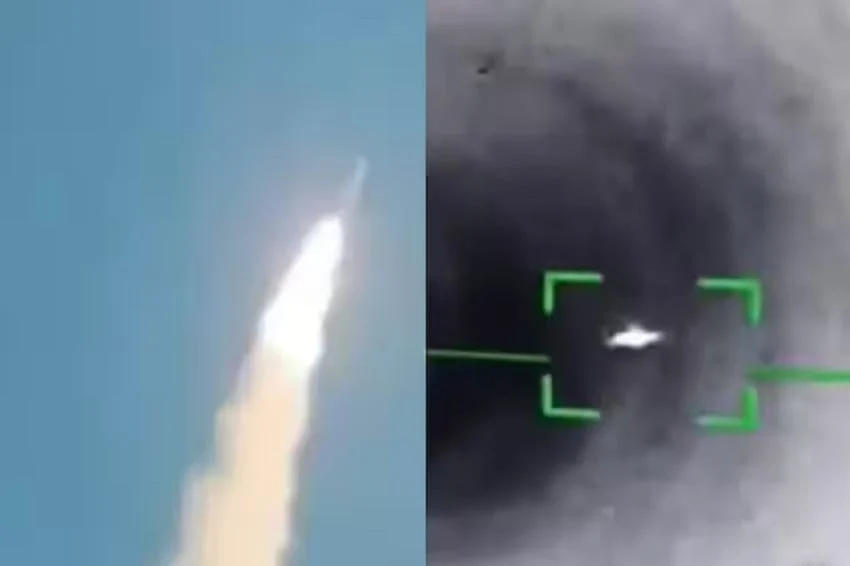
The geopolitical landscape of the Middle East has once again been cast into high tension following a dramatic escalation in the skies over the Persian Gulf. According to official statements released by the Iranian Army, domestic air defense systems successfully targeted and inflicted critical damage upon a United States Air Force F-16 fighter jet. Teheran asserts that the aircraft was intercepted while conducting unauthorized maneuvers within or adjacent to Iranian airspace late Friday evening. The alleged engagement immediately triggered a war of words between regional adversaries, with the United States Central Command issuing flat denials regarding the incident, characterizing the Iranian narrative as entirely fabricated amidst an ongoing, multi-layered regional conflict.
The unfolding narrative highlights the increasing reliance on indigenous military technology by the Islamic Republic, alongside the precarious nature of military operations conducted by foreign powers in close proximity to heavily guarded sovereign territories. As strategic analysts sift through contradictory claims from both Washington and Teheran, the broader implications of this alleged engagement point toward an increasingly volatile theater of operations where miscalculations could precipitate wider military confrontations.
Chronology of the Incident and Iranian Military Assertions
According to detailed operational accounts published by the Mehr News Agency and attributed to high-ranking officials within the Iranian Armed Forces, the confrontation began on Friday night. Utilizing an integrated domestic air defense network—a complex architecture designed to monitor, track, and neutralize foreign aerial threats without reliance on external supply chains—military radar operators reportedly detected an unidentified foreign military asset closing in on the southern maritime borders of the country.
The Iranian military stated that the aircraft in question was a U.S. military F-16 fighting falcon. Operating under pre-established rules of engagement designed to counter perceived incursions, the integrated defense network locked onto the target and deployed a surface-to-air missile. Iranian officials maintained that the projectile successfully intercepted the target, causing structural and mechanical damage severe enough to compromise the aircraft’s mission readiness.
Consequently, the pilot of the affected F-16 was allegedly forced to abort the operation immediately, turning away from the immediate operational zone and executing an emergency landing at a nearby coalition airfield located within the region. While the Iranian military did not initially disclose the exact landing coordinates of the crippled aircraft, the assertion of a successful hit was framed as a major defensive victory for the nation’s domestic defense manufacturing sector.
United States Central Command Responds with Categorical Denials
In stark contrast to the declarations emanating from Teheran, the United States military moved swiftly to invalidate the claims. The United States Central Command (CENTCOM), which oversees military operations across the Middle East, issued a definitive statement via social media channels and official defense briefings, labeling the Iranian claims as baseless propaganda.
"Iran sama sekali tidak menyerang pesawat tempur F-16 AS kemarin," the official CENTCOM statement noted, translating to and reinforcing the operational reality maintained by Washington that no such engagement took place. Expanding upon the refutation, CENTCOM explicitly stated that all United States military aircraft operating throughout the entirety of the Middle East region remain secure, fully operational, and continuously tracked by robust command and control telemetry systems.
Defense analysts note that the rapid and public nature of CENTCOM’s response is standard protocol designed to maintain strategic deterrence, protect operational morale, and prevent the proliferation of unverified narratives that could influence regional stability or financial markets. The absolute divergence between the two accounts leaves international observers to weigh conflicting claims in the absence of independent third-party verification from international aviation monitors.
Broader Regional Context and Escalating Hostilities
The reported aerial skirmish does not occur in a vacuum; rather, it represents the latest flashpoint in an extensive and protracted regional conflict. According to Iranian state media and military briefings, the broader hostilities stem from what Teheran describes as a continuous campaign of military aggression launched jointly by the United States and Israel. Iranian authorities trace the intensification of these hostilities to a significant escalation that began on February 28, characterizing the ongoing military actions as a flagrant violation of the United Nations Charter and foundational principles of international law.
Over the course of this protracted friction, the Iranian Armed Forces have repeatedly claimed to have neutralized or intercepted various high-value American military assets. Past assertions from Teheran have included claims regarding the tracking, targeting, or engagement of advanced fifth-generation stealth fighters such as the F-35, alongside workhorse tactical platforms like the F-15 and F-16. While Western defense analysts frequently view these claims with considerable skepticism—often attributing them to domestic political signaling—the frequency of such announcements underscores the psychological dimension of modern warfare.
Adding fuel to an already volatile operational environment, the Islamic Revolutionary Guard Corps (IRGC) announced a coordinated retaliatory strike targeting U.S. military infrastructure in Bahrain on Saturday night. According to IRGC communiqués, the operation involved a combined barrage of precision-guided missiles and loitering munitions directed at military installations, specifically claiming to target advanced radar systems associated with Patriot missile batteries. This reciprocal action was framed by Teheran as a direct and proportionate response to ongoing violations of Iranian sovereign airspace and maritime boundaries.
Strategic Analysis and Implications for Regional Security
The friction over the Persian Gulf carries profound implications for international security, maritime trade, and global energy markets. The Persian Gulf and the adjacent Strait of Hormuz represent critical chokepoints for the transit of global petroleum supplies. Any sustained escalation between the United States and Iran directly threatens commercial shipping lanes, prompting heightened insurance premiums, military escorts, and strategic posturing by navies operating in the region.
From a technical perspective, the incident highlights the ongoing debate regarding the efficacy of Iran’s domestically produced air defense systems. Following decades of international arms embargoes and economic sanctions, Iran has invested heavily in developing indigenous military capabilities, ranging from radar networks to surface-to-air missile batteries like the Bavar-373 and localized variants of air defense hardware. While Western intelligence agencies often question the technological parity of these systems compared to Western electronic warfare and stealth capabilities, Iranian military planners consistently seek to demonstrate their operational deterrence value.
Furthermore, the psychological and informational warfare aspects of the alleged F-16 incident cannot be overlooked. In modern asymmetric conflicts, the narrative surrounding military engagements is often weaponized to achieve strategic objectives. For Teheran, broadcasting the successful targeting of an advanced American platform serves to bolster domestic morale, project strength regionally, and challenge the aura of invincibility surrounding Western military hardware. Conversely, for Washington and its regional allies, swift and unequivocal denials are essential to preserve strategic credibility and reassure partner nations within the Gulf Cooperation Council (GCC) regarding the reliability of American security guarantees.
As diplomatic channels remain strained and direct communication lines between Washington and Teheran operate under severe constraints, the risk of miscalculation remains a persistent threat. Military commanders on both sides must navigate crowded operational spaces where commercial air traffic, drone surveillance, and combat patrols intersect daily. Whether this specific incident over the Persian Gulf will catalyze further retaliatory spirals or remain a localized war of words depends heavily on the behind-the-scenes diplomatic maneuvering of international stakeholders seeking to prevent a broader conflagration in the Middle East.
