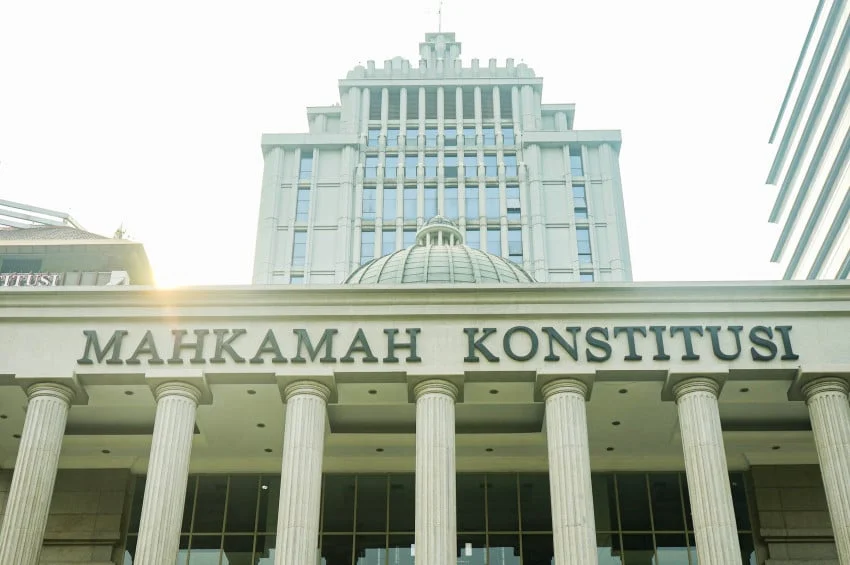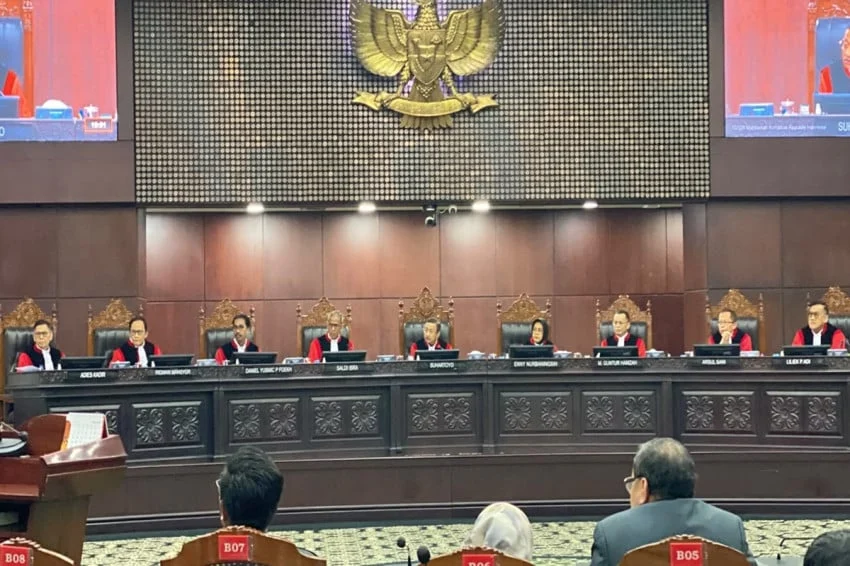
The Constitutional Court of Indonesia, commonly known as Mahkamah Konstitusi or MK, officially concluded the preliminary examination hearing regarding a high-profile electoral lawsuit filed by prominent constitutional law expert Denny Indrayana and a coalition of co-petitioners. The legal proceeding, which took place at the main courtroom of the Constitutional Court in Jakarta, centers on a controversial legal challenge targeting the validity of the educational credentials and diploma requirements fulfilled by Vice President Gibran Rakabuming Raka during his candidacy in the 2024 Presidential Election. As the judicial branch of government charged with safeguarding the Indonesian Constitution and resolving disputes concerning general election results, the Constitutional Court faces yet another pivotal test concerning the legitimacy of the nation’s executive leadership.
During the preliminary session, Chief Justice Suhartoyo presided over the courtroom proceedings alongside a panel of constitutional justices tasked with evaluating the formal requirements of the petition. Before adjourning the initial session, the Chief Justice formally acknowledged the receipt of several requests submitted by outside entities seeking to participate in the judicial review as related parties. Among the key participants permitted to join the proceedings are representatives from the central executive board of the volunteer organization known as the Association of Militant People’s Movement Nusantara, operating under the banner of Militan Gibran 08 Nusantara, alongside individual applicants Andi Azwan and Abdul Aziz Salim.
The inclusion of these related parties introduces a dynamic layer of advocacy into the courtroom, as supporters of the Vice President mobilize to defend the legitimacy of the 2024 election outcomes against mounting legal scrutiny. Despite the applications being filed mere hours before the commencement of the inaugural hearing, the panel of constitutional judges deliberated and reached a unanimous consensus to accept the intervention requests. Consequently, these groups and individuals will be granted formal standing to present their arguments, introduce counter-evidence, and deliver comprehensive statements addressing the core allegations brought forth by Denny Indrayana and his fellow petitioners.
Background Context of the Legal Challenge
The roots of this constitutional lawsuit stretch back to the intense political landscape of the 2024 Indonesian Presidential Election cycle, an era marked by historic legal maneuvers, intense public debate, and substantial shifts in the nation’s electoral architecture. The dispute spearheaded by Denny Indrayana and his co-petitioners fundamentally questions the administrative eligibility of Gibran Rakabuming Raka, specifically challenging the authenticity, compliance, and procedural verification of the academic credentials and diplomas submitted to the General Elections Commission during the candidate registration phase.
In their primary legal brief, Denny Indrayana and the petitioner coalition are formally requesting that the Constitutional Court annul the official determination and subsequent inauguration of Gibran Rakabuming Raka as the Vice President of the Republic of Indonesia. The petitioners argue that administrative flaws and alleged discrepancies regarding educational qualifications breach the rigorous statutory requirements stipulated under the prevailing election laws. Such a bold legal petition strikes at the heart of the executive branch’s current political stability, invoking complex constitutional questions regarding the threshold and jurisdiction of the Constitutional Court in handling post-election qualification disputes after the inauguration has already taken place.
The involvement of the Constitutional Court in electoral disputes is governed by specific constitutional parameters, primarily focusing on vote tallies and systemic electoral fraud. However, innovative legal arguments presented by petitioners frequently seek to expand the court’s interpretive boundaries by framing administrative eligibility issues as constitutional violations that fundamentally undermine the democratic integrity of the electoral process. The court’s willingness to hear the preliminary arguments indicates a thorough judicial review process, ensuring that all procedural avenues are thoroughly explored before a final verdict is handed down.
Chronology of the Preliminary Proceedings and Subsequent Schedule
The procedural timeline of the current legal battle has moved swiftly since the formal submission of the case file to the registry of the Constitutional Court. Following the initial administrative intake and verification of legal standing for the primary petitioners, the court scheduled the preliminary examination hearing for Monday, September 21, 2026. This inaugural session served as an opportunity for the bench of constitutional justices to examine the substance of the petition, verify the identities and legal standing of the applicants, and establish the procedural framework for subsequent hearings.
A critical juncture during Monday’s session involved the last-minute intervention requests filed by the legal representation of Militan Gibran 08 Nusantara, as well as individual applicants Andi Azwan and Abdul Aziz Salim. Despite the compressed timeframe between the submission of these intervention documents and the opening gavels of the court, Chief Justice Suhartoyo confirmed that the panel of judges deliberated on the matter and agreed to grant official status to the related parties. This decision ensures that the defense of the Vice President’s administrative credentials will feature active advocacy from his grassroots supporters alongside official state respondents.
Looking ahead, the judicial calendar dictates a rigorous pace for the evidentiary and deliberative phases of the trial. The next scheduled session will take place on Wednesday, September 23, 2026. The primary agenda for this upcoming hearing will involve listening to the formal legal responses, defenses, and evaluations submitted by the primary respondents and relevant state agencies. The General Elections Commission, serving as the direct respondent responsible for organizing the election and verifying candidate files, will present its official defense. Additionally, the Election Supervisory Body will deliver its independent factual findings and statutory evaluations, alongside formal testimonies from the newly accepted related parties representing the Gibran volunteer organizations.
Official Responses and Institutional Perspectives
As the lawsuit gathers momentum, key institutional actors and legal representatives are preparing comprehensive defense strategies to address the allegations raised by the petitioner coalition. The General Elections Commission maintains that all administrative procedures, candidate verifications, and educational document screenings executed during the lead-up to the 2024 presidential ballot strictly adhered to the statutory guidelines outlined in Law Number 7 of 2017 concerning General Elections, alongside subsequent administrative regulations issued by the commission.
Representatives for the Election Supervisory Body have similarly emphasized their ongoing oversight role throughout the electoral phases. Bawaslu officials are expected to present detailed administrative logs demonstrating that candidate vetting processes underwent standard verification protocols without registering disqualifying anomalies during the statutory objection windows. Bawaslu’s testimony during the upcoming Wednesday hearing will provide the constitutional justices with an independent administrative baseline regarding whether formal objections to educational credentials were appropriately raised and addressed during the active campaign and registration periods.
Meanwhile, legal counsels representing the Militan Gibran 08 Nusantara volunteer coalition have expressed confidence in their newly acquired standing as related parties. Speaking outside the courtroom, organizational representatives asserted that the lawsuit lacks substantial constitutional merit and serves primarily as a political maneuver designed to destabilize the democratically elected government. By joining the proceedings as a formal related party, the volunteer alliance aims to provide documentation and arguments affirming that the Vice President’s academic history complies fully with domestic educational and electoral standards, thereby neutralizing the basis for the annulment request.
Broader Impact and Constitutional Implications
The acceptance of the petition for preliminary examination and the subsequent inclusion of pro-government volunteer groups as related parties highlight the ongoing legal and political reverberations stemming from the 2024 general elections. While presidential transitions in Indonesia traditionally consolidate executive authority following the final certification of election results by the Constitutional Court, creative legal challenges targeting individual candidate eligibility continue to test the boundaries of post-election constitutional litigation.
From a broader legal perspective, the outcome of this case could establish significant judicial precedents regarding the extent to which the Constitutional Court can review administrative candidate requirements after a presidential ticket has assumed office. Legal analysts and constitutional scholars are closely monitoring the proceedings to observe how the court balances the strict principles of electoral administrative finality against allegations of foundational credential discrepancies. A ruling that dismisses the petition would firmly reinforce the legal finality of the 2024 electoral outcomes, whereas an unexpected judicial intervention would introduce unprecedented institutional turbulence into Indonesia’s political structure.
As the Constitutional Court prepares to reconvene on Wednesday, September 23, 2026, the eyes of the nation remain fixed on the judicial chamber in Jakarta. The testimonies delivered by the General Elections Commission, the Election Supervisory Body, and the Gibran volunteer coalition will form the critical evidentiary core upon which the constitutional justices will ultimately determine the legal trajectory of this high-stakes challenge to the nation’s executive leadership.