
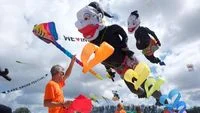
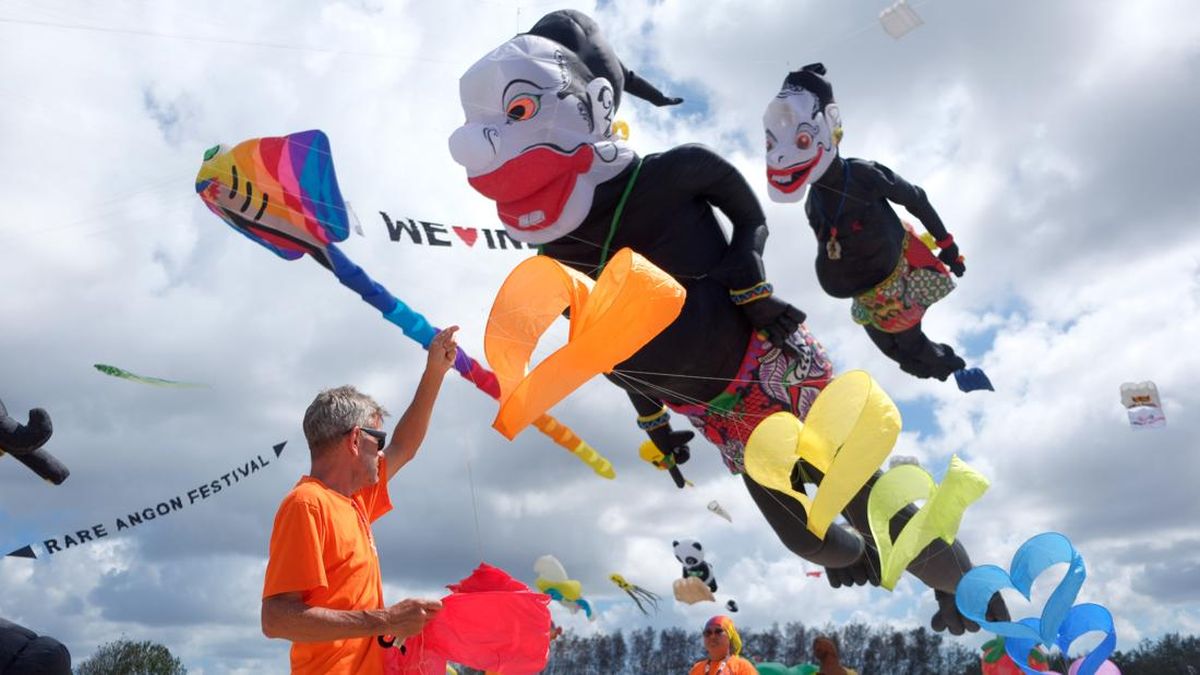
The coastal skies of Sanur, Bali, were recently transformed into a vibrant canvas of color and movement as the annual Rare Angon Kite Festival took center stage, drawing thousands of spectators and participants to witness a unique blend of ancient tradition and contemporary creativity. This year’s iteration of the festival gained significant attention for its eclectic display of kites, which ranged from the towering, traditional silhouettes of Balinese mythology to whimsical, modern depictions of popular culture icons such as the legendary Javanese shadow puppet character Petruk and the globally recognized Japanese robotic cat, Doraemon. The event, held at the expansive Mertasari Beach, serves as a testament to the enduring legacy of kite-flying in Balinese culture, a practice that transcends mere recreation to become a spiritual and communal endeavor.
The Cultural Significance of Rare Angon
To understand the magnitude of the Rare Angon Kite Festival, one must first delve into the philosophical roots of the term "Rare Angon" itself. In Balinese Hindu tradition, Rare Angon is an avatar of the god Shiva, depicted as a young shepherd boy who is the patron deity of kite flying and the controller of the winds. The festival is traditionally held during the dry season, typically between June and August, when the strong, steady trade winds blow across the Indonesian archipelago. For the Balinese, flying a kite is not merely a pastime but a form of prayer and gratitude offered to the gods for a bountiful harvest and favorable weather conditions.
The Rare Angon Kite Festival in Sanur has evolved over decades from a local village activity into an international-scale event that attracts "pelayang" (kite flyers) from across the island and beyond. While the festival remains deeply rooted in the "Tri Hita Karana" philosophy—emphasizing the harmony between humans, God, and the environment—it has increasingly embraced modern artistic expressions, as evidenced by the inclusion of non-traditional characters in the competition’s creative categories.
A Visual Spectacle: From Petruk to Doraemon
This year’s competition was marked by an extraordinary level of craftsmanship. The "Kreasi" (Creative) category was particularly noteworthy, as it allowed participants to deviate from the rigid structural requirements of traditional kites like the Bebean (fish-shaped), Janggan (bird-shaped with a long tail), and Pecukan (leaf-shaped).
Spectators were treated to the sight of Petruk, a beloved figure from the Punokawan group in Javanese wayang kulit (shadow puppetry), soaring gracefully above the Indian Ocean. The kite, meticulously crafted with bamboo frames and hand-painted fabric, captured the character’s elongated nose and jovial expression, bridging the gap between Javanese folklore and Balinese skies. In stark contrast, the appearance of a massive Doraemon kite highlighted the influence of global media on local traditions. The blue-and-white feline, a symbol of childhood nostalgia for many Indonesians, required sophisticated aerodynamic engineering to maintain stability despite its unconventional, rounded shape.
Organizers noted that the inclusion of such characters is a deliberate move to engage the younger generation. By allowing modern themes to coexist with traditional ones, the festival ensures that the art of kite making remains relevant in an era dominated by digital entertainment. The juxtaposition of a centuries-old wayang character and a 20th-century anime icon exemplifies the fluidity of Balinese culture, which has a long history of absorbing external influences while maintaining its core identity.
The Chronology of the Event
The Rare Angon Kite Festival followed a rigorous schedule, beginning with weeks of preparation by local "Banjars" (traditional community neighborhoods). In Bali, kite flying is a collective effort; a single large kite can require the coordination of 30 to 50 people to transport, assemble, and launch.
- Preparation Phase: In the months leading up to the festival, youth groups (Sekaa Teruna Teruni) gathered in their respective Banjars to construct their entries. This involved sourcing high-quality "Petung" bamboo, treating the wood to ensure flexibility and strength, and sewing durable fabrics that could withstand high-altitude winds.
- The Opening Ceremony: The festival commenced with a traditional Balinese "Pemlaspas" ceremony, a ritual intended to purify the kites and imbue them with spirit. This was accompanied by the rhythmic sounds of the Gamelan orchestra, setting a celebratory yet sacred tone for the proceedings.
- The Competition Rounds: Over several days, the kites were judged based on various criteria, including "ngelog" (the gracefulness of the kite’s movement in the air), color harmony, structural integrity, and the skill of the ground crew in managing the launch and landing.
- The Main Event: The final days saw the largest kites take to the sky. The Janggan kites, some featuring tails exceeding 100 meters in length, required hundreds of meters of rope and immense physical strength from the teams to keep them airborne.
Supporting Data and Economic Impact
The Rare Angon Kite Festival is more than just a cultural display; it is a significant driver of the local economy in Sanur and the wider Denpasar area. According to local tourism boards, the festival typically sees a 20-30% increase in visitor footfall at Mertasari Beach compared to standard weekends.
- Participation Levels: This year’s festival saw over 1,000 kites registered across various categories, with participants coming from all nine regencies of Bali.
- Tourism Growth: Hotels and homestays in the Sanur area reported occupancy rates of nearly 85% during the festival week, with a notable influx of domestic tourists from Jakarta and Surabaya, as well as international tourists from Australia and Europe.
- Local SME Support: Hundreds of local vendors, ranging from food stalls selling traditional "Babi Guling" and "Sate Lilit" to kite-themed souvenir shops, benefited from the massive crowds. Estimates suggest that the informal economy surrounding the event generates billions of Rupiah in revenue over the course of the festival.
Official Responses and Community Impact
I Made Kasta, a prominent figure in the Balinese kite-flying community, emphasized the social importance of the event. "The Rare Angon festival is about ‘Gotong Royong’ (mutual cooperation). You cannot fly a large kite alone. It requires the youth, the elders, and the entire community to work together. In a world that is becoming increasingly individualistic, this festival brings us back to our roots," he stated during a press briefing at the site.
Government officials from the Denpasar Tourism Office also lauded the event for its role in sustainable tourism. By focusing on a tradition that utilizes wind power and natural materials, the festival aligns with Bali’s broader goals of promoting "Green Tourism." However, officials also issued reminders regarding safety, particularly the importance of flying kites away from power lines and the flight paths of I Gusti Ngurah Rai International Airport. The "Kite Policy" in Bali remains a critical point of discussion, as the government seeks to balance cultural expression with the safety of modern infrastructure.
Technical Challenges and Engineering Feats
Building a kite that can represent a character like Petruk or Doraemon involves significant engineering challenges. Traditional Balinese kites are aerodynamic by design, perfected over centuries. However, "creative" kites often have irregular shapes that catch the wind unevenly.
The creators of the Petruk kite explained that they had to use a specific type of "tali timbang" (weighting string) system to ensure the long nose did not cause the kite to nose-dive. Similarly, the Doraemon kite utilized a "ribbed" bamboo structure to maintain its three-dimensional appearance while remaining light enough to catch the moderate Sanur breezes. These technical innovations showcase the "Pelayang" (kite flyer) as not just an artist, but an informal aeronautical engineer.
Broader Implications: Tradition in the Modern Age
The success of the Rare Angon Kite Festival highlights a broader trend in Indonesia where traditional festivals are being revitalized through the infusion of modern elements. This phenomenon, often referred to as "Pop-Tradition," allows cultural heritage to survive by adapting to the tastes of younger generations.
From an analytical perspective, the festival serves as a soft-power tool for Bali. By showcasing its unique culture through a medium that is visually spectacular and easily sharable on social media, Bali reinforces its image as a destination that offers more than just beaches. The images of Doraemon flying alongside a traditional Janggan kite have gone viral on platforms like Instagram and TikTok, reaching a global audience and sparking interest in Balinese folklore.
Furthermore, the festival plays a crucial role in environmental awareness. The "Rare Angon" philosophy teaches respect for the wind and the sky. Many participating groups have begun using recycled materials for their kites, and the festival organizers have implemented strict "leave-no-trace" policies for the beach area, ensuring that the celebration of nature does not come at the cost of the environment.
Conclusion
As the sun set over Mertasari Beach, marking the end of the Rare Angon Kite Festival, the sight of hundreds of kites being slowly reeled in signaled the close of another successful chapter in Bali’s cultural calendar. The event successfully demonstrated that tradition is not a static relic of the past but a living, breathing entity capable of embracing characters like Petruk and Doraemon without losing its soul.
The Rare Angon Kite Festival remains a beacon of Balinese identity, a sky-high tribute to the wind god, and a vibrant reminder of the power of community. As long as the trade winds continue to blow across Sanur, the "Rare Angon" will continue to shepherd the dreams and creativity of the Balinese people into the clouds, ensuring that this magnificent tradition soars for generations to come. Through the meticulous balance of economic growth, cultural preservation, and artistic innovation, the festival stands as a model for how ancient traditions can thrive in the 21st century.
