
President Prabowo Subianto has voiced his strong pride in the Indonesian National Armed Forces (TNI) adopting the domestically produced Maung jeep as an operational vehicle. This decision, he emphasized, prioritizes national industrial development over the lower cost of imported alternatives, signaling a strategic shift in defense procurement. The sentiment was articulated during his address at the TNI Harvest Festival in Support of Food Security Programs, held at Abdulrachman Saleh Airbase in Malang, East Java, on Friday, July 17th.
The genesis of the Maung’s adoption into TNI’s fleet traces back to Prabowo’s tenure as Minister of Defense. Facing a crucial decision regarding operational vehicle procurement, he was presented with a stark choice: cheaper foreign-made jeeps or a more expensive, yet domestically manufactured, Indonesian option. This pivotal moment, he recounted, underscored a broader national imperative.
"I was presented with options: ‘Sir, here’s a good jeep, it’s cheap, foreign-made. This one is Indonesian-made, but it’s more expensive because we’re just starting,’" Prabowo stated, as quoted by Antara news agency on the same day. He posed a rhetorical question that encapsulated his rationale: "If I choose the cheaper jeep, when will Indonesia ever have its own jeep?" This pragmatic yet forward-looking perspective led him to champion the Maung, viewing its higher initial cost as a vital investment in cultivating indigenous defense industry and manufacturing capabilities.
"So, I chose the one that’s a bit more expensive but made by our own Indonesian children, namely the Maung. Which is now being used by our officers. Our officers are using the Maung," he declared, highlighting the vehicle’s current deployment within the ranks.
The Maung is a tactical vehicle manufactured by PT Pindad, a state-owned defense enterprise. As of May 2026, the company had reportedly produced over 3,200 units of the Maung. This national effort in vehicle production has been visibly integrated into the highest levels of government, with President Prabowo himself reportedly utilizing the Maung since his inauguration on October 20, 2024, further solidifying its status as a symbol of national capability.
Expanding National Vehicle Integration Across the TNI
The commitment to national vehicle production extends beyond high-ranking officers. Prabowo indicated that the utilization of domestically manufactured vehicles within the TNI is being progressively broadened. Beyond commissioned officers, he confirmed that a number of "Danramil" (Military District Commanders) are now being equipped with the Maung for their official duties.
Furthermore, a significant initiative is underway to support the grassroots level of the TNI. The "Babinsa" (Village Guidance Non-Commissioned Officers), who are integral to community engagement and operational presence at the village level, are set to receive electric motorcycles as their operational vehicles. This dual approach, deploying robust jeeps for commanders and efficient electric motorcycles for frontline personnel, aims to enhance the operational readiness and adaptability of the TNI across diverse geographical and functional roles.
"I heard that Danramils are already using the jeep too, right? They look imposing. Of course, it can’t all happen at once. But the Babinsa have started receiving motorcycles, electric motorcycles," Prabowo observed, underscoring the phased but determined implementation of this national procurement strategy.
The Dawn of the Indonesian Electric Motorcycle
In the same address, President Prabowo unveiled an ambitious plan for the imminent launch of a national electric motorcycle. He announced that this new Indonesian-made electric vehicle is slated for release within the coming weeks.
"Very soon, we will have a national motorcycle. I will be launching a national electric motorcycle in the next few weeks," he stated, projecting a swift timeline for this significant development in sustainable transportation.
The government’s vision for this national electric motorcycle is one of broad public utility. Prabowo expressed his hope that it would be widely adopted by the general populace, including farmers, serving as a more efficient and affordable mode of transportation. This initiative aligns with the government’s broader objectives of fostering technological advancement and reducing reliance on fossil fuels.
The development of these national vehicles, from the Maung jeep to the forthcoming electric motorcycle, is intrinsically linked to the government’s overarching strategy of bolstering domestic industrial capabilities and fostering national self-reliance. Prabowo articulated his deep sense of pride in witnessing the Maung being deployed across various regions, interpreting it as a tangible demonstration of Indonesian ingenuity and manufacturing prowess.
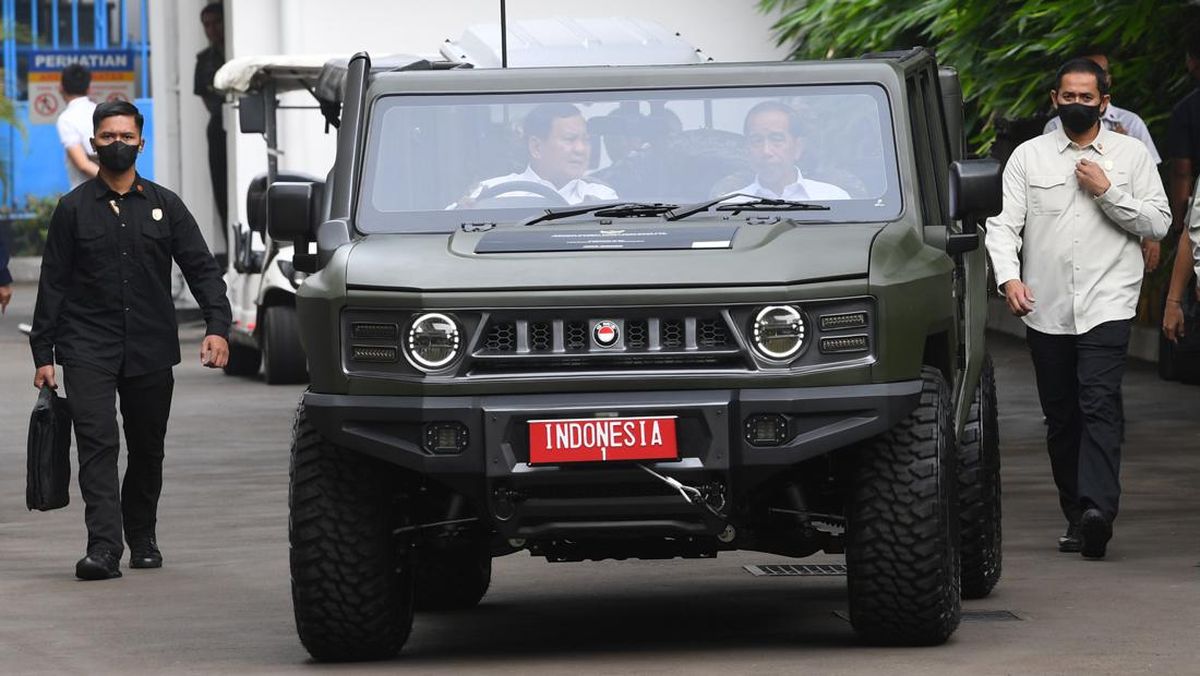
"So now, when you see jeeps in the cities, I feel proud too. The TNI is now using its own jeeps," he concluded, reinforcing the sentiment that these vehicles represent not just operational tools, but emblems of national achievement and technological sovereignty.
Background and Context: A Strategic Pivot in Defense Procurement
The pronouncements by President Prabowo Subianto mark a significant juncture in Indonesia’s defense procurement and industrial policy. Historically, Indonesia, like many developing nations, has often relied on imported defense equipment due to established supply chains, perceived technological advantages, and often, lower initial costs. However, this reliance can lead to long-term dependencies, hinder the development of local industries, and create vulnerabilities in supply and maintenance.
The decision to prioritize the Indonesian-made Maung jeep, even at a higher price point, signifies a strategic pivot towards fostering a robust domestic defense industrial base. This approach is not unique to Indonesia; many nations are increasingly recognizing the strategic and economic benefits of developing their own defense manufacturing capabilities. Such capabilities can lead to job creation, technological spillovers into civilian sectors, and greater national security autonomy.
Timeline of Key Developments:
- Prabowo’s Tenure as Minister of Defense: The initial selection process for the Maung likely occurred during this period, where he was presented with the choice between foreign and domestic options.
- October 20, 2024: President Prabowo Subianto is inaugurated. His subsequent use of the Maung underscores its adoption at the highest levels.
- May 2026 (Reported): PT Pindad has produced over 3,200 units of the Maung, indicating a substantial scaling up of production.
- July 17, 2026: President Prabowo delivers his speech at the TNI Harvest Festival, highlighting the pride in the Maung’s deployment and announcing plans for a national electric motorcycle.
Supporting Data and Market Context
The Indonesian automotive market is substantial, with a significant demand for utility vehicles. While specific cost comparisons between the Maung and its imported counterparts are not publicly detailed, the general principle of "learning curve" costs in new manufacturing is well-established. New domestically produced goods often carry higher initial unit costs due to lower production volumes, the investment in research and development, tooling, and the establishment of new supply chains. As production scales and processes are refined, these costs typically decrease.
PT Pindad, as a state-owned enterprise, plays a crucial role in implementing the government’s industrial policies. Its mandate extends beyond commercial viability to national strategic objectives. The production of over 3,200 Maung units signifies a considerable investment and commitment from both the company and the government.
The planned launch of a national electric motorcycle taps into a growing global trend towards electrification. The Indonesian government has expressed ambitions to become a significant player in the electric vehicle (EV) ecosystem, leveraging its rich nickel reserves, a key component in EV batteries. Developing domestic EV manufacturing capabilities, including motorcycles, is seen as a critical step in this direction.
Broader Impact and Implications
For National Security and Defense:
The reliance on domestically produced military hardware enhances national security by reducing dependence on foreign suppliers, which can be subject to political pressures or supply disruptions. It also allows for greater customization and adaptation of vehicles to meet specific Indonesian operational requirements. The sustained use of the Maung by the TNI, from officers to Danramils, demonstrates a commitment to interoperability and standardization within the armed forces.
For Domestic Industry and Economy:
The decision to favor national products like the Maung and the upcoming electric motorcycle has significant economic implications. It stimulates the domestic automotive and manufacturing sectors, creates jobs, and fosters the development of skilled labor. Furthermore, it encourages innovation and technological advancement within these industries, potentially leading to spin-off technologies that benefit the broader economy. The investment in R&D for vehicles like the Maung can also bolster PT Pindad’s capabilities and reputation in the global defense market.
For Public Perception and National Pride:
President Prabowo’s emphasis on national pride associated with the Maung taps into a powerful sentiment. Seeing locally manufactured vehicles used by national institutions can foster a sense of accomplishment and self-reliance among citizens. This can translate into greater support for national industries and a strengthened sense of national identity.
For Environmental Sustainability (Electric Motorcycle):
The planned introduction of a national electric motorcycle aligns with global efforts to reduce carbon emissions and promote sustainable transportation. If successful, this initiative could contribute to cleaner air in urban centers and reduce Indonesia’s reliance on fossil fuels for transportation.
Analysis of the "Higher Cost" Rationale:
Prabowo’s justification for choosing the more expensive Indonesian jeep highlights a long-term strategic vision. The immediate financial outlay is viewed as an investment in future capabilities. This approach recognizes that short-term cost savings by importing can lead to long-term disadvantages, including a lack of indigenous technological development and a continued dependence on foreign supply chains. By investing in national production, Indonesia aims to build a self-sustaining defense and automotive ecosystem. This is a common strategy employed by nations seeking to achieve greater industrial autonomy and technological sovereignty.
The expansion of national vehicle usage across different ranks within the TNI, from the tactical Maung jeeps to the practical electric motorcycles for Babinsa, suggests a comprehensive strategy to modernize and indigenize the force’s operational assets. This phased approach allows for gradual integration while ensuring that personnel at all levels are equipped with reliable and appropriate tools, manufactured with national pride and expertise.
