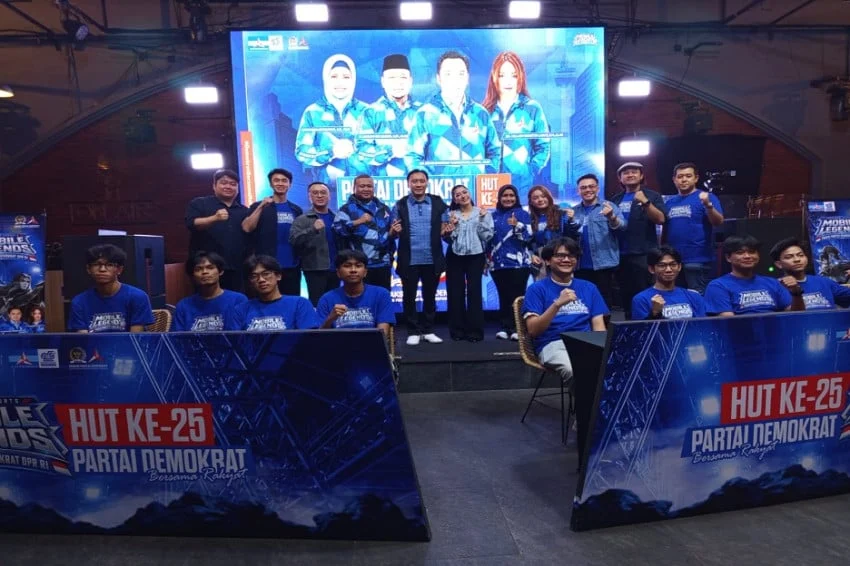
The Democratic Party of Indonesia (Partai Demokrat) celebrated its 25th anniversary on Tuesday, September 8, 2026, by hosting a high-stakes Mobile Legends: Bang Bang (MLBB) tournament at the Saka Social House in South Jakarta. This event, which brought together 320 players from various competitive backgrounds, serves as a significant intersection between political outreach and the burgeoning esports industry. The tournament was spearheaded by the Democratic Faction of the Indonesian House of Representatives (DPR RI) as a strategic initiative to acknowledge the growing importance of the digital creative economy among the nation’s younger demographics.
A Strategic Pivot Toward Digital Engagement
The decision to organize an esports event as a cornerstone of a major political anniversary reflects a broader trend in Indonesian political communication. As the demographic dividend of Indonesia continues to shift toward Gen Z and Millennials, political parties are increasingly seeking platforms that resonate with the digital-native generation. Mobile Legends, as one of the most popular mobile games in Southeast Asia, provides a unique ecosystem that rewards the exact skills that are often championed in professional environments: rapid decision-making, strategic planning, team communication, and high-pressure execution.
The tournament featured a rigorous format that tested the participants’ endurance and technical proficiency. With 320 players participating, the event was not merely a ceremonial gathering but a competitive showcase requiring logistical precision. The participants navigated through a series of elimination rounds, emphasizing the spirit of sportsmanship and the professionalization of gaming in Indonesia.
Key Figures and Leadership Presence
The event was attended by prominent figures within the Democratic Party, led by Edhie Baskoro Yudhoyono, widely known as Ibas. Serving as the Chairman of the Democratic Faction at the DPR RI and the Deputy Speaker of the MPR RI, Ibas’s presence underscored the political weight attached to the initiative. He was accompanied by his wife, Aliya Baskoro Yudhoyono, whose attendance highlighted the party’s focus on family-oriented and community-based engagement.
Also present were several key legislators from the party, including Hillary Brigitta Lasut, Harmusa Oktaviani, and Hasani Bin Zuber. The involvement of these younger legislators was particularly strategic. Hillary Brigitta Lasut, for instance, actively engaged with the players, participating in a "fan match" that bridged the gap between political figures and the gaming community. This interaction was intended to humanize political leadership while signaling that the party is listening to the interests and concerns of the youth.
The Intersection of Esports and the Creative Economy
The Indonesian esports sector has experienced exponential growth over the past decade. According to recent industry reports, Indonesia accounts for a significant portion of the total esports revenue in Southeast Asia. This sector is no longer viewed solely as entertainment; it is now recognized as a viable career path, encompassing roles such as professional players, coaches, analysts, broadcasters, and event managers.
By hosting this tournament, the Democratic Party is positioning itself as an advocate for the creative economy. The party argues that supporting esports is a preventative measure against social ills. By providing a structured, competitive, and community-driven environment, the party aims to steer youth away from negative influences, such as substance abuse or unproductive idle time, and toward professional development within the digital realm.
"Esports represents a new frontier for our youth to channel their creativity and competitive spirit," stated Ibas during the event. He emphasized that the party’s role is to act as a facilitator, ensuring that the digital infrastructure and social support systems exist to allow young people to pursue these interests as legitimate professional endeavors.
Economic Implications of the Digital Shift
The broader implications of this event involve the integration of digital gaming into national policy discussions. Indonesia’s Ministry of Tourism and Creative Economy has previously highlighted esports as a pillar for economic growth. The industry provides a multiplier effect, stimulating demand for better telecommunications infrastructure, high-end mobile hardware, and digital media services.
For the Democratic Party, the initiative serves a dual purpose. First, it serves as an outreach tool to connect with voters who are typically disengaged from traditional politics. Second, it aligns the party with the national vision of a "Golden Indonesia 2045," which relies heavily on the ability of the younger generation to master digital technologies. By championing esports, the party is signaling its intent to stay relevant in a rapidly evolving, tech-driven landscape.
Chronology of the 25th Anniversary Commemoration
The celebration of the Democratic Party’s 25th anniversary spans several weeks, with the MLBB tournament serving as the primary engagement event for the youth sector.
- Early September 2026: Preparations for the tournament began with regional qualifiers, ensuring that the best players from various communities were represented.
- September 8, 2026: The main event at Saka Social House, Jakarta. The day consisted of a opening ceremony, the main tournament bracket, exhibition matches featuring the legislators, and an awards presentation.
- Post-Event Phase: The party plans to utilize the data and feedback gathered from the tournament to formulate policy recommendations regarding esports regulations, player protection, and the promotion of local game developers in Indonesia.
Challenges and Future Outlook
While the event was a success in terms of participation and optics, the intersection of politics and esports is not without its challenges. Critics often warn against the "politicization" of youth culture, suggesting that political entities should focus on systemic policy changes rather than staging intermittent events. However, proponents argue that such events are essential for building rapport and creating awareness of the issues that matter to the esports community, such as internet accessibility, digital safety, and the professional licensing of esports athletes.
Furthermore, the longevity of this support remains to be seen. The Democratic Party has indicated that this tournament is part of a series of initiatives aimed at the digital generation. Future efforts are expected to include digital literacy programs, workshops on game development, and partnerships with local tech startups.
The Role of Legislators in Digital Policy
The participation of members of the House of Representatives in this event is significant. Legislators like Hillary Brigitta Lasut are uniquely positioned to translate the experiences gained at the tournament into concrete policy. As the government continues to debate regulations regarding digital content and online taxation, having legislators who are familiar with the gaming ecosystem is vital.
The interaction between the players and the politicians at the Saka Social House provided a direct line of feedback. Players were able to express their concerns regarding the lack of localized servers, the need for better funding for amateur leagues, and the importance of recognizing esports as an official branch of sports under the National Sports Committee of Indonesia (KONI).
A Model for Future Political Engagement
The Democratic Party’s 25th-anniversary celebration has set a high bar for political engagement with the digital community. By combining a major anniversary milestone with a high-engagement activity like a Mobile Legends tournament, the party has successfully managed to dominate the news cycle in a way that feels relevant to the younger demographic.
The success of the event lies in its authenticity. Instead of a formal lecture, the party chose a format where the participants were the protagonists. The presence of the party leadership in a supportive, rather than didactic, capacity allowed for a more organic interaction. This shift in strategy—from top-down communication to bottom-up participation—may very well be the defining characteristic of political campaigning in the coming decade.
As the tournament concluded and the winners were announced, the overarching message from the Democratic Faction remained clear: the party intends to be a partner in the digital transformation of Indonesia. Whether this translates into lasting legislative success or remains a successful public relations endeavor will depend on the party’s ability to maintain its commitment to the youth-led creative economy beyond the anniversary celebrations. For now, however, the 320 participants who gathered in South Jakarta represent a growing segment of the Indonesian electorate that is increasingly defined by its digital identity—a group that the Democratic Party is clearly eager to represent in the halls of the DPR RI.