
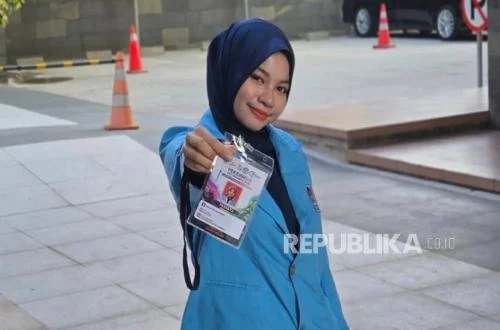
The landscape of student creativity in Indonesia reached a new milestone as the Pekan Seni Mahasiswa Daerah (Peksimida) DKI Jakarta 2026 convened at the Universitas Gunadarma Campus D in Depok. Among the standout participants was Dini Fitriyah Herti, a Data Science student from Universitas Nusa Mandiri (UNM), who demonstrated that the intersection of analytical academic backgrounds and digital artistry is a potent force in the modern era. The event, held on Thursday, July 16, 2026, served not only as a regional talent showcase but also as the primary selection gateway for the prestigious national-level Pekan Seni Mahasiswa Nasional (Peksiminas). This year’s iteration was particularly significant due to the debut of the Digital Poster Design category, reflecting a shift in the Indonesian Ministry of Education’s recognition of digital-native artistic expressions.
The competition brought together 15 elite representatives from various public and private higher education institutions across the Jakarta metropolitan area. Unlike traditional art competitions where themes are announced well in advance, Peksimida 2026 employed a high-pressure, spontaneous format to test the mental agility and conceptual depth of the participants. Upon arrival, the specific sub-themes were determined via a randomized "spin wheel" mechanism, ensuring that all contestants started on an equal footing without the benefit of pre-rendered assets or long-term conceptual preparation. The wheel landed on a broad yet challenging directive: "Driving the Creation of a Higher Quality of Life." This theme required participants to translate abstract sociological and health goals into a singular, compelling visual narrative within a strictly controlled timeframe.
Dini Fitriyah Herti’s response to this challenge was a work titled "Investasi Besok Pagi Dimulai dari Malam Ini" (Tomorrow Morning’s Investment Starts Tonight). Her approach bypassed generic interpretations of quality of life—such as financial wealth or environmental cleanliness—and instead focused on the foundational biological pillar of human productivity: sleep hygiene. Utilizing a technical stack that included ibis Paint X for original illustrations and Canva for layout optimization, Dini advocated for the use of catnip leaves as a natural herbal tea remedy to combat insomnia and improve sleep cycles. Her poster aimed to bridge the gap between traditional herbal wisdom and modern digital aesthetics, presenting a cohesive argument that a high-quality life is unattainable without the restorative power of proper rest.
Chronology of the Creative Challenge
The competition day was structured to simulate a professional design studio environment, demanding both creative endurance and technical precision. The proceedings commenced promptly at 09:00 WIB, following a brief technical orientation. Participants were given exactly six hours to move from a blank digital canvas to a finished, high-resolution product. A 45-minute mandatory break was integrated into the schedule, providing a brief window for mental recalibration, but the clock remained the primary adversary.
During the first two hours, Dini focused on conceptual mapping and structural sketching. As a Data Science student, her approach was notably systematic; she emphasized the importance of a "design theory-first" methodology. By 11:00 WIB, the core visual elements were being rendered in ibis Paint X, where she meticulously crafted the illustrative components of the catnip tea theme. The final two hours of the competition were dedicated to typography, color grading, and ensuring the visual hierarchy of the poster effectively communicated the "investment" metaphor to the audience. The session concluded at 15:00 WIB, leaving the participants to submit their source files and final renders for a rigorous evaluation by a panel of three professional industry judges.
Technical Execution and Conceptual Depth
The choice of catnip (Nepeta cataria) as the central subject of the poster was a calculated move by Dini to introduce an element of novelty into the competition. While many participants focused on urban planning or exercise, Dini’s focus on "sleep as an investment" resonated with the judges’ criteria for originality. Catnip, often associated with feline behavior, contains nepetalactone, which in humans acts as a mild sedative. By highlighting this niche botanical fact, Dini demonstrated a capacity for research-driven design—a trait encouraged by her home institution, Universitas Nusa Mandiri.
From a technical perspective, the integration of ibis Paint X allowed for a hand-drawn, organic feel that stood out against purely vector-based or stock-heavy submissions. The use of Canva for final compositing ensured that the poster met professional standards for text legibility and branding. Dini noted that her preparation involved a deep dive into design semiotics and color psychology weeks before the event. This preparation allowed her to translate the "Quality of Life" theme into a palette of calming blues and earthy greens, reinforcing the message of tranquility and natural health.
Institutional Support and the Digital Business Philosophy
Universitas Nusa Mandiri, which brands itself as a "Digital Business Campus," has increasingly integrated creative competencies into its traditionally technical curricula. The participation of a Data Science student in an art competition is a direct reflection of the university’s "MBKM" (Merdeka Belajar Kampus Merdeka) implementation, which encourages students to explore disciplines outside their primary major. Taopik Hidayat, the Student Affairs Coordinator at UNM, underscored the importance of this multi-disciplinary approach in a formal statement released on Monday, July 20, 2026.
According to Hidayat, the university views competitions like Peksimida as essential "laboratories" for character building. He emphasized that in the current industrial landscape, technical skills in data or programming must be augmented by the ability to communicate complex ideas visually and persuasively. Hidayat stated that the university is committed to fostering an environment where students are "brave enough to appear" on regional and national stages. He argued that the experience of competing against the best minds from Jakarta’s most prestigious universities provides a level of "industrial readiness" that cannot be replicated in a standard classroom setting.
The university’s leadership believes that by supporting Dini and other creative students, they are preparing a workforce that is not only proficient in technology but also possesses the "soft skills" of storytelling and visual communication. This is particularly relevant in the context of Indonesia’s burgeoning creative economy, which contributed over 7% to the national GDP in recent years.
The Significance of Peksimida in the National Context
Peksimida serves as the regional qualifying round for Peksiminas, the highest level of artistic competition for university students in Indonesia, organized under the auspices of the Indonesian Talent Centre (BPTI) and the Ministry of Education, Culture, Research, and Technology. The inclusion of the Digital Poster category in 2026 is a milestone. Historically, Peksiminas focused on traditional arts such as vocal performance, dance, and painting. The shift toward digital poster design acknowledges the reality of the "Content Creator" era and the digitalization of the global economy.
For the participants, the stakes are high. Winners of Peksimida represent their province (DKI Jakarta) at the national level, where they face the best talents from across the 38 provinces of Indonesia. This platform often serves as a springboard for professional careers in advertising, graphic design, and digital marketing. Furthermore, the networking opportunities provided by such events are invaluable; Dini Fitriyah Herti highlighted that interacting with peers from diverse academic backgrounds allowed her to gain new perspectives on how digital art can be applied to solve social issues.
Broader Implications and Future Outlook
The "Quality of Life" theme tackled by Dini and her peers reflects a growing social consciousness among the Gen Z student population in Indonesia. The focus on mental health, sleep hygiene, and holistic well-being suggests that the next generation of professionals is prioritizing sustainable lifestyles over the "hustle culture" that dominated previous decades. Dini’s work, specifically, serves as a reminder that technology (in the form of digital design tools) should be used to promote health rather than detract from it.
As the judging process continues, the UNM academic community remains optimistic. However, as Taopik Hidayat noted, the final ranking is secondary to the "evidence of innovation" displayed by the students. The fact that a Data Science student could compete at this level in a creative field proves that the boundaries between "STEM" (Science, Technology, Engineering, and Mathematics) and "Arts" are becoming increasingly blurred. This "STEAM" approach is widely regarded by educational experts as the key to producing versatile innovators capable of navigating the complexities of the 21st-century economy.
In the coming weeks, the results of the Peksimida DKI Jakarta 2026 will be officially announced. Regardless of the outcome, Dini Fitriyah Herti’s journey from the data labs of Universitas Nusa Mandiri to the competitive design halls of Universitas Gunadarma stands as a testament to the evolving spirit of Indonesian higher education. Her work serves as a blueprint for how students can utilize digital tools to address relevant social issues, effectively blending technology, art, and health into a single, impactful message. The commitment of UNM to supporting such diverse talents ensures that its graduates are not just digital workers, but digital leaders capable of shaping a higher quality of life for society at large.
