
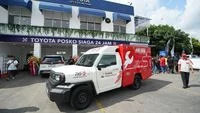
The Indonesian light commercial vehicle sector has witnessed a transformative addition with the market introduction of the Toyota Hilux Rangga, a versatile platform engineered to address the diverse demands of modern enterprises, small and medium-sized enterprises (SMEs), and public sector initiatives. Positioned strategically beneath the traditional heavy-duty Hilux 4×4 line, the Hilux Rangga has quickly captured the attention of business operators, logistics providers, and government agencies alike due to its high degree of adaptability, robust mechanical specifications, and accessible price point. As urban and regional supply chains continue to evolve in post-pandemic Southeast Asia, automotive manufacturers are increasingly required to offer multi-purpose chassis solutions rather than single-purpose transport units. Toyota Astra Motor (TAM), the sole distributor of Toyota vehicles in Indonesia, has leaned heavily into this philosophy, marketing the vehicle not merely as a pickup truck, but as a comprehensive business ecosystem capable of morphing into an ambulance, a mobile banking unit, a firefighter vehicle, or a refrigerated delivery truck.
Strategic Positioning and the Business Ecosystem
The conceptualization of the Toyota Hilux Rangga stems from a deep market analysis indicating that contemporary business operators require low operational overhead coupled with maximum configuration flexibility. According to senior leadership at Toyota Astra Motor, the vehicle was envisioned as a direct answer to the complex supply chain requirements observed across various commercial sectors in the archipelago.
"Hilux Rangga is not just a commercial vehicle, but a business solution that can be customized for a variety of needs, ranging from MSME logistics, agriculture, public services, to mining," stated TAM Vice President Jap Ernando Demily during a recent industry briefing. This design philosophy allows fleet managers and individual entrepreneurs to tailor the vehicle chassis to highly specialized operational environments. Whether deployed in the rugged terrain of remote mining concessions in Kalimantan or navigating the congested urban arteries of Jakarta for last-mile courier services, the vehicle maintains structural integrity and mechanical dependability.
The adaptability of the platform is largely attributed to its engineering architecture, which features a robust ladder-frame chassis shared with its heavier sibling, the standard Toyota Hilux, yet optimized specifically for commercial utility. The vehicle boasts a payload capacity of up to 1.2 tons, complemented by a flat cargo deck equipped with a three-way opening system that dramatically streamlines the processes of loading and unloading bulky goods. Furthermore, the incorporation of a semi-bonnet design—as opposed to a traditional cab-over configuration—enhances front-end crash safety and improves cabin ergonomics, reducing driver fatigue during long-haul logistics operations.
Diverse Industrial and Public Sector Conversions
One of the most compelling aspects of the Toyota Hilux Rangga lifecycle in Indonesia is its rapid integration into both private commercial fleets and government-backed public service programs. The versatility of the platform has enabled a wide array of coachbuilders and conversion specialists to develop bespoke bodies tailored to specific societal and industrial requirements.
In alignment with recent governmental priorities, several units have been custom-built to support the Free Nutritious Meal (Makanan Bergizi Gratis or MBG) program, acting as mobile distribution hubs to transport provisions efficiently to schools and community centers. In the cold-chain logistics sector, the Hilux Rangga Cold Box (Moda) variant has emerged as a vital asset for transporting perishable commodities, pharmaceuticals, and frozen foods across regional boundaries without compromising temperature integrity.
For industrial maintenance and field operations, the Hilux Rangga Flatdeck has been successfully deployed as a maintenance support vehicle, carrying heavy tools, diagnostic equipment, and spare parts directly to remote job sites. In the financial sector, the introduction of the ACC Mobile Service variant represents an innovative approach to rural banking and financial inclusion, providing secure, mobile access points for communities residing in Indonesia’s outermost and isolated regions.
Public safety and urban mobility have also benefited from the vehicle’s flexibility. Specialized firefighting units (Firefighter) have been engineered on the Rangga chassis to provide rapid-response capabilities in narrow urban alleyways where standard fire trucks struggle to maneuver. Additionally, urban transport trials initiated in November 2024 have seen the platform converted into Mikrotrans public passenger vehicles for the Transjakarta network, highlighting its potential to replace aging fleet inventories in metropolitan mass transit systems.
Comprehensive Technical Specifications and Powertrain Options
Underneath its utilitarian exterior, the Toyota Hilux Rangga is powered by proven powerplant configurations designed to balance thermal efficiency, torque delivery, and compliance with stringent environmental standards. In the Indonesian market, the vehicle is exclusively offered in a 4×2 drivetrain configuration. Toyota Astra Motor has clarified that there are currently no immediate plans to introduce a 4×4 variant of the Rangga, as the heavy-duty 4×4 pickup segment is already comprehensively serviced by the flagship Toyota Hilux line, thereby maintaining a clear demarcation between the brand’s commercial and lifestyle-recreation offerings.
The mechanical lineup comprises both diesel and gasoline internal combustion engines, all certified to EURO 4 emission standards to comply with national environmental regulations:
Diesel Engine Variant:
- Engine Code: 2GD-FTV
- Displacement: 2,393 cc, 4-cylinder in-line
- Induction: VNT Turbocharger with Common-rail direct injection
- Maximum Power: 149 PS at 3,400 rpm
- Maximum Torque (Manual): 343 Nm available from 1,400 to 2,800 rpm (paired with a 5-speed manual transmission)
- Maximum Torque (Automatic): 400 Nm available from 1,600 to 2,000 rpm (paired with a 6-speed automatic transmission)
Gasoline Engine Variant:
- Engine Code: 1TR-FE
- Displacement: 1,998 cc, 4-cylinder in-line
- Valve Train: Dual VVT-i (Variable Valve Timing-intelligent)
- Maximum Power: 139 PS at 5,600 rpm
- Maximum Torque: 183 Nm at 4,000 rpm (paired with a 5-speed manual transmission)
This dual-fuel strategy ensures that fleet buyers can select the powertrain that best matches their operational profile, whether they prioritize the low-end pulling power and fuel economy of the diesel VNT unit for heavy payloads or the smooth, lower-maintenance urban utility of the gasoline engine.
Market Pricing and Import Logistics
Currently imported as completely built-up (CBU) units from Toyota’s manufacturing facilities in Thailand—a major regional hub for light commercial vehicle production—the Hilux Rangga enters the Indonesian market at a highly competitive price point designed to disrupt the entry-to-mid-level commercial vehicle segment.
Retail pricing across the various base configurations spans from Rp194.3 million for the most accessible entry-level variants up to Rp309.6 million for the fully-optioned automatic transmission models. This pricing structure places the vehicle in direct competition with established light commercial rivals, while its superior payload capacity, modern safety layout, and extensive factory-backed conversion options provide a distinct value proposition.
Broader Economic Implications and Industry Outlook
The introduction and rapid adoption of the Toyota Hilux Rangga carry significant economic implications for Indonesia’s commercial transport landscape. As micro, small, and medium-sized enterprises increasingly digitize and expand their operational footprints, the demand for reliable, cost-effective, and adaptable logistics assets has surged.
By offering a modular chassis architecture, Toyota has effectively reduced the barrier to entry for businesses requiring specialized transport vehicles. Rather than commissioning expensive, custom-fabricated chassis from scratch, fleet operators can utilize the standardized mounting points and engineering blueprints associated with the Rangga platform. This standardization not only lowers capital expenditure for startup logistics firms but also simplifies maintenance schedules and spare parts inventory management for large corporate fleets.
Furthermore, the alignment of the vehicle with government-led social programs—such as nutritional distribution and public transit modernization—demonstrates the platform’s utility as an instrument of national development. As municipal governments seek sustainable, locally maintainable solutions for public service delivery, vehicles like the Hilux Rangga offer a pragmatic bridge between heavy commercial utility and passenger vehicle comfort.
In summary, the Toyota Hilux Rangga represents a calculated strategic pivot by Toyota Astra Motor to capture a dominant share of Indonesia’s light commercial vehicle market. Through a combination of robust performance metrics, extensive customization potential, diverse powertrain options, and aggressive pricing, the platform has established a new benchmark for commercial utility vehicles in the region, promising sustained growth and widespread adoption across multiple industrial sectors in the years ahead.
