
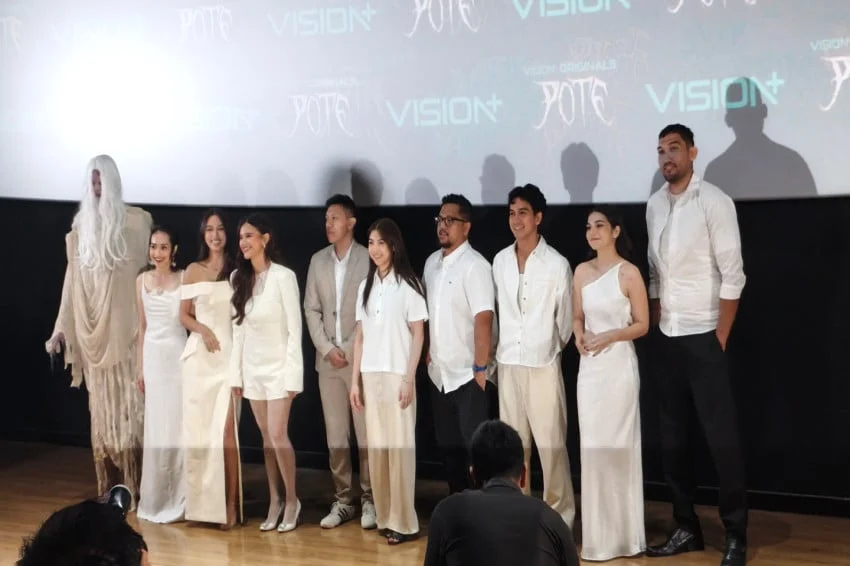
The physical demands of modern cinematic and episodic storytelling often require actors to undergo rigorous preparations, ranging from extreme physical weight fluctuations to mastering intricate martial arts choreography. However, for Indonesian actor Daniel Ekaputra, his primary trial on the set of the upcoming Vision+ original series Pote involved an entirely different kind of endurance: navigating a grueling, four-hour daily prosthetic makeup regimen to bring the titular ghostly entity to life. Speaking candidly during the official series press conference held in Jakarta on Saturday, September 19, 2026, Ekaputra detailed the meticulous and time-consuming process required to transform into a terrifying spirit whose visual fidelity relies heavily on high-definition, close-up camera angles.
The production of suspense and horror content within the Indonesian streaming market has seen a massive surge in investment, technical sophistication, and audience demand over recent years. As local platforms like Vision+ continue to compete directly with international streaming giants, the standard for practical effects, creature design, and cinematic world-building has risen exponentially. Within this competitive landscape, the psychological and physical horror elements of Pote are positioned as a central pillar of the series’ marketing and artistic identity. By committing to extensive practical makeup rather than relying entirely on digital computer-generated imagery (CGI), the production team ensured a tactile, visceral realism that directly impacts the actors on set, particularly Ekaputra, who bore the brunt of the prosthetic transformation.
Main Facts of the Production and Character Design
The core revelation from the Jakarta press conference centered on the intricate nature of the Pote character design. According to Ekaputra, the spectral entity’s physical appearance was meticulously crafted to withstand the scrutiny of frequent close-up shots, which form a signature stylistic choice of the series’ direction. In contemporary high-end television production, close-up cinematography demands flawless execution from the special effects makeup department, as every texture, edge, and color tone of a prosthetic piece is exposed under high-intensity cinematic lighting.
To achieve this level of detail, Ekaputra was required to report to the makeup chair up to four hours before his scheduled filming call time. This intensive daily ritual involved the application of complex prosthetic layers, skin-safe adhesives, custom painting, and specialized contact lenses designed to evoke a chilling, otherworldly aura. When asked by members of the press about the psychological and physical toll of enduring such a lengthy preparation process every single day of production, Ekaputra did not shy away from describing the sheer complexity involved, characterizing the routine as exceptionally complicated and demanding, while maintaining a lighthearted demeanor about how he managed the downtime.
"This form of Pote is very, very detailed, especially because there are so many close-up shots," Ekaputra explained to the assembled media outlets during the Saturday press conference. "So, the preparation that required the most time was definitely the makeup. The makeup process itself took a minimum of four hours." Despite the logistical hurdles and the physical confinement of sitting motionless while special effects artists worked meticulously on his face and upper body, the actor found a pragmatic way to cope with the hours spent in the chair. "It was really complicated, honestly," he admitted with a laugh. "But I basically just slept while they did the makeup."
Background Context of the Vision+ Original Series Pote
The series Pote represents another strategic step by Vision+, a leading Indonesian subscription video-on-demand (SVOD) service, to capture a larger share of the domestic and regional Southeast Asian horror market. Horror remains one of the most resilient and universally consumed genres across the archipelago, drawing millions of viewers who appreciate both traditional folklore-inspired narratives and modern psychological thrillers. By greenlighting high-concept original series with robust production values, platform executives aim to elevate local storytelling standards and attract top-tier talent from across the Indonesian film industry.
Development on Pote began months prior to its official announcement, with pre-production phases focusing heavily on creature design, casting, and script development. The creative team understood that for the horror elements to resonate with a sophisticated audience accustomed to global horror standards, the visual presentation of the antagonist—the ghost Pote—had to avoid clichés and deliver genuine dread. This necessitated a collaborative effort between the show’s directors, the director of photography, and the special effects makeup department to ensure that the practical effects would read convincingly on screen without breaking immersion during intense dramatic sequences.
Chronology of the Press Conference and Promotional Rollout
The official press conference on Saturday, September 19, 2026, served as the primary media launchpad for Pote, bringing together the core cast, creative directors, and platform executives in Jakarta. The event was structured to provide journalists and industry analysts with a comprehensive overview of the series’ thematic elements, production challenges, and character arcs.
Leading up to the event, promotional campaigns had teased the eerie atmosphere of the show, but details regarding the physical realization of the supernatural elements remained largely under wraps until the cast and crew took the stage. The disclosure by Ekaputra regarding his four-hour makeup sessions provided a tangible narrative hook for entertainment journalists, highlighting the behind-the-scenes dedication required to execute high-end streaming content in Indonesia. The press conference also featured updates from co-stars, including Audi Marissa, who discussed her role as a medical doctor in the series and the extensive research she undertook to master authentic medical terminology prior to stepping onto the set.
Supporting Data: The Evolution of Practical Effects in Indonesian Streaming
The reliance on practical makeup effects over purely digital solutions marks a notable trend in contemporary Indonesian filmmaking and streaming production. Data from regional entertainment market analysts indicates that audiences respond more favorably to physical creature designs and tactile gore or horror effects because they create a greater sense of immediate danger and realism on screen.
However, utilizing heavy prosthetics introduces significant logistical challenges for production schedules. A four-hour daily makeup application means that an actor’s available working window within standard labor regulations is immediately compressed, forcing assistant directors and production coordinators to meticulously schedule scene blocks. For a series like Pote, where the ghost is a recurring, pivotal presence across multiple episodes, the cumulative hours spent in the makeup chair over the course of principal photography represent a massive investment of time, financial resources, and artistic labor.
Industry Implications and the Demands on Modern Actors
The physical demands experienced by Daniel Ekaputra reflect a broader evolution in what is expected of actors working within the premium streaming sector. No longer is acting confined to emotional delivery and line memorization; physical endurance, adaptability to harsh costume and prosthetic conditions, and collaboration with technical departments have become essential competencies for modern performers.
For actors tackling monster or ghost roles, the challenge lies in conveying genuine emotion, menace, or tragedy through layers of silicone, latex, and theatrical paint. Ekaputra’s ability to navigate this barrier—using the extensive preparation time as a period of psychological transition into character—underscores the professionalism permeating the Indonesian acting community. As local productions scale up in budget and complexity, the symbiotic relationship between actors and technical departments, particularly special effects and makeup teams, will continue to dictate the visual and narrative success of genre television in Southeast Asia.
Broader Impact on the Indonesian Entertainment Industry
The anticipation surrounding Pote reflects the maturation of Indonesia’s digital entertainment ecosystem. With platforms like Vision+ aggressively funding original content, local creators are granted the financial and technical runway needed to experiment with high-concept narratives and sophisticated visual effects. The willingness of actors to undergo grueling physical transformations for streaming series signals a high level of dedication to elevating the craft.
As Pote moves closer to its premiere date following the successful promotional rollout in Jakarta, industry observers will be watching closely to see how effectively the practical effects translate to the screen. The rigorous four-hour daily routines endured by Daniel Ekaputra, combined with the comprehensive medical research conducted by cast members like Audi Marissa, point toward a production that values authenticity and technical excellence. Ultimately, these behind-the-scenes efforts contribute to a growing body of work that continues to redefine the boundaries of Indonesian television, setting a new benchmark for horror storytelling in the region.
