
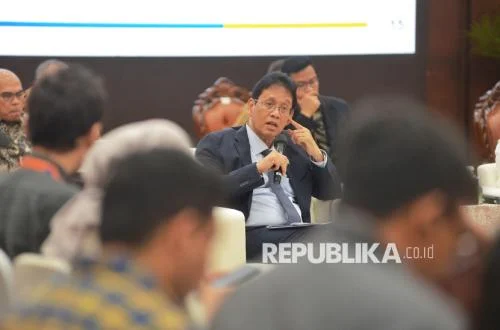
JAKARTA – Indonesia’s financial landscape is witnessing a concerted effort to fortify coordination between its key economic architects, the Ministry of Finance (MoF) and Bank Indonesia (BI). Despite previous divergences in assessing banking sector liquidity, the two institutions have actively pursued measures to enhance their synergy, most notably through a strategic exchange of high-ranking officials. This proactive approach underscores a commitment to maintaining financial stability and fostering robust economic growth, as articulated by Minister of Finance Purbaya Yudhi Sadewa.
The imperative for close collaboration between the fiscal and monetary authorities became particularly evident in recent months, especially when differing perspectives on banking liquidity indicators emerged. However, Purbaya Yudhi Sadewa, addressing the press during the "APBN Kita" (Our State Budget) July 2026 conference at the Ministry of Finance Complex in Jakarta on Tuesday, July 21, 2026, affirmed that communication channels have significantly improved, leading to a stronger working relationship. "We are coordinating very closely with the Central Bank. If I spoke a few weeks ago and Ms. Destry spoke yesterday, has it improved? Yes, it has certainly improved now," Purbaya stated, indicating a positive resolution to earlier points of contention.
Strategic Personnel Exchange: A Catalyst for Cohesion
A cornerstone of this intensified synergy is a unique "tukar guling," or exchange, of senior officials between the Ministry of Finance and Bank Indonesia, a move that Purbaya highlighted as a testament to the seriousness of their commitment. This strategic personnel shift, implemented since February 2026, saw Thomas Djiwandono, formerly the Deputy Minister of Finance, transition to a new role within Bank Indonesia. Concurrently, Juda Agung, who previously served as a Member of the Bank Indonesia Board of Governors, moved to the Ministry of Finance, assuming the position of Deputy Minister of Finance.
This unprecedented cross-pollination of leadership is more than just a personnel reshuffle; it represents a deliberate institutional mechanism designed to bridge understanding, align policy perspectives, and streamline communication at the highest levels. Purbaya underscored the effectiveness of this approach with a touch of humor, remarking, "We continuously communicate with the Central Bank, so the synergy is excellent. I even imported a central bank deputy governor to become my deputy minister, and exported my deputy minister to become a BI deputy governor, to strengthen coordination between us and the Central Bank. Every Board of Governors Meeting (RDG), Mr. Juda now attends, so there are no significant ‘misses’ anymore," he explained, casting a lighthearted glance at Juda Agung seated beside him. This direct integration of perspectives aims to ensure that both fiscal and monetary policy decisions are made with a comprehensive understanding of each other’s mandates and operational realities, thereby minimizing potential friction points and fostering a more coherent national economic strategy.
The Liquidity Debate: M0 vs. INDONIA
The need for enhanced coordination became particularly apparent amidst a debate surrounding the accuracy of banking liquidity indicators. On Wednesday, July 15, 2026, during a working meeting with Commission XI of the House of Representatives (DPR RI), Minister Purbaya had raised concerns about the data utilized by the Financial System Stability Committee (KSSK). He suggested that the indicator commonly used to assess banking liquidity within KSSK – namely M0, or base money, which is released monthly by Bank Indonesia – was potentially "incorrect."
Purbaya’s contention stemmed from feedback received directly from commercial banks. While official data from institutions like BI, the Financial Services Authority (OJK), the Deposit Insurance Corporation (LPS), and the Ministry of Finance, all integral components of the KSSK (which Purbaya himself chairs), suggested ample liquidity, the reality on the ground, according to the banks, was different. "I asked LPS, BI, (Ministry of) Finance, everyone said (liquidity) was ample, but their data was all wrong. So, there was a data error or an indicator error that KSSK has been using all this time. I have asked the KSSK team to fix it, but apparently, they haven’t been able to yet," Purbaya revealed during the parliamentary session. This contradiction highlighted a critical disconnect between reported figures and the operational environment faced by financial institutions.
The issue of liquidity is paramount for the health of the banking sector and the broader economy. Adequate liquidity ensures that banks can meet their short-term obligations, facilitate lending, and support economic activity. Purbaya pointed out that the growth in M0 had indeed increased following the government’s policy, initiated in September 2025, to place its Budget Surplus (SAL) funds from BI into commercial banks. This policy was specifically designed as a fiscal stimulus to inject liquidity into the banking system, with the ultimate goal of boosting credit growth and supporting the real sector. However, the perceived discrepancy between the rising M0 data and the banks’ complaints suggested that the base money indicator alone might not fully capture the nuanced dynamics of market liquidity or its accessibility to banks for lending purposes.
Bank Indonesia’s Counter-Perspective and Indicators
In response to these concerns, Senior Deputy Governor of Bank Indonesia, Destry Damayanti, had previously affirmed that banking liquidity remained well-maintained and was sufficient to support intermediation targets. BI’s assessment was based on different, albeit complementary, indicators. Destry specifically referenced the Indonesia Overnight Index Average (INDONIA), which serves as a key benchmark for interbank overnight interest rates. INDONIA provides a real-time snapshot of liquidity conditions in the money market, reflecting the cost of borrowing and lending among banks.
According to BI’s data, INDONIA reached 6.62 percent on June 18, 2026, before subsequently declining to 6.17 percent by July 16, 2026. This fluctuation and subsequent reduction in the interbank rate were presented by BI as evidence of improving liquidity conditions, suggesting that banks were able to manage their short-term funding needs effectively. The central bank’s focus on INDONIA reflects its mandate to manage monetary policy and maintain stability in financial markets, where the efficient flow of funds between banks is crucial. The divergence in indicators – M0 favored by the MoF for broader liquidity and SAL impact, versus INDONIA by BI for real-time interbank market conditions – underscored the complexity of liquidity assessment and the need for a harmonized understanding within KSSK.
Resolution and Affirmation of BI’s Performance
The subsequent statements from Minister Purbaya on July 21, 2026, signaled a positive shift, indicating that the initial disagreements had largely been addressed through ongoing dialogue. He expressed confidence that the situation had improved, underscoring the effectiveness of the strengthened communication channels. Furthermore, Purbaya commended Bank Indonesia’s performance, acknowledging the positive outcomes of its policies. "I think the Central Bank has done its job well because credit grew by 11.5 percent. That is an indication that policies are being monitored and directed properly," he asserted.
The 11.5 percent credit growth figure is a significant economic indicator. Robust credit expansion is vital for stimulating investment, consumption, and overall economic activity. It suggests that despite earlier concerns about liquidity, the banking sector has been able to channel funds effectively into the real economy, a primary objective of both fiscal and monetary policy. This endorsement from the Minister of Finance validates BI’s efforts in managing monetary policy and liquidity to support the national economic agenda. It also implies that the policy of placing SAL funds into banks, combined with BI’s monetary operations, has yielded tangible results in terms of boosting lending.
The Role of KSSK and Data Accuracy for Financial Stability
The Financial System Stability Committee (KSSK) plays a pivotal role in safeguarding Indonesia’s financial system. Comprising the Minister of Finance, the Governor of Bank Indonesia, the Chairman of the Board of Commissioners of the Financial Services Authority (OJK), and the Chairman of the Board of Commissioners of the Deposit Insurance Corporation (LPS), KSSK is mandated to coordinate policies and actions to prevent and manage financial crises. Purbaya’s earlier remarks about "incorrect data" within KSSK highlight the critical importance of accurate, consistent, and commonly agreed-upon indicators for effective policymaking.
The challenge lies in reconciling different data sources and interpretations among the member institutions, each with its specific mandate and analytical tools. The Ministry of Finance focuses on fiscal stability and government financial health, Bank Indonesia on monetary stability and price control, OJK on financial sector supervision, and LPS on deposit insurance. While their objectives are complementary, their operational perspectives and preferred indicators can sometimes diverge. The incident underscores an ongoing need for KSSK to continuously refine its analytical frameworks and ensure that all members operate from a unified understanding of financial conditions. Improving data quality and methodology within KSSK is not merely a technical exercise; it is fundamental to the committee’s ability to provide early warnings, formulate effective responses, and ultimately maintain public confidence in the financial system. The commitment to address these data discrepancies reflects a mature approach to inter-agency cooperation, prioritizing shared objectives over institutional differences.
Broader Implications for Economic Policy and Stability
The intensified synergy between the Ministry of Finance and Bank Indonesia, as demonstrated by the official exchange and the resolution of liquidity debates, carries significant implications for Indonesia’s economic stability and growth trajectory. First, it fosters greater coherence between fiscal and monetary policies. When these two pillars of economic management work in tandem, they can more effectively steer the economy through challenges, mitigate risks, and capitalize on opportunities. For instance, coordinated efforts can optimize the impact of government spending and central bank interest rate decisions, leading to more predictable outcomes for inflation, exchange rates, and economic output.
Second, enhanced coordination bolsters investor confidence. A unified stance from key economic regulators signals stability and predictability, which are crucial for attracting both domestic and foreign investment. Investors typically shy away from economies where policy uncertainty or inter-agency conflicts are prevalent. The clear communication and proactive problem-solving exhibited by the MoF and BI project an image of a well-managed economy capable of navigating complex financial dynamics.
Third, this collaborative model is vital for navigating the evolving global economic landscape, which is often characterized by volatility and unforeseen shocks. Whether responding to global inflationary pressures, supply chain disruptions, or capital outflow risks, a synchronized response from the MoF and BI ensures that Indonesia is better equipped to protect its financial system and economy. The proactive measures taken, such as the strategic personnel exchange, aim to institutionalize this cooperation, making it more resilient and less susceptible to individual leadership changes.
Looking ahead, the commitment to continuous dialogue and data harmonization within KSSK and between its leading institutions will be paramount. As Indonesia strives for sustained economic growth and aims to achieve its long-term development goals, the robustness of its financial system, underpinned by seamless inter-agency collaboration, will remain a critical success factor. The recent developments underscore a positive trajectory towards a more integrated and resilient financial governance framework in Indonesia.
