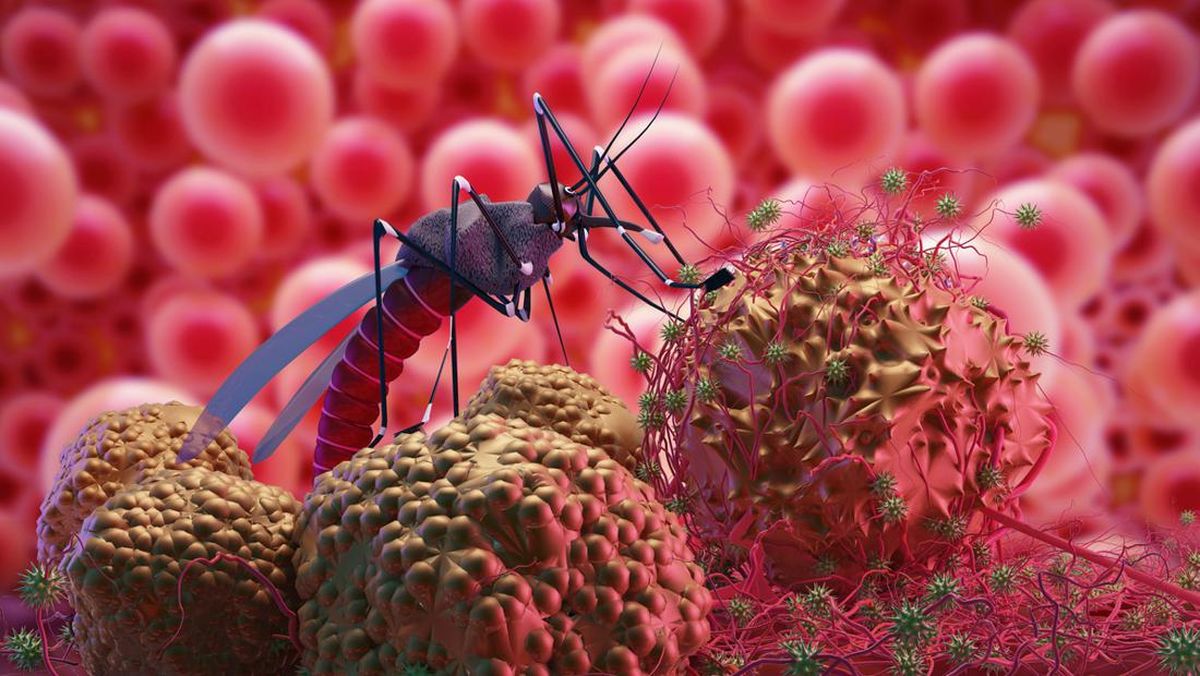
Jakarta — In a resolute push to eradicate one of the tropics’ most persistent public health threats, the Indonesian government has officially established an ambitious target of achieving zero deaths from dengue fever by the year 2030. This landmark commitment was announced by Deputy Minister of Health Benjamin Paulus Octavianus, who underscored that tackling the vector-borne disease requires a paradigm shift: viewing prevention not as an operational expense, but as a crucial investment in national public health resilience and human capital.
To turn this vision into a reality, the Ministry of Health is currently drafting the National Action Plan (RAN) for Dengue Control spanning 2006 to 2029 (projected for the 2026–2029 operational timeline). This comprehensive blueprint will serve as the guiding policy framework for federal, regional, and cross-sectoral interventions, aiming to streamline surveillance, enhance early detection systems, optimize clinical management, and foster multisectoral collaboration across the archipelago.
The Looming Global and National Crisis
Dengue remains an extraordinary public health challenge for Indonesia, a tropical nation characterized by hyperendemic transmission conditions where the Aedes aegypti mosquito thrives year-round. The urgency of addressing this crisis is further highlighted by international milestones. According to data from the World Health Organization (WHO), 2024 marked a historically unprecedented peak in global dengue cases, placing immense strain on healthcare systems worldwide.
In Indonesia, the repercussions of this epidemiological crisis extend far beyond clinical wards, deeply penetrating the national economy and household finances. A comprehensive study conducted by the Center for Health Financing and Health Insurance Management Policy (Pusat KPMAK) at Universitas Gadjah Mada (UGM) revealed staggering economic figures. In 2024 alone, the total economic burden of dengue in Indonesia was estimated to reach a staggering US$550.9 million, translating to nearly Rp9 trillion.
Furthermore, the study projected more than two million hospital visits nationwide attributed to dengue infections. For patients covered under the National Health Insurance scheme (JKN—Jaminan Kesehatan Nasional), direct medical costs alone accounted for approximately Rp3 trillion. However, researchers point out a critical gap: public health insurance does not entirely shield families from the financial shock of the disease.
The Hidden Household Burden
While the JKN absorbs a significant portion of inpatient treatment bills, families grappling with a dengue diagnosis continue to face substantial out-of-pocket expenses. These non-medical costs include daily transportation to and from healthcare facilities, meals, accommodation for attending family members, and—perhaps most critically—a loss of household income while caregivers take time off work to nurse patients back to health.
Diah Ayu Puspandari, a senior researcher at UGM, noted that these findings illustrate how dengue inflicts a dual blow on both the macro-level healthcare financing system and micro-level household savings.
"Our findings confirm that dengue imposes a massive national economic burden, touching both the health financing system and the financial stability of Indonesian households. Crucially, we must observe that JKN does not fully eliminate the economic burden at the household level," Puspandari stated.
According to UGM data, patients enrolled in the JKN system still incur out-of-pocket expenses averaging between Rp1.09 million and Rp1.33 million per clinical episode. For uninsured patients, this financial burden escalates dramatically, ranging from Rp4.27 million to Rp5.60 million per episode. For lower-income households, such expenditures can trigger severe financial distress, driving home the necessity of robust primary prevention measures to stop infections before they require hospitalization.
Building a Unified National Movement
Recognizing that clinical treatment alone cannot outpace the virus, public health advocates and civil society groups are rallying behind a unified front. Suir Syam, Chairman of KOBAR Lawan Dengue, emphasized that despite its yearly toll, dengue is an entirely manageable and preventable disease if collective action is successfully mobilized.
"Dengue remains a serious health issue because every year it still claims lives, but this is not an uncontrollable disease," Syam remarked during a public health briefing.
Timed closely with the momentum of ASEAN Dengue Day 2026, stakeholders are calling for an all-hands-on-deck approach. The movement urges government agencies, healthcare professionals, academic institutions, private enterprises, mass media outlets, civil society organizations, and local communities to institutionalize a national movement against dengue. This grassroots-to-federal strategy emphasizes vector control, vector management, continuous public education, and rapid early detection.
Multi-Layered Intervention Strategies
To effectively break the chain of transmission, health authorities are championing a diversified portfolio of interventions. The cornerstone of community-level prevention remains the classic 3M Plus Mosquito Nest Eradication (PSN) campaign: draining and cleaning water storage containers, tightly covering water reservoirs, and recycling or properly disposing of discarded items that can accumulate stagnant rainwater and serve as breeding grounds for mosquitoes.
Beyond traditional vector control, Indonesia is increasingly integrating modern biomedical innovations into its public health arsenal. Among these is the deployment of Wolbachia-infected mosquitoes—a groundbreaking biological control method designed to reduce the capacity of Aedes aegypti to transmit the dengue virus. Concurrently, public health officials are upgrading epidemiological surveillance systems, establishing early warning networks, and refining clinical treatment protocols to prevent severe complications and mortality.
Another critical component gaining traction is dengue vaccination. A cost-effectiveness analysis study conducted by the Center for Child Health (CCHPRO) at Universitas Gadjah Mada indicated that introducing dengue vaccination for school-aged children could serve as an exceptionally cost-effective public health intervention. The study projects that a systematic immunization program could avert roughly 1.1 million to 1.3 million Disability-Adjusted Life Years (DALYs)—representing healthy years of life lost to illness, disability, or premature death—over a 20-year period.
Syam stressed that these technological and medical advancements must be embraced as vital pillars of a holistic prevention framework.
"The good news is that dengue prevention efforts are growing stronger. Alongside education, early detection, and vector control, Indonesia also possesses various health innovations, including Wolbachia technology and dengue vaccination, which can be considered part of a broader prevention strategy," Syam explained.
Policy Implications and Moving Forward toward 2030
The convergence of rising global case numbers, heavy household financial burdens, and the availability of advanced medical countermeasures has fundamentally transformed how policymakers view vector-borne disease management. Experts argue that shifting the narrative from reactive treatment to proactive prevention is the only viable path forward.
By laying out the National Action Plan (RAN) for Dengue Control 2026–2029, the Ministry of Health aims to bridge policy gaps and harmonize local execution with national goals. Achieving "Zero Dengue Deaths by 2030" will require sustained political will, consistent budgetary allocation, community empowerment, and strict adherence to integrated vector management principles.
As Indonesia navigates its status as a hyperendemic tropical zone, the success of the 2030 target will ultimately depend on whether public health stakeholders can successfully reframe expenditure on vector control and vaccination. As underscored by public health leaders, treating prevention as an investment rather than an expense will not only save thousands of lives in the years to come, but also safeguard the economic security of millions of Indonesian families.