
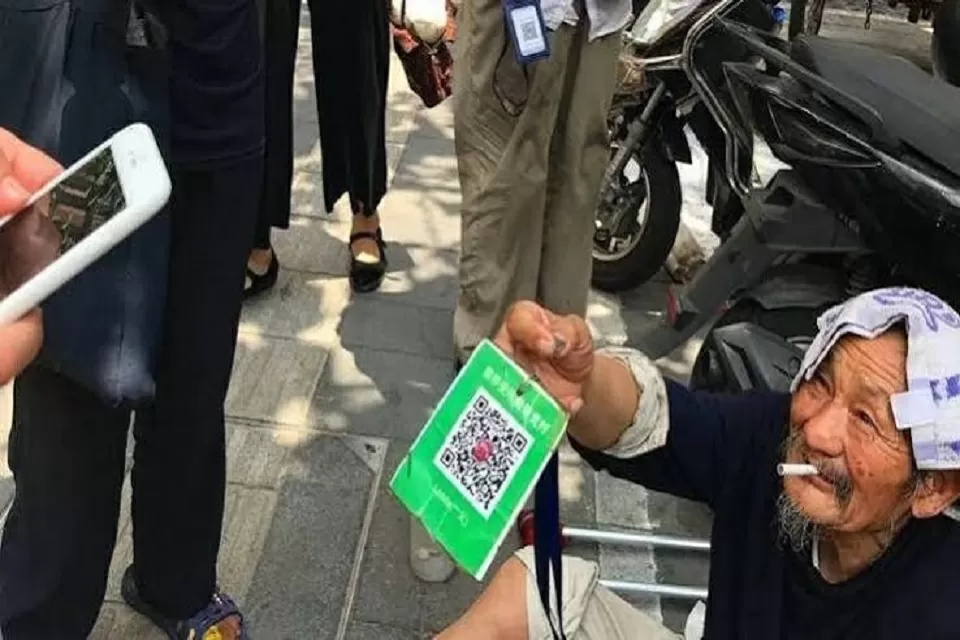
The landscape of panhandling has undergone a profound transformation in recent years, shifting from traditional, localized solicitation to sophisticated, tech-enabled operations that challenge both social order and moral frameworks. While the image of the destitute individual remains a reality for many, a growing segment of society has professionalized begging, utilizing digital payment systems such as QR codes and organized crowdfunding schemes to maximize revenue. This evolution has prompted a critical examination of the practice, particularly regarding the intersection of economic survival, social deception, and religious ethics.
The Professionalization of Solicitation
In contemporary urban environments, the traditional markers of poverty—tattered clothing, visible physical distress, and public displays of hardship—are no longer the universal prerequisites for panhandling. Investigations have revealed that many individuals engaging in begging today operate with a high degree of business acumen. This includes the use of clean, professional attire, the operation of modern communication devices, and in some cases, the utilization of personal transport.
The shift toward digital integration is perhaps the most significant change. By displaying QR codes for mobile banking or e-wallet transfers, solicitors can bypass the need for physical cash, tapping into a cashless economy that is increasingly prevalent in metropolitan areas. Furthermore, the rise of group-based solicitation, often masquerading as legitimate charity or community fundraising, has complicated the public’s ability to discern between genuine need and opportunistic exploitation. These groups often manufacture elaborate proposals for non-existent social projects, diverting funds meant for altruistic purposes into personal bank accounts.
Chronology of a Changing Phenomenon
The history of panhandling is as old as organized society, but the transition to "professional begging" gained significant momentum alongside the digital revolution of the early 21st century.
- Pre-2010s: Panhandling was primarily an individual, localized activity characterized by direct, face-to-face requests for small denominations of cash.
- 2015-2019: The rise of ride-sharing and food delivery platforms created a new visibility for the urban poor, while simultaneously providing a template for "gig-economy" style begging, where solicitors began to mimic the appearance of laborers.
- 2020-2022: The COVID-19 pandemic acted as a catalyst for digital adoption. As social distancing mandates reduced physical contact, beggars began experimenting with remote solicitation, including the use of social media and QR codes to maintain revenue streams without physical interaction.
- 2023-Present: The phenomenon has stabilized into a dual-track system: the "traditional" destitute population and the "professional" class, who treat solicitation as a full-time, revenue-generating occupation.
Socio-Economic Data and Analysis
Sociological studies suggest that the professionalization of begging is often a response to the "efficiency" of the modern urban economy. In many developing nations, the income generated from organized solicitation can significantly outpace the minimum wage for unskilled labor.
Data from municipal social services indicate that, in several major cities, a high percentage of those detained during anti-begging sweeps are not suffering from chronic homelessness. Instead, they are part of a mobile network that travels between urban centers to capitalize on high-traffic areas. The implications for public policy are severe; social workers argue that when begging becomes a lucrative career path, it undermines state-funded social welfare programs, as the "business" of begging often provides more immediate cash flow than the bureaucratic hurdles of government assistance.
Islamic Perspectives on Tasawwul
The ethical and religious dimensions of begging, or tasawwul in Arabic, provide a robust framework for understanding why many religious authorities view this shift with deep concern. Within Islamic jurisprudence, tasawwul is broadly defined as the act of asking others for wealth. Scholars, such as Ustaz Muhammad Wasitho Abu Fawaz, emphasize that the legitimacy of such requests is strictly defined by the necessity of the requester and the purpose of the funds.
In Islamic tradition, the concept of charity (zakat and sadaqah) is designed to support the truly vulnerable—those whose economic circumstances have rendered them incapable of providing for their basic needs. However, the use of deceit to obtain these funds is viewed as a form of corruption. If an individual has the capacity to work, or if they are misrepresenting their economic status to solicit money for private gain rather than for the betterment of the community or religious obligations, the act is generally condemned by religious scholars.
Scriptural Warnings and Ethical Implications
The warning against professionalizing dependency is deeply rooted in prophetic tradition. Islamic texts contain stern admonitions against the habit of begging when one has the physical and mental capacity to earn a livelihood.
One of the most frequently cited warnings comes from a hadith narrated by Abdullah bin Umar, in which the Prophet Muhammad stated that a person who persists in begging—without a genuine, dire need—will appear on the Day of Judgment in a state of profound shame, stripped of the dignity of their face. This teaching is interpreted by theologians as a metaphorical and literal warning about the loss of human dignity that occurs when an individual chooses dependency over self-reliance.
A secondary narrative, often attributed to Abu Hurairah, reinforces this by highlighting that the act of asking is a "scratching" on one’s own face. These warnings are not intended to discourage true charity toward the poor, but rather to discourage the creation of a societal culture where human effort is devalued and exploitation of the empathetic becomes a viable income strategy.
Broader Societal Impact and Policy Responses
The growth of professional begging has forced government agencies to reconsider how they handle public solicitation. Traditional "handouts" are increasingly seen by urban planners as contributors to the growth of organized begging networks.
- Public Awareness Campaigns: Governments are shifting focus toward encouraging citizens to donate to verified charitable organizations rather than individuals on the street. This ensures that aid reaches those who are vetted and truly in need.
- Regulation of Digital Solicitation: Some jurisdictions are exploring regulations on the use of digital payment methods in public spaces, particularly when these are used to solicit funds without municipal permits.
- Support for Labor Reintegration: The most successful policies have been those that offer skills training and employment support, aiming to transition those who have fallen into the cycle of begging back into the formal labor market.
Conclusion: The Need for Discernment
The evolution of the beggar from a desperate figure to a professional operator using digital tools is a reflection of the adaptability of human survival strategies. However, this evolution necessitates a shift in how the public responds. While compassion remains a core human virtue, the rise of deceptive, organized, and professionalized begging suggests that discernment is now a necessary component of charity.
By understanding the religious, social, and economic implications of tasawwul and professional dependency, society can better protect the resources intended for the truly vulnerable. The challenge for modern urban centers is to dismantle the structures that reward exploitation while simultaneously strengthening the social safety nets that provide a legitimate path for those who have nowhere else to turn. The future of public aid must be built on transparency, accountability, and the promotion of self-sufficiency, ensuring that charity remains a tool for empowerment rather than a subsidy for professional deception.
