
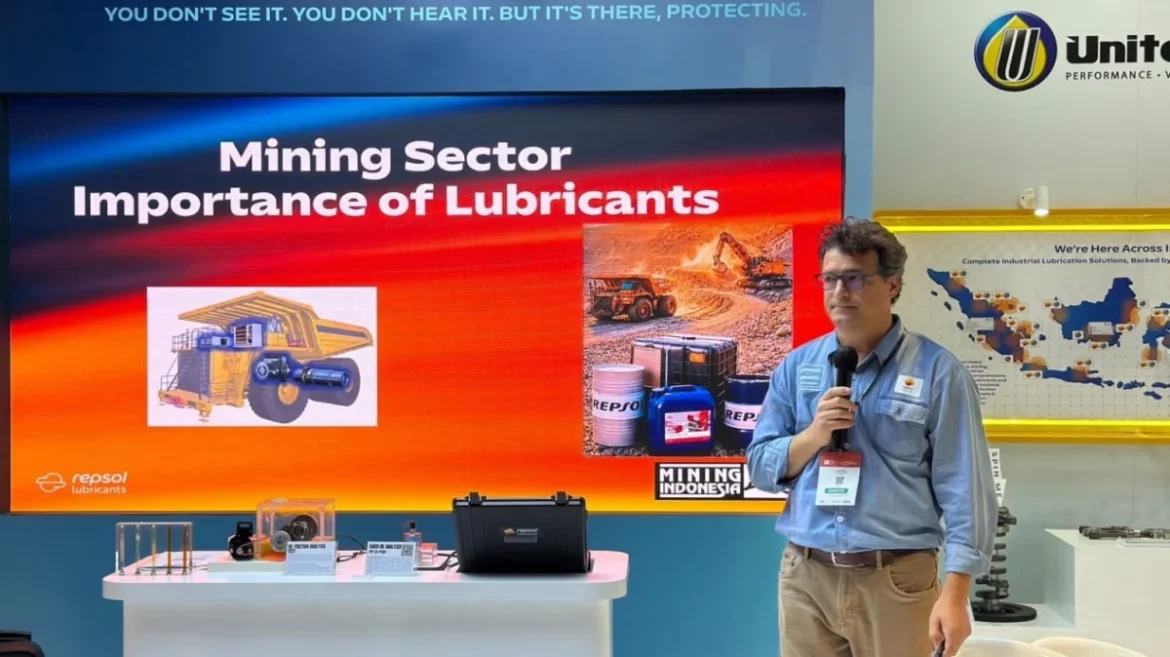
The landscape of the Indonesian mining industry is currently undergoing a significant technical transformation as the nation accelerates its transition toward higher biodiesel blends. As the government pushes for the implementation of B50—a fuel blend containing 50 percent fatty acid methyl esters (FAME)—heavy-duty equipment operators are finding that traditional maintenance protocols are no longer sufficient to ensure operational longevity. This critical shift was a focal point of discussion at the Mining Indonesia 2026 exhibition, held at JIExpo Kemayoran, Jakarta, from September 9 to 12, 2026, where industry leaders and lubricant manufacturers addressed the evolving demands of engine health.
The 24th Edition of Mining Indonesia: A Hub for Technical Discourse
Mining Indonesia 2026 stands as one of the largest international mining equipment and technology exhibitions in Asia. Now in its 24th year, the event serves as a nexus for stakeholders across the mining value chain, including heavy equipment manufacturers, component suppliers, lubricant engineers, and mining operators. With the mining sector accounting for a significant portion of Indonesia’s GDP, the exhibition provides a vital platform for showcasing solutions to the sector’s most pressing logistical and mechanical challenges.
This year’s edition was particularly notable for its focus on sustainability and energy efficiency. As the global shift toward decarbonization accelerates, Indonesian mining firms are looking for ways to optimize their existing fleets to run on cleaner fuels without sacrificing the high reliability required in extreme environments. The integration of biodiesel, specifically the B50 mandate, has placed a spotlight on the compatibility of lubricants with high-FAME fuels.
The Mechanics of Biodiesel: Why B50 Changes the Game
Biodiesel is chemically distinct from conventional petroleum-based diesel. While it offers the advantage of lower greenhouse gas emissions, its chemical composition presents unique challenges for internal combustion engines. High-FAME blends like B50 tend to increase the acidity of the oil, accelerate oxidation, and lead to higher levels of soot and carbon deposits within the engine.
In a heavy-duty mining environment, where engines operate under constant high loads and in abrasive, dusty conditions, these contaminants can lead to rapid lubricant degradation. If not managed properly, this degradation causes sludge buildup, ring sticking, and increased wear on critical components, potentially resulting in catastrophic engine failure and prolonged downtime.
Repsol Lubricants and the DXR 8 Solution
Recognizing these challenges, Repsol Lubricants Indonesia, in collaboration with United Oil, utilized the Mining Indonesia 2026 platform to introduce specialized solutions tailored for the Indonesian climate and fuel landscape. A key product featured was the Repsol DXR 8 SAE 15W-40 API CI-4, an oil specifically engineered for the rigors of heavy-duty diesel operations.
The performance of the DXR 8 relies on a sophisticated balance of detergent and dispersant additives. In the context of B50 usage, these additives serve two critical functions:
- Detergents: These act as a cleaning agent, preventing the formation of high-temperature deposits on piston rings and cylinder walls.
- Dispersants: These ensure that combustion byproducts—specifically soot and carbon—remain suspended in the oil rather than clumping together to form sludge.
By maintaining these contaminants in a suspended state, the engine’s filtration system can effectively remove them before they cause abrasive wear. This mechanism is essential for mining equipment, which often runs for thousands of hours in demanding conditions where oil changes are scheduled based on strict interval programs.
Expert Insights: The Importance of API CI-4 Specifications
Alejandro Werd Alonso, Head of Marketing at Repsol Lubricants Indonesia, emphasized that the mining industry requires a precision-based approach to maintenance. "The mining industry has highly specific operational requirements," Alonso stated during the event. "Equipment must function under extreme loads while maintaining maximum reliability. When you introduce a fuel blend like B50, the chemistry inside the engine changes, and the lubricant must be capable of counteracting those specific chemical stresses."
According to industry standards, the API CI-4 specification remains a vital benchmark for engines operating on higher biodiesel blends. It provides the necessary alkalinity reserve to neutralize the acidic components formed during the combustion of biodiesel. Alonso noted that for mining companies, the transition to B50 is not just about fuel procurement; it is about adjusting the entire maintenance strategy to ensure that the lubricant used is compatible with the chemical footprint of the fuel.
Chronology of Indonesia’s Biodiesel Mandate
The path to B50 is the result of a long-term government strategy to reduce dependence on fossil fuel imports and utilize domestic palm oil production. The progression has been steady:
- 2016: Mandatory implementation of B20 across the transportation and industrial sectors.
- 2020: The successful national rollout of B30, marking a significant milestone in global biofuel integration.
- 2023-2024: The commencement of pilot programs and testing for B35 and B40.
- 2026: The current phase, focusing on the infrastructure and technical readiness for B50, particularly within the heavy-industry sector.
This rapid advancement has forced engine manufacturers (OEMs) and lubricant providers to fast-track their research and development. The data collected during these transition periods suggests that while modern engines are designed to handle higher biodiesel content, the service intervals for oil changes may need to be adjusted downward to account for the faster depletion of the oil’s Total Base Number (TBN).
Broader Implications for the Mining Industry
The technical implications of the B50 mandate extend beyond just engine maintenance. For mining operations, which operate on razor-thin margins, the cost of unplanned maintenance is the primary driver of operational expenditure (OPEX).
- Supply Chain Logistics: Mining sites are often located in remote areas. Ensuring a steady supply of high-spec lubricants that can handle B50 is a complex logistical challenge that requires partnerships between local distributors and international technical experts.
- Environmental Compliance: As mining firms face pressure from investors and regulators to reduce their carbon footprint, the move to B50 is a necessary step. However, this must be balanced against the need for high-performance equipment uptime.
- Training and Knowledge Transfer: The workforce at mining sites must be trained to recognize the signs of lubricant degradation related to biodiesel. This includes performing regular oil analysis, which is becoming increasingly critical in the B50 era.
Future-Proofing Heavy Equipment
As Indonesia moves forward with its energy policy, the synergy between fuel technology and lubricant chemistry will define the efficiency of the mining sector. The discussions held at Mining Indonesia 2026 highlight that the industry is not just passively waiting for changes but is actively engineering solutions to adapt.
The introduction of products like the Repsol DXR 8 indicates that the lubricant market is shifting toward "application-specific" solutions. Rather than using generic heavy-duty oils, mining companies are increasingly opting for formulations that are tested against the specific fuel chemistry of the Indonesian market.
In conclusion, the transition to B50 represents a significant technical challenge for the Indonesian mining industry. However, through rigorous maintenance, the use of advanced additive technology, and a commitment to technical precision, the sector is well-positioned to maintain its productivity. The insights shared by industry leaders at the 2026 exhibition underscore that the longevity of mining assets in the age of biodiesel depends on the careful selection of lubricants that can withstand the unique chemical pressures of high-FAME fuels. As the industry continues to evolve, the integration of data-driven maintenance and high-performance lubricants will remain the cornerstone of operational success in the nation’s vital mining sector.
