
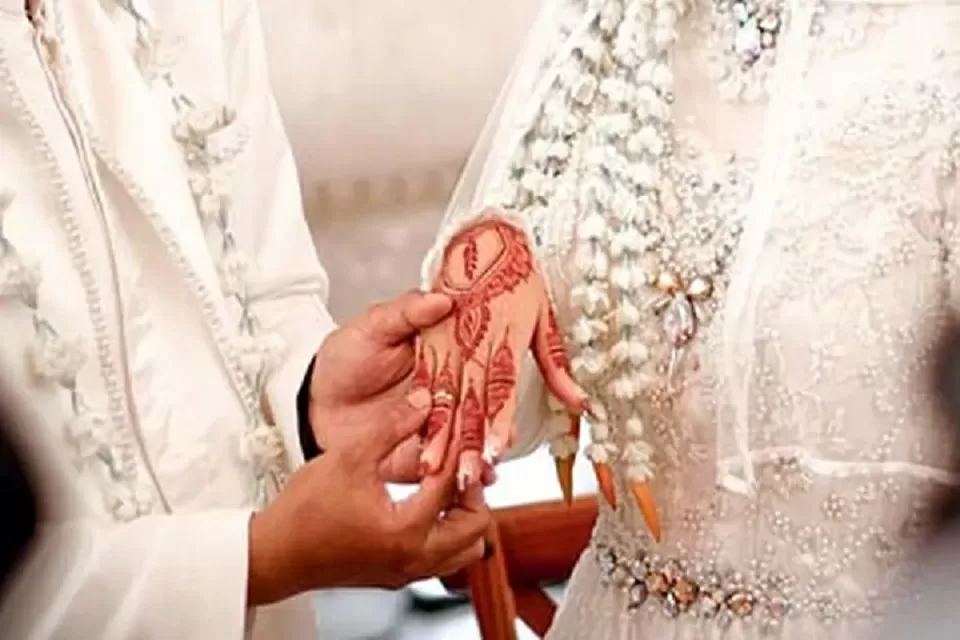
The month of Safar, the second month of the Islamic Hijri calendar, has long been shrouded in misconception and superstition in various communities, particularly concerning the timing of significant life events such as marriage. Despite clear Islamic teachings, a persistent belief that Safar is an inauspicious month, bringing misfortune, financial hardship, or general bad luck, continues to influence societal practices. This article aims to comprehensively explore the Islamic stance on marrying in Safar, dismantling these long-held myths with theological evidence, historical context, and jurisprudential consensus.
Historical Roots of Safar Superstitions
The superstitions surrounding the month of Safar trace their origins back to pre-Islamic Arabia, an era often referred to as Jahiliyyah (Ignorance). During this period, various omens and beliefs dictated daily life, and Safar became associated with misfortune for several reasons. Linguistically, the Arabic word "Safar" carries multiple meanings, two of which are particularly relevant to these historical perceptions. One meaning is "empty" or "void," which was interpreted by some early Arabs to describe the emptiness of their homes during this month as they would embark on long journeys, often for trade, hunting, or warfare. This extensive travel led to a perception of vulnerability and potential dangers on the road, fostering a sense of foreboding.
Another interpretation of "Safar" referred to a severe stomach illness, believed to be a large, deadly worm, which was thought to be contagious and particularly prevalent during this time. This belief contributed significantly to the month’s ominous reputation. Consequently, the people of Jahiliyyah regarded Safar as a period fraught with calamities, ill omens, and general misfortune, leading them to avoid initiating important undertakings, including marriage, during this time. They believed that engaging in such joyous events would inevitably invite hardship, failure, or even death. These deeply ingrained beliefs persisted even into the early days of Prophet Muhammad’s prophethood, highlighting the challenge Islam faced in reorienting societal mindsets towards a pure monotheistic understanding.
Islam’s Decisive Rejection of Superstition (Tasyau’um)
Islam fundamentally rejects the concept of tasyau’um (superstition or belief in bad omens) and emphasizes tawakkul (reliance on God) and tawhid (the absolute Oneness of God). The Quran and the Sunnah (the teachings and practices of Prophet Muhammad) repeatedly admonish believers against attributing power to anything other than Allah, including specific times, days, or natural phenomena. Such beliefs are considered a form of minor shirk (associating partners with God) because they imply that something other than Allah has the power to bring good or harm, thereby detracting from the absolute sovereignty of the Creator.
Prophet Muhammad (PBUH) actively worked to dismantle these pre-Islamic superstitions. A well-known Hadith narrated by Abu Hurairah states: "There is no ‘Adwa (no contagious disease is transmitted without Allah’s permission), nor Tiyarah (evil omen from birds, etc.), nor Hammah (owls bringing bad luck), nor Safar (the month of Safar is not unlucky)." (Sahih al-Bukhari, Sahih Muslim). This Hadith explicitly refutes the notion that Safar is an unlucky month, directly challenging the deeply rooted Jahiliyyah beliefs. By explicitly mentioning Safar alongside other common superstitions, the Prophet underscored that the timing of events, including the month of Safar, has no inherent power to cause good or evil. All matters are ultimately subject to Allah’s divine decree and wisdom.
This principle is central to Islamic theology: a believer’s fate, sustenance (rizq), and life events are predetermined by Allah and are not influenced by arbitrary associations with specific periods. To believe otherwise would be to doubt Allah’s omnipotence and justice, and to foster unnecessary fear and anxiety in one’s life.
The Islamic Ruling: Permissibility and Sunnah of Marriage in Safar
Contrary to popular misconception, Islamic jurisprudence unequivocally permits marriage in the month of Safar. Moreover, several prominent Islamic scholars and schools of thought, particularly within the Shafi’i school, even consider marrying in Safar to be sunnah (a recommended practice following the example of the Prophet). This recommendation stems from a significant event in early Islamic history: the marriage of Sayyidah Fatimah az-Zahra, the beloved daughter of Prophet Muhammad (PBUH), to Sayyidina Ali ibn Abi Talib, his cousin and one of the most revered figures in Islam.
Historical accounts, as cited in respected Islamic texts such as Nihayatuz Zain by Imam Nawawi al-Jawi and Al-Mausu’ah Al-Fiqhiyah Al-Kuwaitiyah (The Kuwaiti Encyclopedia of Islamic Jurisprudence), indicate that this blessed union took place in the month of Safar, approximately twelve months after the Hijrah (the Prophet’s migration from Makkah to Madinah). The specific Hadith referenced in Al-Mausu’ah Al-Fiqhiyah Al-Kuwaitiyah states: "Indeed, the Messenger of Allah (PBUH) married his daughter Fatimah to Ali in the month of Safar, twelve months from the Hijrah."
This marriage holds immense significance in Islam. It united two of the most virtuous and pivotal figures in early Islamic history, laying the foundation for a blessed lineage that includes Imam Hasan and Imam Husayn, revered by Muslims worldwide. The fact that the Prophet himself chose this month for his daughter’s marriage serves as a powerful testament to its auspiciousness and directly refutes any notion of misfortune. If Safar were indeed an unlucky month, it is inconceivable that the Prophet, guided by divine revelation, would have chosen it for such a monumental and blessed occasion.
Furthermore, Nihayatuz Zain explicitly states: "And it is sunnah to marry in the month of Syawal and Safar, because the Messenger of Allah (PBUH) married Sayyidah Aisyah in the month of Syawal, and he married his daughter, Sayyidah Fatimah, to Sayyidina Ali in the month of Safar." This establishes a clear precedent. Just as the Prophet’s marriage to Sayyidah Aisyah in Syawal makes it a recommended month for marriage, so too does Sayyidah Fatimah’s marriage to Sayyidina Ali in Safar elevate Safar to a month of recommendation for marital unions.
Broader Islamic Principles on Auspicious Times
In Islam, all times are created by Allah and are inherently capable of bearing blessings. The concept of auspiciousness in Islam is not tied to arbitrary dates or lunar cycles but rather to the performance of righteous deeds and acts of worship. While certain periods, like Ramadan or the first ten days of Dhul Hijjah, are indeed highlighted for their increased rewards due to specific acts of worship performed within them, this does not imply that other months are inherently "bad" or "unlucky."
Instead, a Muslim is encouraged to seek blessings at all times by striving to live righteously, engaging in prayer, supplication (dua), charity (sadaqah), and remembrance of Allah (dhikr). The success and blessings in one’s marriage or any endeavor are believed to stem from sincere intention, adherence to Islamic principles, and reliance on Allah, rather than the specific month in which the event takes place. The Islamic worldview fosters a sense of optimism and hope, encouraging believers to see the good in all of Allah’s creation and to approach life with a positive outlook, free from the shackles of baseless superstitions.
Addressing the Financial Superstition
One of the most persistent superstitions associated with marrying in Safar is the belief that it leads to financial hardship, deficiency, and indebtedness for the married couple. This notion is fundamentally at odds with the Islamic concept of rizq (sustenance) and tawakkul. In Islam, sustenance is solely from Allah, and its distribution is based on His divine wisdom and justice, not on the timing of a marriage or any other event. A person’s financial well-being is determined by Allah’s decree, their efforts, and their adherence to ethical principles, not by the Gregorian or Hijri calendar.
To believe that marrying in Safar inherently causes financial woes is to imply that the month itself has power over one’s livelihood, thereby undermining the belief in Allah as the sole Provider. Such a belief can lead to anxiety, fear, and even delaying a blessed union, potentially creating further complications for individuals and families. Islam teaches that sincere prayers, hard work, righteous conduct, and trust in Allah are the true keys to blessings, including financial stability, not avoiding specific months.
Social and Psychological Implications of Persistent Superstitions
Despite centuries of Islamic teaching to the contrary, these superstitions surrounding Safar continue to exert influence in various Muslim communities globally. This persistence can lead to several negative social and psychological implications:
- Delayed Marriages: Couples or families might postpone weddings for months, leading to unnecessary delays, stress, and potential complications, especially in cultures where early marriage is traditional or where family pressures are significant.
- Unnecessary Anxiety: Believers who are aware of the Islamic prohibition of tasyau’um but are still exposed to societal pressure might experience internal conflict and anxiety if they proceed with a Safar marriage, fearing judgment or potential misfortune from their community.
- Reinforcement of Ignorance: The perpetuation of such myths prevents communities from fully embracing the rational and empowering teachings of Islam, keeping them tethered to pre-Islamic, often illogical, beliefs.
- Social Stigma: Individuals who marry in Safar might face subtle or overt social stigma, potentially impacting their early married life with unnecessary negativity.
Statements from Islamic Authorities and Educational Initiatives
Leading Islamic scholars and institutions consistently reiterate the permissibility and even recommendation of marrying in Safar. Religious authorities worldwide, including various fatwa councils and prominent imams, issue directives and educational materials aimed at dispelling these myths. They emphasize that the primary criteria for a blessed marriage are adherence to Islamic principles, mutual respect, piety, and the consent of the parties involved, not the month of the wedding.
Educational initiatives, ranging from sermons in mosques to online campaigns and publications, are crucial in combating these superstitions. These efforts aim to enlighten the public about the authentic teachings of Islam, highlighting the Prophet’s Sunnah and the consensus of classical and contemporary scholars. The message is clear: trust in Allah, follow the Sunnah, and do not let baseless superstitions dictate important life decisions.
Conclusion: Embracing the True Spirit of Islam
The month of Safar, far from being a period of misfortune, is a month like any other in the Islamic calendar, imbued with the potential for blessings and good. The explicit Hadith from Prophet Muhammad (PBUH) refuting the inauspiciousness of Safar, coupled with the historical fact of Sayyidah Fatimah’s marriage to Sayyidina Ali during this month, provides irrefutable evidence that marrying in Safar is not only permissible but, for some, a recommended act following the Prophetic tradition.
The persistence of pre-Islamic superstitions represents a departure from the clear and empowering teachings of Islam, which champions rationality, reliance on Allah, and freedom from baseless fears. By understanding and internalizing the true spirit of Islam, Muslims can confidently plan their weddings in Safar, knowing that their union is blessed by Allah, just as the marriage of Sayyidah Fatimah and Sayyidina Ali was, and that their success and happiness depend on their piety, efforts, and trust in the Almighty, not on arbitrary notions of luck tied to a specific month. Dispelling these myths is not merely about correcting a misconception; it is about reaffirming the core tenets of tawhid and tawakkul that define the Islamic faith.
