
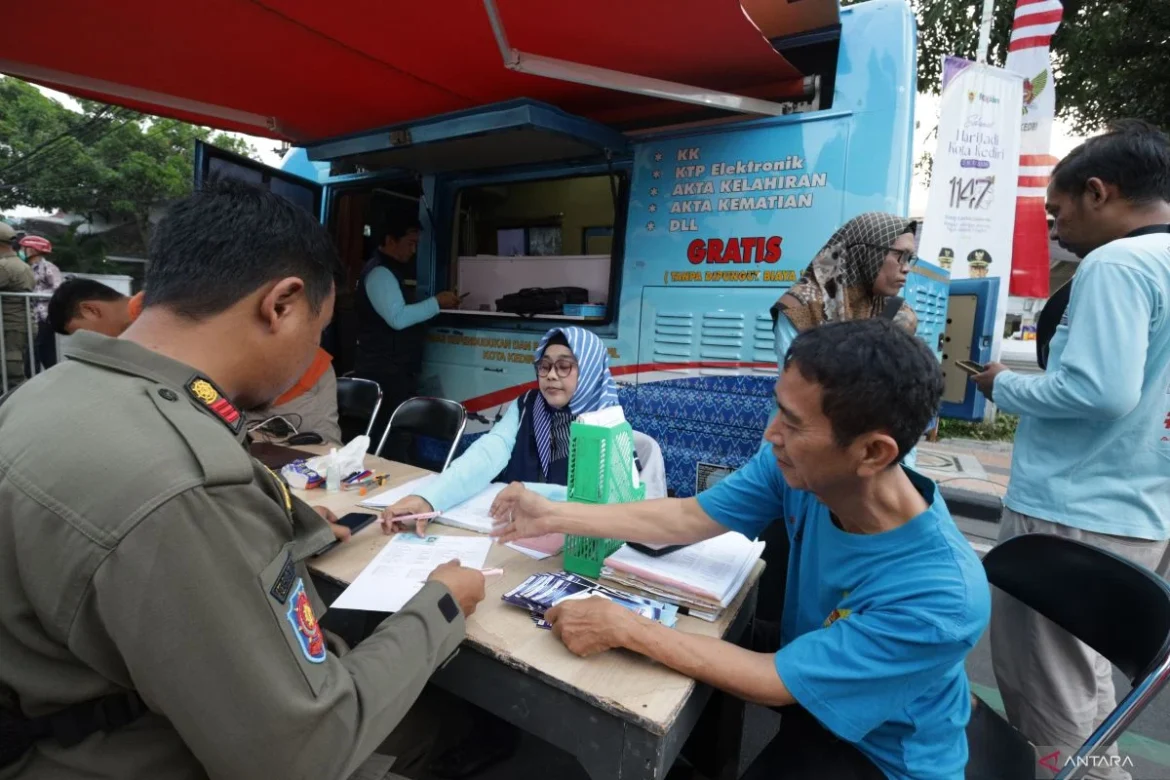
This sweeping policy shift, aimed at drastically accelerating public service delivery and simplifying citizens’ access to essential population documents, underscores the government’s commitment to bureaucratic reform and fostering a more citizen-centric administrative environment. For decades, the requirement of obtaining multiple layers of approval, particularly the introductory letter from the RT (Rukun Tetangga, neighborhood association) and RW (Rukun Warga, community association), followed by the Kelurahan (urban village) or Desa (village) office, has been a significant bottleneck in Indonesia’s administrative processes. This multi-layered clearance system, while historically intended for local verification and community oversight, often resulted in prolonged processing times, increased costs due to multiple trips, and created opportunities for informal fees, ultimately hindering public access to basic rights such as identity and civil registration.
A New Era for Public Services: Dispelling Bureaucratic Hurdles
The Director General of Population and Civil Registration at the Ministry of Home Affairs has explicitly stated that the vast majority of population administration documents no longer necessitate these introductory letters. This move fundamentally redefines the interaction between citizens and the state’s administrative apparatus, shifting from a fragmented, permission-based model to a more integrated, data-driven approach. The core principle behind this reform is to leverage the national population database, where citizens’ data, once recorded and verified, can serve as the primary basis for accessing subsequent services.
However, a crucial caveat remains: introductory letters may still be required under specific conditions, primarily for individuals who are not yet registered within the national population database. This applies to citizens who need to obtain a National Identity Number (NIK) for the first time or to be officially recorded in a Family Card (KK), signifying their initial entry into the system. This exception ensures data integrity and proper registration while minimizing unnecessary bureaucratic steps for existing registrants.
Key Documents Freed from Bureaucracy
The following critical population documents are now generally exempt from the RT/RW or Kelurahan introductory letter requirement, simplifying the lives of millions of Indonesians:
-
Electronic National Identity Card (KTP-el): For the issuance, renewal, or any data changes on the KTP-el, citizens are no longer required to present an introductory letter from their local community unit. Applicants can directly approach the local Population and Civil Registration Office (Disdukcapil) with the necessary supporting documents tailored to their specific service needs, such as a previous KTP-el, Family Card, or birth certificate. This is particularly impactful as the KTP-el serves as the primary legal identity document for all Indonesian citizens aged 17 and above, essential for everything from banking to voting.
-
Family Card (KK): The process of updating or issuing a Family Card, including changes in family member data, adding new family members (such as newborns or spouses), or modifying specific data elements within the card, can now be directly handled at the Disdukcapil without any introductory letter from the residential environment. The Family Card is a cornerstone document, detailing the composition and relationship of family members, crucial for accessing a wide range of social services and government programs.
-
Statement of Domicile Transfer (Surat Keterangan Pindah Domisili): Perhaps one of the most significant changes, the process of officially registering a change of residence within or between administrative regions no longer requires introductory letters from the RT/RW or Kelurahan. Citizens merely need to submit an application to the Disdukcapil, providing their existing Family Card and completing the designated population transfer application form. This simplification is rooted in Peraturan Presiden Nomor 96 Tahun 2018 (Presidential Regulation No. 96 of 2018) and Peraturan Menteri Dalam Negeri Nomor 108 Tahun 2019 (Minister of Home Affairs Regulation No. 108 of 2019), which explicitly streamline population mobility procedures. This particular reform addresses a historically cumbersome process that often discouraged legal and timely reporting of domicile changes, impacting electoral rolls and service delivery planning.
-
Birth Certificate (Akta Kelahiran): The issuance of birth certificates for children and the recording of births can now be directly facilitated through Dukcapil services. Supporting documents typically include a birth certificate from a health facility (hospital or midwife), the Family Card, and the parents’ identification documents. The introductory letter from RT/RW is no longer a primary requirement, especially for individuals whose data is already integrated into the administrative population system. This ensures that every child can obtain a legal identity promptly, which is vital for accessing education, healthcare, and other fundamental rights.
-
Death Certificate (Akta Kematian): The processing of death certificates is also now a direct civil registration service available through the Disdukcapil. Applicants must submit supporting documents as per prevailing regulations, typically including a death notification from a health facility or a police report, the deceased’s KTP-el and KK. This streamlined process aims to facilitate timely and accurate recording of deaths, which is crucial for updating population data, settling estates, and ensuring proper social security provisions.
-
Child Identity Card (KIA): The creation of Child Identity Cards for children is another administrative service that can be directly applied for at the Disdukcapil. This requires family document prerequisites, and critically, it no longer needs an introductory letter from the RT/RW, provided the child’s population data is already recorded in the system. The KIA, introduced to give children under 17 a formal identity, helps track their access to public services and prepares them for adult identity documents.
The Rationale Behind the Reform: Tackling Red Tape
The decision to abolish these introductory letters stems from a long-standing recognition of bureaucratic inefficiencies and public dissatisfaction. Historically, the RT/RW and Kelurahan letters were intended to serve as a local verification mechanism, confirming a resident’s presence and legitimacy within a specific community. However, in practice, this system often became a source of delay, inconvenience, and even minor corruption. Citizens frequently had to navigate multiple visits to different local officials, often during specific limited hours, leading to loss of workdays and productivity. The inconsistency in requirements and fees across different regions further exacerbated the problem, creating an opaque and frustrating experience for many.
The Ministry of Home Affairs has consistently emphasized that this simplification is part of a broader national effort to enhance the quality of population administration services. This initiative aligns with President Joko Widodo’s administration’s agenda to improve bureaucratic efficiency, reduce red tape, and foster good governance. The goal is to move towards a system where the national population database, underpinned by the National Identity Number (NIK), serves as the single source of truth for citizen data, thereby negating the need for repetitive local verification for already registered individuals.
Legal Foundations for Streamlined Services
The legal framework underpinning these reforms is robust, primarily drawing from Peraturan Presiden Nomor 96 Tahun 2018 concerning the Requirements and Procedures for Population Registration and Civil Registration, and Peraturan Menteri Dalam Negeri Nomor 108 Tahun 2019 concerning the Regulations for Population Registration and Civil Registration Implementation. These regulations collectively establish the legal basis for the simplified procedures, explicitly removing the mandatory requirement for introductory letters for a wide range of services, particularly for those whose data is already captured in the national system. These legislative acts represent a culmination of years of policy discussion and a strategic pivot towards a more modern, efficient, and data-driven public administration model. They empower citizens by placing greater trust in the national digital database as the primary authenticator of identity and residency.
The Role of Digital Transformation and Data Integration
A critical enabler of this policy is the ongoing digital transformation within Indonesia’s public sector. The national population database, managed by Dukcapil, is designed to be a comprehensive and integrated repository of citizen information. This database allows for cross-referencing and verification of data electronically, making the manual, paper-based verification via RT/RW letters largely redundant for existing registrants.
Many regional governments are actively developing and implementing online platforms to further expedite the document processing. The Provincial Government of DKI Jakarta, for example, has been a frontrunner in this regard, offering Dukcapil services not only through conventional service counters but also via the "Alpukat Betawi" mobile application. This application allows residents to submit applications, track their progress, and even receive digital versions of some documents, significantly reducing the need for physical visits and face-to-face interactions. Such digital innovations are crucial in bridging geographical distances and catering to the increasingly tech-savvy populace, aligning with the broader vision of e-government.
Official Voices: Commitment to Citizen-Centric Governance
Officials from the Ministry of Home Affairs and Dukcapil have consistently voiced their commitment to this reform. A spokesperson for the Director General of Dukcapil, speaking on the record, emphasized, "This simplification is a direct response to the public’s need for faster, more accessible services. By removing unnecessary bureaucratic steps, we are not only saving citizens time and money but also enhancing the integrity and efficiency of our administrative system. Our focus is on leveraging technology and data integration to deliver truly citizen-centric governance." This sentiment is echoed by policy analysts who view this move as a critical step towards reducing the burden on citizens and fostering a more transparent administrative environment. Public advocacy groups have largely welcomed the policy, citing improved access for vulnerable populations and a reduction in opportunities for informal payments. While some RT/RW heads may initially feel a diminished role, the broader understanding is that this shift frees them to focus on community development rather than administrative gatekeeping.
Navigating Exceptions and Ensuring Data Integrity
Despite the widespread simplification, it is imperative to acknowledge the specific conditions where introductory letters from RT/RW or Kelurahan may still be required. As mentioned, this primarily pertains to individuals who are being registered into the national population database for the very first time. This includes obtaining a National Identity Number (NIK) or being added to a Family Card (KK) as a new resident without prior digital records. These instances necessitate local verification to establish initial residency and identity, ensuring the accuracy and integrity of the foundational data. Furthermore, complex cases or those requiring special verification regarding data authenticity may also warrant additional local support. Dukcapil offices are tasked with clearly communicating these exceptions to the public to prevent confusion and ensure a smooth transition.
Broader Implications: Efficiency, Transparency, and Economic Impact
The broader implications of this policy are far-reaching. From an efficiency standpoint, the elimination of introductory letters is expected to significantly reduce the processing time for essential documents, translating into tangible time and cost savings for millions of citizens. This increased efficiency also contributes to a more productive workforce, as individuals spend less time on bureaucratic errands.
In terms of transparency, removing layers of manual verification reduces the potential for discretion and informal fees, thereby curbing opportunities for petty corruption. This move aligns with Indonesia’s ongoing efforts to improve its standing in global ease of doing business indices and to create a more investor-friendly environment, as a transparent and efficient civil administration system underpins all economic activities.
Moreover, the reliance on a centralized, integrated population database strengthens data accuracy and consistency across various government agencies. This integration is crucial for evidence-based policymaking, effective resource allocation, and targeted social welfare programs. It also contributes to better electoral processes and national security by maintaining up-to-date and reliable demographic information.
Challenges and the Path Forward
While the policy is largely positive, its successful implementation hinges on several factors. Public awareness campaigns are essential to inform citizens about the new procedures and when exceptions apply. Disdukcapil staff across all regions must be adequately trained to handle the revised processes and effectively utilize digital systems. Addressing the digital divide remains a challenge, as access to online services and digital literacy vary across Indonesia’s vast archipelago. Ensuring data security and protecting citizen privacy in an increasingly digitized system is also paramount.
Looking ahead, the government aims to further integrate services, potentially allowing for more proactive service delivery and reducing the need for citizens to initiate every single administrative process. The expansion of digital platforms and the continuous improvement of the national population database will be key to realizing the full potential of these reforms.
Conclusion: A Leap Towards Modern Administration
The decision to abolish the requirement for RT/RW and Kelurahan introductory letters for most population administration services represents a significant leap forward in Indonesia’s journey towards modern, efficient, and citizen-centric governance. By dismantling unnecessary bureaucratic hurdles and embracing digital solutions, the Ministry of Home Affairs, through Dukcapil, is empowering citizens, fostering greater transparency, and laying a stronger foundation for a more integrated and responsive public administration system. This reform not only simplifies access to essential documents but also signifies a fundamental shift in how the government interacts with its people, promising a future of smoother, faster, and more accessible public services for all Indonesians.
