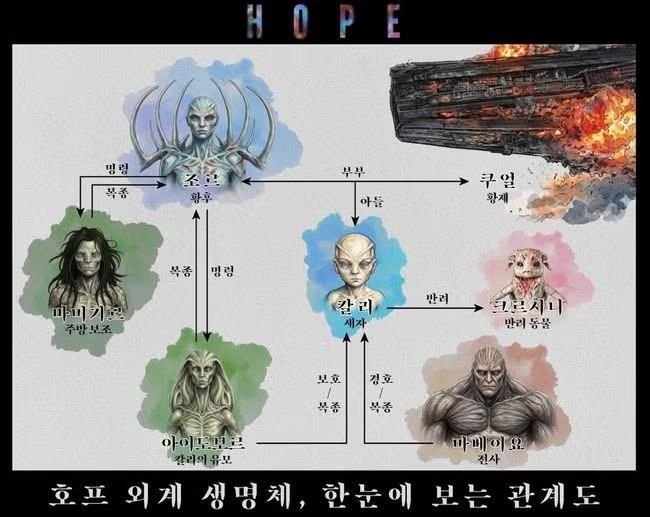
After a decade-long hiatus following his critically acclaimed 2016 horror masterpiece The Wailing, visionary South Korean filmmaker Na Hong-jin has officially returned to the director’s chair with his highly anticipated science-fiction epic, Hope. Released in Indonesian cinemas on September 9, 2026, the film marks Na’s maiden voyage into the sci-fi genre. Known for his meticulous approach to storytelling and atmospheric tension, Na has once again sparked global intrigue by leaving substantial narrative mysteries embedded within the cinematic framework of the film. While the on-screen narrative intentionally leaves the precise origins and lineage of the extraterrestrial visitors shrouded in ambiguity, the production company Forged Films, alongside promotional campaigns in South Korea, has released exhaustive official documents and character relationship charts. These promotional materials meticulously decode the complex hierarchy, backgrounds, and motivations of the alien race that crash-lands on Earth. This comprehensive revelation has elevated Hope from a standard creature-feature into a complex sociopolitical allegory, setting a new benchmark for high-concept science fiction in contemporary Asian cinema.
Decoding the Gertu Dynasty: The Royal Lineage Behind the Invasion
To fully comprehend the stakes in Hope, audiences must look beyond the visceral terror depicted on screen and examine the intricate lore established by the production team. According to official details published by Forged Films, the extraterrestrial collective that touches down near the isolated Hobo Port originates from a distant planet known as Gertu. Far from being a mindless horde of predatory beasts, this contingent is actually led by members of the Gertu royal family, fleeing from catastrophic domestic turmoil.
At the center of this tragic exodus is J’aur, portrayed by acclaimed actress Alicia Vikander, who serves as the reigning empress and the grieving mother of the Crown Prince, Kali. The inciting tragedy of the entire narrative occurs before the primary timeline of the film begins: Prince Kali is brutally killed by a local human resident named Yang-bae, played by Eum Moon-suk. This senseless act of violence against foreign royalty by an unsuspecting Earthling serves as the catastrophic catalyst for the ensuing confrontation, bridging an interstellar tragedy with localized rural violence.
Accompanying the royal refugees is a carefully selected entourage of protectors, caretakers, and domestic staff. Among them is Ma’veyyo, a fiercely loyal protective warrior played by Michael Fassbender, whose duty is to safeguard the surviving royals against hostile forces. The retinue also includes Ai’dovor, a nurturing caretaker portrayed by Taylor Russell; Va’migere, a kitchen assistant played by Cameron Britton whose actions inadvertently lead to the devastating destruction of the local village; and even Krusini, the late Crown Prince Kali’s extraterrestrial pet. Meanwhile, the supreme ruler of Gertu and father of the fallen prince, Emperor Ku’er, commands operations from above aboard a massive, heavily armed flagship warship that orbits the planet.
Refugees, Not Invaders: The Underlying Narrative of Displacement
The presence of Emperor Ku’er’s colossal dreadnought and the composition of the royal retinue provide critical contextual clues regarding the true nature of their arrival. Narrative analysis of the promotional charts indicates that J’aur, Kali, and their entourage are not an advance vanguard for a calculated military invasion aimed at territorial conquest. Instead, they are desperate refugees fleeing an apocalyptic war or severe internal political conflict on Planet Gertu, seeking a sanctuary far away from their collapsing home world.
This dynamic shifts the moral ambiguity of the film. The extraterrestrials are not inherently malicious conquerors, but traumatized survivors thrust into an alien environment where miscommunication leads directly to bloodshed. The inadvertent destruction caused by lower-ranking members of the royal entourage, combined with the tragic murder of Prince Kali by a local human, highlights a tragic collision of two civilizations utterly unprepared for one another. Industry analysts note that the destruction of Emperor Ku’er’s command ship and the escalating threats from a mysterious enemy force on their home planet are poised to serve as the core narrative engine for a potential sequel. Should a follow-up be officially confirmed, it will likely explore the harrowing possibility of an uneasy alliance between humanity and these alien survivors against a mutual, larger threat.
The Rural Nightmare: Chronology and Plot Overview
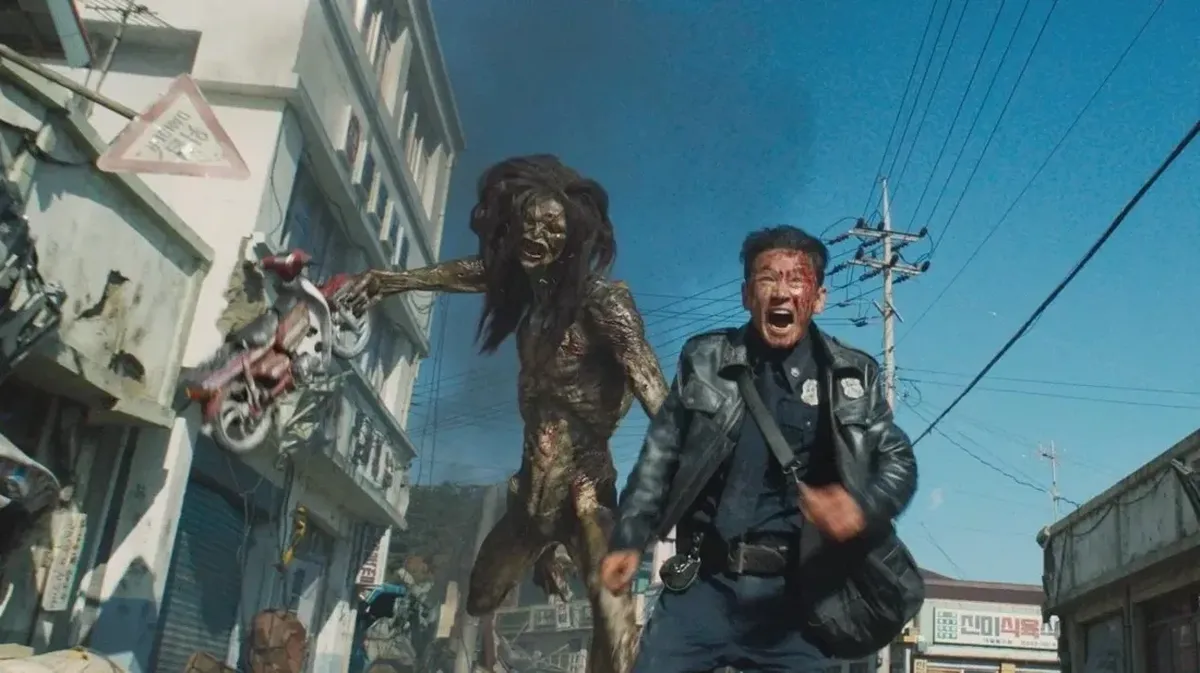
Set against the rugged backdrop of a quiet, unassuming coastal port town, the plot of Hope unfolds with agonizing tension. The residents of the small community find their peaceful lives upended by a series of bizarre and increasingly horrifying anomalies. The chilling chronology begins with the unexplained mutilation and slaughter of livestock across the countryside, bearing the hallmarks of a hunt conducted by a predator of incomprehensible physical scale and ferocity.
Recognizing the escalating danger, a local police officer, played by Hwang Jung-min, and a seasoned hunter, portrayed by Zo In-sung, embark on independent reconnaissance missions to uncover the truth behind the agricultural devastation. Their investigations quickly spiral into a harrowing descent as they realize they are tracking an entity entirely unprecedented in human history. As the true scale of the otherworldly threat becomes apparent, the town—populated predominantly by elderly residents—is plunged into a desperate, claustrophobic struggle for sheer survival. Cut off from major metropolitan reinforcements, these ordinary citizens find themselves battling an unyielding, seemingly immortal foreign entity with meager resources and dwindling hope.
Production Background and Directorial Significance
The release of Hope represents a monumental milestone for South Korean cinema, bridging international star power with local auteur-driven storytelling. Director Na Hong-jin, globally renowned for his mastery of psychological dread and meticulous pacing in films such as The Chaser (2008), The Yellow Sea (2010), and The Wailing (2016), spent nearly a decade developing his first science-fiction project. The decision to cast internationally acclaimed actors like Alicia Vikander, Michael Fassbender, Taylor Russell, and Cameron Britton alongside South Korea’s finest talent—including Hwang Jung-min and Zo In-sung—underscores the ambitious, cross-cultural scope of the production.
Industry insiders note that Hope was constructed with an unprecedented budget for a Korean sci-fi thriller, aiming to rival Hollywood blockbusters while maintaining the distinct psychological depth and emotional weight characteristic of Na’s filmography. The extensive world-building, evidenced by the release of detailed planetary genealogies and royal hierarchies, demonstrates a commitment to immersive storytelling that extends far beyond the traditional 120-minute runtime. By releasing comprehensive lore documents prior to and during the theatrical run, the production house has fostered an active digital ecosystem of fan theories, lore analysis, and speculative discussions across global cinema forums.
Broader Implications and Market Impact
The theatrical rollout of Hope in Indonesia on September 9, 2026, followed by broader international distributions, arrives at a time when audiences are increasingly fatigued by formulaic cinematic universes and are actively seeking original, high-concept storytelling. Box office tracking during the film’s opening weekend indicates robust ticket sales, driven heavily by positive word-of-mouth, the star-studded ensemble cast, and the formidable reputation of Director Na Hong-jin.
From a socio-cultural standpoint, the narrative themes embedded within Hope—specifically forced displacement, the tragedy of miscommunication across cultural or biological divides, and the catastrophic consequences of reactionary violence—resonate deeply with contemporary geopolitical anxieties. The parallel between the Gertu royal family fleeing conflict on their home planet and modern terrestrial refugee crises adds a layer of poignant social commentary to an otherwise terrifying creature feature.
As cinematic analysts and audiences continue to dissect the rich lore behind Planet Gertu, the tragic fate of Prince Kali, and the desperate struggle of the inhabitants of Hobo Port, Hope has successfully cemented its status as a defining cinematic event of 2026. Whether the narrative will expand into a fully realized franchise remains to be seen, but Na Hong-jin has undeniably reestablished himself as a pioneer of genre-defying cinema, leaving an indelible mark on the landscape of international science fiction.