
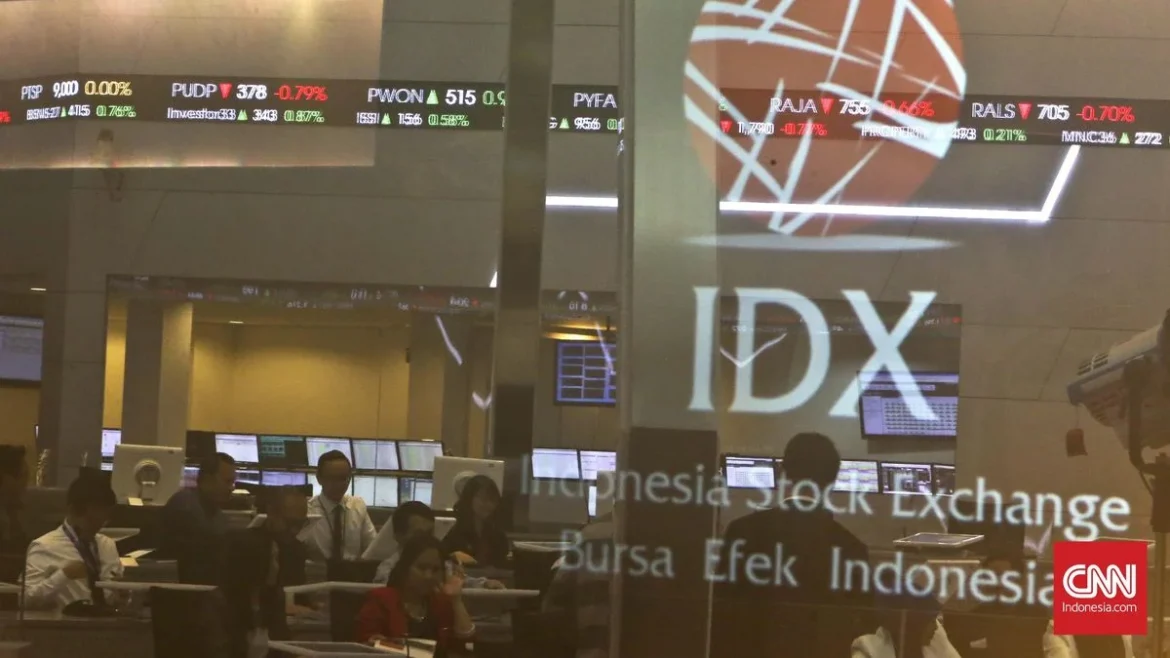
The Indonesia Stock Exchange (IDX), known locally as Bursa Efek Indonesia (BEI), has officially distributed a special cash dividend to eligible shareholders totaling IDR 1.56 trillion. This landmark corporate action represents the very first time in the history of the stock exchange’s management that a dividend has been paid out to its shareholders. The unprecedented decision was formally ratified and approved by shareholders during an Extraordinary General Meeting of Shareholders (EGMS) convened at the IDX Building in South Jakarta.
The distribution of this special dividend signals a significant evolution in the financial maturity and operational stability of Indonesia’s premier capital market infrastructure. By unlocking retained earnings and rewarding shareholders, the IDX has established a new precedent for corporate transparency and capital allocation efficiency within the country’s financial sector. This comprehensive report explores the background, financial mechanics, regulatory framework, and broader implications of this historic payout.
The Historic EGMS Decision and Financial Breakdown
During the EGMS, shareholders reviewed and overwhelmingly approved the management’s proposal to distribute a portion of the accumulated retained earnings. According to IDX President Director Jeffrey Hendrik, the special cash dividend is funded through the allocation of retained earnings derived from the audited financial statements for the period ending June 30, 2026.
The total financial outlay for this corporate action stands at precisely IDR 1.564 trillion. In terms of per-share distribution, eligible shareholders will receive IDR 17 billion per share, reflecting the unique shareholding structure and capitalization of the stock exchange entity.
Speaking at a press conference following the EGMS, Jeffrey Hendrik elaborated on the technical parameters of the payout. "The distribution of cash dividends, which constitutes a special dividend to the company’s eligible shareholders as recorded in the company’s register of shareholders on October 27, 2026, amounts to a total value of IDR 1.564 trillion, or equivalent to IDR 17 billion per share," Jeffrey stated to members of the press.
Eligibility for this historic payout was strictly restricted to shareholders whose names were formally recorded in the company’s registry by the close of business on October 27, 2026, one day prior to the formal EGMS approval. This ensures that long-term stakeholders and institutional entities holding the exchange’s equity are directly rewarded for their sustained backing of Indonesia’s capital market ecosystem.
Strategic Capital Allocation and Regulatory Compliance
While the distribution of IDR 1.56 trillion to shareholders marks a major milestone, the IDX leadership has also ensured that the institution retains a robust financial buffer to support ongoing technological upgrades, market surveillance enhancements, and general operational continuity.
Following the approval of the 2027 Annual Work Plan and Budget (RKAT) alongside necessary amendments to the company’s articles of association by the Financial Services Authority (Otoritas Jasa Keuangan or OJK), a separate allocation of IDR 2 trillion has been earmarked. This substantial sum will be designated as an operational and development reserve fund for the exchange.
This reserve allocation is fully compliant with prevailing regulatory mandates, specifically referencing Article 26, Paragraph 2 of POJK Number 13 of 2026. By aligning the distribution of excess capital with strict regulatory oversight, the IDX aims to balance shareholder remuneration with the heavy capital expenditure requirements demanded by modern, high-frequency, and secure financial exchanges.
The dual-track approach—rewarding equity holders while simultaneously securing long-term capital for technological resilience—underscores the strategic foresight of the exchange’s executive board. As global financial markets increasingly shift toward digitized, algorithm-driven trading environments, maintaining a well-funded development reserve is critical for the IDX to remain competitive regionally and globally.
Background Context: The Evolution of IDX Corporate Structure
To fully appreciate the significance of this IDR 1.56 trillion special dividend, it is essential to examine the historical evolution of the Indonesia Stock Exchange. Historically, stock exchanges around the world operated as mutual organizations owned by their member brokerages, where profits were typically reinvested back into operational infrastructure rather than distributed as direct dividends. Over the decades, many global exchanges demutualized, transforming into for-profit, publicly traded, or shareholder-owned corporations.
The IDX operates under a unique framework as a self-regulatory organization (SRO) entrusted with maintaining fair, orderly, and efficient trading of securities. Over the past decade, the Indonesian capital market has experienced exponential growth, characterized by a massive surge in retail investor participation, record-breaking initial public offerings (IPOs), and increasing daily transaction volumes.
This sustained period of macroeconomic stability and market expansion allowed the IDX to accumulate substantial retained earnings. For years, these funds were largely absorbed into internal capital reserves to finance major system overhauls, such as the implementation of advanced trading platforms, enhanced risk management systems, and widespread financial literacy campaigns across the archipelago. The decision to finally issue a dividend in 2026 indicates that the exchange has achieved a level of financial capitalization where retained earnings surpass immediate operational requirements, allowing surplus capital to be safely returned to shareholders without compromising institutional stability.
Chronology of Events Leading to the Payout
The path toward this historic dividend distribution involved a carefully coordinated timeline of corporate governance milestones and regulatory submissions:
- Mid-2026: The IDX finalizes its audited financial statements for the period ending June 30, 2026, revealing a strong balance sheet with healthy retained earnings.
- Early October 2026: Executive leadership drafts the proposal for the special cash dividend, balancing shareholder returns with upcoming regulatory compliance requirements under POJK 13/2026.
- October 27, 2026: The official recording date (recording date) for shareholders. Only entities and individuals listed in the registry on this specific date are qualified to receive the special dividend payout.
- October 28, 2026: The Extraordinary General Meeting of Shareholders (RUPSLB) is formally convened at the IDX Building in South Jakarta. Shareholders debate, review, and ultimately grant unanimous approval for the IDR 1.56 trillion dividend distribution, alongside discussions regarding the 2027 RKAT and OJK-compliant operational reserves.
- Post-EGMS 2026 and Beyond: Management initiates administrative procedures to disburse the funds to eligible accounts while awaiting final OJK ratification for the IDR 2 trillion operational and development reserve fund.
Economic Implications and Market Analysis
Financial analysts and market observers have largely interpreted the IDX special dividend as a strong signal of confidence in the underlying health of Indonesia’s financial sector. By returning capital to stakeholders, the exchange demonstrates that the domestic market is capable of generating robust economic value independent of broader global economic volatilities.
Furthermore, this move may serve as a catalyst for enhanced corporate governance standards among listed companies in Indonesia. When the primary institution overseeing the stock market successfully executes a transparent, regulation-compliant capital return policy, it sets a benchmark for best practices that other corporations listed on the exchange are encouraged to emulate.
However, analysts also emphasize the importance of the accompanying IDR 2 trillion development fund. In an era defined by cybersecurity threats, the necessity for lightning-fast trade execution, and the integration of sustainable finance (ESG) metrics into trading platforms, capital expenditure requirements for stock exchanges are higher than ever. Ensuring that the IDX remains adequately capitalized for future technological upgrades is vital to protecting the integrity of the nation’s financial system.
The convergence of shareholder remuneration and forward-looking infrastructure investment illustrates a mature approach to corporate stewardship. As the Indonesia Stock Exchange moves past this historic milestone, market participants will closely monitor how the exchange deploys its designated development reserves to further elevate the standing of the Indonesian capital market on the global stage.
