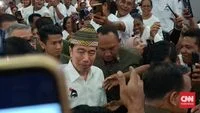
President Joko Widodo arrived in Sikka Regency, East Nusa Tenggara (NTT), on Wednesday, September 16, to conduct a working visit focused on disaster relief efforts and community engagement. The President’s visit follows the significant seismic activity that impacted the region in mid-August, causing widespread disruption to local infrastructure and the livelihoods of residents. The arrival of the Head of State at approximately 13:00 Central Indonesian Time (WITA) underscores the administration’s commitment to accelerating the recovery process in disaster-prone areas of the archipelago.
Official confirmation regarding the President’s itinerary was provided by the Sikka Regency Public Relations Office, which noted that the primary objective of the visit is to provide direct support and express solidarity with the survivors of the August 15 earthquake. While the specific delegation accompanying the President remains undisclosed at this stage, the visit is being viewed as a critical step in assessing the effectiveness of the central government’s emergency response initiatives in the eastern provinces.
Contextualizing the Seismic Impact in NTT
The earthquake that struck East Nusa Tenggara on August 15, 2026, serves as the backdrop for this presidential visit. NTT is geographically situated within the "Ring of Fire," a region characterized by high tectonic activity and frequent volcanic and seismic events. The mid-August tremor resulted in structural damage to residential dwellings, public facilities, and small-scale agricultural infrastructure, which form the backbone of the local economy in Sikka and surrounding regencies.
For many survivors, the President’s visit serves as a morale booster. In the immediate aftermath of such natural disasters, the presence of national leadership often correlates with a renewed sense of urgency in the distribution of aid, the reconstruction of essential services, and the implementation of long-term mitigation strategies. Local authorities in Sikka have been working in coordination with the National Agency for Disaster Countermeasure (BNPB) to map the affected areas and ensure that recovery funds reach the intended beneficiaries.
A Pattern of Regional Engagement
President Joko Widodo’s visit to Sikka is part of a broader, consistent pattern of regional outreach. Throughout his tenure, the President has prioritized direct interactions with communities outside of the capital, Jakarta. This approach is designed to bridge the geographic and bureaucratic divide between the central government and the diverse provinces of Indonesia.
Prior to his arrival in NTT, the President made headlines for his appearance at a social and cultural event in Cirebon, West Java, on Saturday, September 12. During that visit, he attended a communal ceremony hosted by the Al-Busthomi Foundation, accompanied by his youngest son, Kaesang Pangarep, who serves as the General Chairman of the Indonesian Solidarity Party (PSI). The inclusion of political figures in his regional tours has occasionally drawn scrutiny, yet the administration maintains that these visits are primarily focused on maintaining social cohesion and observing regional developments firsthand.
Furthermore, the President’s recent itinerary reflects a high frequency of travel. Earlier in August, he completed a three-day visit to Kupang, the capital of NTT, spanning from July 31 to August 2. During that time, he engaged in a multi-faceted agenda that included:
- Economic Dialogues: Meetings with seaweed farmers at Oesina Beach to discuss supply chain challenges and export potential.
- Political Outreach: Attendance at the Regional Coordination Meeting (Rakorda) of the PSI in Kupang.
- Public Engagement: Participation in Car Free Day (CFD) activities and attendance at local cultural carnivals, aimed at promoting tourism and regional identity.
Strategic Implications of the Visit
The frequency of the President’s visits to NTT suggests that the region holds significant strategic importance in the administration’s development agenda. NTT, often characterized by its unique geographical challenges and potential in the maritime and agricultural sectors, has seen increased infrastructure investment under the current government. From the construction of dams and irrigation systems to the development of tourism hubs, the administration’s focus on the region is intended to narrow the economic disparity between the western and eastern parts of Indonesia.
However, the visibility of these visits also brings the government’s actions under a sharper lens. For instance, a recent visit to Lampung, where the President participated in a traditional ritual involving the symbolic stepping on a buffalo head, sparked extensive public discourse. Such events highlight the complex intersection of traditional culture, political optics, and the public’s expectations of the President’s role in modernizing the nation while respecting indigenous customs.
Logistics and Coordination
Managing a presidential visit in a post-disaster environment requires intricate coordination between the Presidential Security Force (Paspampres), the local military (Kodim), and the regional police (Polres). The primary challenge for officials in Sikka is balancing the strict security protocols required for a sitting President with the need for accessibility for the survivors of the earthquake.
As of the current reporting, local authorities are finalizing the logistical arrangements for the President to interact with community leaders and representatives of the affected families. The focus remains on addressing immediate needs, such as the restoration of water supply, temporary housing, and medical assistance for those injured during the earthquake.
Looking Ahead: The Recovery Roadmap
The impact of the August 15 earthquake in NTT serves as a reminder of the vulnerability of the region’s infrastructure. Experts argue that while direct assistance from the President is beneficial for immediate relief, the long-term solution lies in resilient infrastructure planning. Seismic-resistant construction standards and enhanced early warning systems are key components that the government is expected to prioritize in the coming months.
Analysts suggest that the President’s physical presence in Sikka is intended to signal a sustained commitment to these long-term goals. By visiting the site, the President is not only observing the damage but is also placing the recovery project under the direct purview of the central government, effectively bypassing potential administrative bottlenecks at the local level.
Broader Public Sentiment
Public reaction to the President’s travel schedule is generally divided. Supporters emphasize the importance of leadership presence during times of crisis, arguing that it keeps regional officials accountable and ensures that aid is disbursed efficiently. Critics, however, suggest that the frequency of these visits, particularly when coupled with political events or public ceremonies, may distract from the heavy legislative and administrative work required in the capital.
Regardless of the political debate, the arrival of the President in Sikka is a pivotal event for the local community. For the residents of Sikka, the visit represents a tangible link to the state. As the recovery process moves from the emergency phase to the rehabilitation and reconstruction phase, the government will need to maintain this level of attention to ensure that the promises made during these visits translate into durable improvements for the citizens of East Nusa Tenggara.
Conclusion
The visit of President Joko Widodo to Sikka, NTT, on September 16, 2026, marks a continuation of his policy of direct presidential engagement. While the primary impetus for this specific trip is the humanitarian response to the earthquake that occurred in mid-August, the visit also functions as an inspection of the government’s regional development progress.
As the President meets with survivors and local officials, the focus remains on the efficacy of the recovery efforts and the broader developmental trajectory of the eastern provinces. With a track record of frequent travel and engagement, the administration continues to prioritize on-the-ground assessment as a primary tool of governance. The coming weeks will reveal the impact of this visit, particularly in terms of the acceleration of aid distribution and the initiation of long-term structural repairs in the earthquake-affected zones of NTT. The eyes of the nation remain on Sikka, as the government seeks to balance the immediate needs of disaster victims with the larger aspirations for regional growth and national stability.