
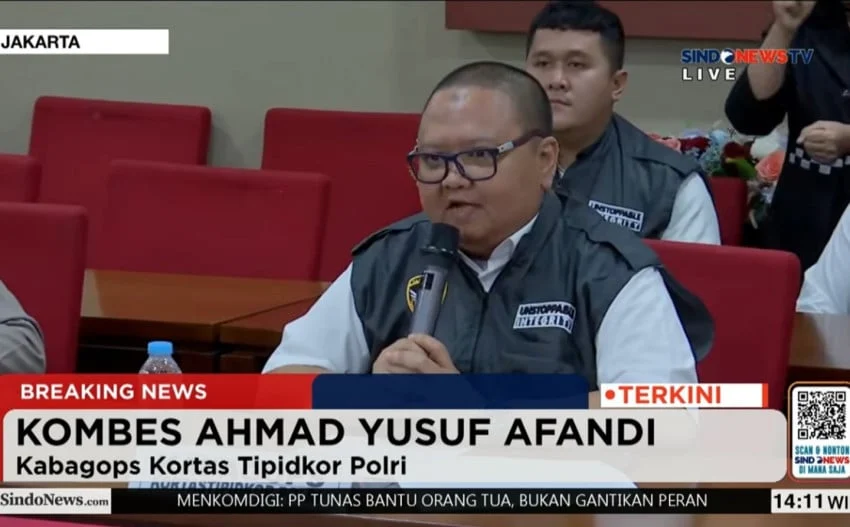
The Indonesian National Police (Polri) has unveiled a series of grave irregularities in an alleged corruption case surrounding the invoice financing facility provided by state-owned asset management company PT Perusahaan Pengelola Aset (PPA) Persero to private entity PT Bintang Abadi Sampurna (BAS). This financing arrangement was purportedly for a coal procurement project destined for PT PLN Batubara, a subsidiary of the state electricity company PT PLN, spanning the period of 2019-2020. Kombes Ahmad Yusuf Afandi, Head of Operations for the Corruption Eradication Task Force (Kortas Tipikor) at Polri, detailed four critical findings that point towards systemic malfeasance rather than mere administrative oversight.
Unpacking the Core Allegations: A Breach of Trust and Procedure
During a press briefing on Monday, July 20, 2026, Kombes Afandi elaborated on the alarming discoveries made by investigators. The first significant deviation from standard operating procedures (SOPs) was the glaring failure to conduct proper due diligence and comprehensive risk analysis. This initial step, fundamental to any financial transaction, was either neglected or inadequately performed, laying the groundwork for subsequent breaches. Crucially, a mandatory recommendation to directly verify information with PT PLN Batubara, a procedure explicitly required by PT PPA’s internal SOPs, was reportedly ignored. This omission, according to Afandi, represented a critical lapse, circumventing a vital safeguard designed to ensure the legitimacy and viability of the underlying project.
The second irregularity highlighted by the police concerned the authenticity and verification of crucial documentation. Investigators found that invoices and their supporting documents, which served as the basis for fund disbursement, were not adequately verified for their legitimacy. Despite this lack of proper authentication, these documents were nonetheless declared as meeting the necessary requirements, leading to the unwarranted release of funds. This particular finding suggests a deliberate bypassing of financial scrutiny, enabling potentially fraudulent claims to be processed.
Thirdly, the investigation revealed a severe failure in the oversight of the cash collateral mechanism. Cash collateral is a standard risk mitigation tool in financing, requiring the borrower to provide liquid assets as security. In this case, monitoring of this critical mechanism was allegedly disregarded, allowing disbursements to proceed even when the collateral requirements were not fully met. This oversight fundamentally undermined the security of the financing facility, exposing PT PPA to significant financial risk and potential losses.
Finally, and perhaps most disturbingly, the Polri uncovered alleged manipulation during the final stages of fund disbursement. It is suspected that bank statements (rekening koran) were deliberately fabricated to create a false impression that the collateral account still held sufficient funds. These falsified documents were then allegedly used as the pretext for further disbursements, effectively siphoning off more state funds under fraudulent pretenses. Kombes Afandi unequivocally stated that these findings transcend mere administrative errors, describing them as "a series of actions allegedly carried out consciously, structured, and interconnected, resulting in state funds being disbursed without a legitimate basis." This strong assertion underscores the gravity of the alleged conspiracy and the deliberate nature of the illegal acts.
Background Context: Indonesia’s Energy Sector and State-Owned Enterprises
To fully appreciate the implications of this case, it is essential to understand the roles of the entities involved and the broader context of Indonesia’s energy landscape. PT Perusahaan Pengelola Aset (PPA) Persero is a state-owned enterprise (SOE) under the Ministry of Finance, primarily tasked with asset management, restructuring of troubled SOEs, and strategic investment. Its mandate often involves providing financing solutions, making sound due diligence and risk management paramount to safeguard state assets. A breach of these protocols at PT PPA has far-reaching consequences for public trust and financial stability.
PT PLN Batubara is a subsidiary of PT PLN (Persero), the national electricity company of Indonesia. PLN is the sole provider of electricity across the vast archipelago, making coal procurement a strategic national interest. Indonesia relies heavily on coal for its energy needs, with coal-fired power plants forming the backbone of its electricity generation capacity. The efficient and transparent procurement of coal is critical for national energy security and economic stability. Any disruption or corruption in this supply chain can lead to inflated costs, unreliable supply, and ultimately, higher electricity tariffs for consumers or increased subsidies from the state budget. The period of 2019-2020 saw significant demand for coal, further highlighting the importance of robust procurement processes.
PT Bintang Abadi Sampurna (BAS), as a private company, acted as the recipient of the invoice financing facility from PT PPA for the coal procurement project. Its role as a supplier in such a critical national undertaking places a significant responsibility on its operations and adherence to contractual and ethical standards. Allegations of collaboration in fraudulent activities undermine the integrity of the private sector’s engagement with state entities.
Inferred Chronology of Events and Investigation
While the precise timeline of the alleged fraudulent activities is subject to ongoing investigation, an inferred chronology can be established based on the available information:
- Pre-2019: The financing facility agreement between PT PPA and PT BAS for the coal procurement project with PT PLN Batubara was established. This period would have involved initial negotiations, due diligence (which was later found to be flawed), and the formalization of the financial arrangements.
- 2019-2020: The period during which the coal procurement project was active and the alleged corrupt practices took place. This included the issuance of invoices, submission of supporting documents, and the subsequent disbursements of funds from PT PPA to PT BAS, predicated on the identified irregularities such as lack of verification, ignored due diligence recommendations, disregarded cash collateral, and manipulated bank statements.
- Post-2020: It is likely that financial discrepancies or red flags began to emerge following the conclusion of the project period. Audits, internal reviews, or whistle-blower reports could have triggered an initial inquiry.
- Investigation Commencement: Polri’s Corruption Eradication Task Force initiated its formal investigation, meticulously gathering evidence, analyzing financial documents, and interviewing relevant parties. This phase would have involved a deep dive into PT PPA’s internal processes, PT BAS’s operational records, and the financial flows between them.
- July 20, 2026: Kombes Ahmad Yusuf Afandi of Polri holds a press conference to announce the findings of the investigation, detailing the four major irregularities uncovered. This public disclosure marks a significant milestone in the ongoing legal process, indicating that sufficient evidence has been collected to articulate the alleged systemic nature of the corruption.
Supporting Data and Legal Framework
While the exact monetary value of the alleged losses has not yet been publicly disclosed, the nature of invoice financing for a large-scale commodity like coal procurement for a national utility suggests that the figures could run into significant amounts, potentially billions or even trillions of Indonesian Rupiah. Such a scale of alleged fraud underscores the potential impact on state finances and the broader economy.
The legal framework for combating corruption in Indonesia is robust, primarily governed by Law No. 31 of 1999 concerning the Eradication of Corruption Crimes, as amended by Law No. 20 of 2001. These laws define various forms of corruption, including embezzlement, bribery, abuse of power, and actions that cause financial losses to the state. The penalties for such crimes are severe, reflecting Indonesia’s commitment to combating corruption, particularly within state-owned enterprises which are custodians of public funds and assets. The emphasis by Kombes Afandi on the "conscious, structured, and interconnected" nature of the actions suggests that the police are building a case based on criminal intent and organized fraudulent activity, rather than mere negligence.
Official Responses and Anticipated Reactions
Following such a significant announcement from Polri, various stakeholders are expected to react.
- Polri: The National Police will likely reiterate its commitment to pursuing all individuals involved, regardless of their position, and to recovering any state losses. They will emphasize the importance of upholding the rule of law and ensuring transparency and accountability in public and private sector transactions involving state assets. Further updates on the investigation, including potential arrests and formal charges, are anticipated.
- PT Perusahaan Pengelola Aset (PPA) Persero: As a state-owned entity, PT PPA is under intense scrutiny. It is expected to issue a formal statement acknowledging the investigation, expressing full cooperation with law enforcement, and pledging to undertake internal audits and strengthen its corporate governance and risk management frameworks. Any individuals found culpable within PT PPA would likely face internal disciplinary actions in addition to legal proceedings. The Ministry of Finance, as the overseeing ministry, may also issue a statement emphasizing zero tolerance for corruption within SOEs.
- PT Bintang Abadi Sampurna (BAS): The private company implicated would likely issue a statement denying the allegations or pledging full cooperation with the investigation. The legal team of PT BAS would be preparing to defend against the impending charges.
- PT PLN and PT PLN Batubara: While seemingly the beneficiaries of the coal procurement (albeit indirectly impacted by the financing fraud), PT PLN and its subsidiary PT PLN Batubara would likely issue statements affirming their commitment to good corporate governance, transparent procurement practices, and emphasizing that they are not directly implicated in the alleged financing fraud between PT PPA and PT BAS, though the project was for their benefit. They may also review their internal procurement processes to ensure no similar vulnerabilities exist.
- Government Officials: The Ministry of State-Owned Enterprises (BUMN) and potentially other high-ranking government officials are expected to weigh in, underscoring the government’s steadfast commitment to rooting out corruption within the SOE ecosystem and ensuring that state assets are managed with integrity. This case serves as a stark reminder of the ongoing challenges in ensuring clean governance within large state enterprises.
Broader Impact and Implications
The revelations from this investigation carry significant broader implications for Indonesia’s economic landscape, corporate governance, and anti-corruption efforts.
Firstly, the case further erodes public trust in state-owned enterprises. SOEs are vital engines of Indonesia’s economy, responsible for delivering essential services and managing strategic assets. When such entities are embroiled in corruption scandals, it diminishes public confidence in their integrity and efficiency, potentially impacting their ability to attract investment and operate effectively.
Secondly, it highlights critical vulnerabilities in corporate governance and risk management practices, particularly within financial institutions and SOEs involved in financing. The failure to conduct proper due diligence, verify documents, and oversee collateral mechanisms points to systemic weaknesses that need urgent rectification. This case will likely prompt a review and tightening of internal controls, compliance frameworks, and auditing processes across other SOEs and financial entities to prevent similar occurrences.
Thirdly, the alleged manipulation of bank statements underscores the sophistication of financial crimes and the lengths to which perpetrators may go to obscure their illicit activities. This necessitates enhanced forensic auditing capabilities and a more vigilant approach from financial regulators and law enforcement agencies.
Economically, potential state losses from such large-scale fraud can divert resources from essential public services, infrastructure development, or social welfare programs. It also sends a negative signal to potential foreign and domestic investors, who prioritize environments with strong rule of law and low corruption risks.
Finally, this investigation by Polri reaffirms the government’s commitment to its anti-corruption agenda. By pursuing complex cases involving high-value transactions and state entities, the police send a clear message that corruption will not be tolerated and that those responsible will be held accountable. This ongoing effort is crucial for fostering a healthier business environment and strengthening governance standards across Indonesia. As the investigation progresses, more details are expected to emerge, potentially leading to a landmark case in Indonesia’s continuous fight against corruption.
