
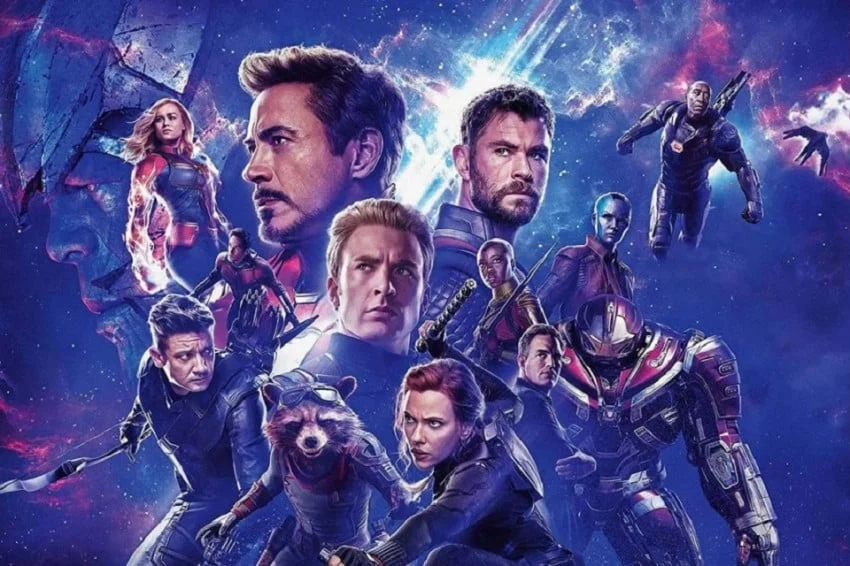
JAKARTA — The cinematic landscape in Indonesia has witnessed a historic shift at the box office as Marvel Studios successfully reclaims and redefines box office dominance. Avengers: Endgame Encore, a special theatrical re-release featuring previously unseen footage, has officially dethroned the local blockbuster Agak Laen: Menyala Pantiku to become the highest-grossing film in the history of Indonesian cinema. The milestone, confirmed by prominent box office tracking accounts on social media including @sipalingmarvel and @officialwatchmenid, underscores the enduring, unmatched popularity of the Marvel Cinematic Universe (MCU) among Indonesian moviegoers, even years after the initial phenomenon swept the globe.
The monumental achievement unfolded rapidly upon the films return to the big screen. On its very first day of the re-release, Avengers: Endgame Encore drew a staggering 131,692 moviegoers across cinemas nationwide. This substantial single-day surge propelled the lifetime cumulative audience of Avengers: Endgame—combining its historic 2019 theatrical run and the current Encore distribution—to an unprecedented 11,108,030 admissions. By crossing this threshold, the superhero epic successfully surpassed the formidable record set by Agak Laen: Menyala Pantiku, a domestic comedy-drama phenomenon that had previously claimed the crown and concluded its theatrical run with an impressive 11,000,866 tickets sold.
The Uniqueness of the Encore Cut and Strategic Marketing
The catalyst behind this renewed box office frenzy is the inclusion of exclusive additional content. Avengers: Endgame Encore introduces approximately four minutes of never-before-seen footage, offering fans a compelling incentive to return to theaters. While four minutes may seem modest on the surface, within the fiercely dedicated community of MCU fans, the prospect of experiencing extended scenes, alternate visual sequences, or deeper character interactions proved irresistible.
Industry analysts point out that this re-release is far from a random commercial endeavor. Rather, it is a meticulously calculated strategic maneuver orchestrated by The Walt Disney Company and Marvel Studios. The theatrical deployment of the Encore cut serves as a foundational bridge designed to reignite public enthusiasm for the overarching multiverse saga, directly paving the way for the highly anticipated upcoming tentpole film, Avengers: Doomsday, which is slated for a worldwide theatrical release in late 2026. By re-engaging the audience with the emotional culmination of the Infinity Saga, Marvel effectively reactivates its massive consumer base, ensuring that brand equity remains at an absolute peak years ahead of the next major crossover event.
A Look Back at the Infinity Saga and Narrative Stakes
To understand the profound cultural resonance of Avengers: Endgame, one must revisit the monumental narrative architecture that preceded it. Released initially in 2019 and directed by Anthony and Joe Russo, Avengers: Endgame served as the direct narrative sequel to Avengers: Infinity War. That devastating preceding chapter left global audiences in a state of collective shock after the tyrannical warlord Thanos successfully executed his plan to gather all six Infinity Stones. Utilizing the unimaginable power of the Infinity Gauntlet, Thanos performed the catastrophic Snap, instantly erasing half of all life across the universe in a matter of seconds.
Avengers: Endgame chronicled the desperate, high-stakes efforts of the surviving Avengers—including Iron Man, Captain America, Thor, Black Widow, Hulk, and Hawkeye—as they formulated a high-risk time-heist strategy to undo the genocide. The resulting conflict stands as the single largest and most complex battle sequence in the history of the Marvel Cinematic Universe. The emotional weight of the narrative was amplified by permanent sacrifices, most notably the heroic death of Tony Stark, who utilized a makeshift Infinity Gauntlet to snap Thanos and his invading army out of existence, sacrificing his own life to save the universe.
The emotional gravity of these historic character arcs formed a profound bond with audiences worldwide, setting unprecedented financial benchmarks. In Indonesia, a nation known for its rapidly expanding cinema infrastructure and fiercely loyal pop-culture communities, the 2019 release shattered numerous attendance records. The introduction of the Encore version capitalizes directly on this nostalgia, proving that the emotional equity built over a decade of storytelling remains remarkably potent.
The Horizon: Avengers: Doomsday and the Rise of Doctor Doom
The unprecedented financial resurgence of Avengers: Endgame Encore does not exist in a vacuum; it functions as the opening salvo for a massive promotional campaign leading toward the next phase of the MCU. As Marvel Studios prepares to pivot away from the Infinity Saga and deep into the Multiverse Saga, the narrative focus shifts dramatically toward a new, terrifying antagonist.
Avengers: Doomsday, scheduled to open in Indonesian cinemas on December 16, 2026, promises to elevate cinematic stakes to an entirely new echelon. The film will introduce Doctor Doom, one of the most iconic and formidable villains in Marvel Comics history. In a casting coup that sent shockwaves through the entertainment industry, Academy Award-winner Robert Downey Jr., who spent over a decade defining the MCU as Tony Stark/Iron Man, is set to return to the franchise—not as a hero, but as the malevolent Doctor Doom.
Industry insiders and promotional materials indicate that Doctor Doom will present a threat that dwarfs the destructive capabilities of Thanos. While Thanos sought cosmic balance through mass extinction, Doctor Doom commands a unique combination of arcane sorcery and peerless technological genius, possessing ambitions that threaten the stability of the multiverse itself. The strategic timing of the Avengers: Endgame Encore re-release ensures that contemporary audiences are thoroughly re-immersed in the monumental scale of Avengers-level threats, priming the theatrical market for the arrival of Downey Jr. in his villainous iteration.
Broader Implications for the Indonesian Box Office
The milestone achieved by Avengers: Endgame Encore carries significant implications for the broader entertainment economy in Indonesia. First and foremost, it highlights the resilience and vibrancy of the theatrical exhibition sector in the post-pandemic era. Despite the meteoric rise of subscription-based streaming platforms, Indonesian audiences continue to demonstrate a powerful willingness to embrace cinema-going as a primary social and cultural activity, particularly for major global blockbusters and high-profile domestic releases alike.
Furthermore, the friendly competition between a Hollywood megahit and a beloved domestic production like Agak Laen: Menyala Pantiku demonstrates the healthy, diverse appetite of the Indonesian moviegoing public. While Hollywood franchises command massive technical budgets and global marketing apparatuses, domestic films have increasingly proven their ability to capture the cultural zeitgeist, pulling in millions of local viewers through relatable humor and culturally resonant storytelling. The fact that an Indonesian comedy-drama held the all-time attendance record for a significant period reflects a thriving, competitive domestic film industry that can stand shoulder-to-shoulder with international giants.
As Avengers: Endgame Encore continues its theatrical run across major cinema networks in Indonesia, industry analysts project that its final cumulative attendance figures will climb even higher, setting a potentially unreachable benchmark for upcoming releases in the near term. Theater owners and ticketing platforms have reported strong, consistent daily occupancies, driven largely by younger demographics eager to experience the cultural phenomenon on the big screen, as well as dedicated superfans participating in the collective countdown to Avengers: Doomsday.
Ultimately, the resurgence of Avengers: Endgame at the top of the Indonesian box office charts is a testament to the enduring power of cinematic storytelling, strategic eventized theatrical distribution, and a passionate fan base that continues to shape the commercial realities of the global film industry.
