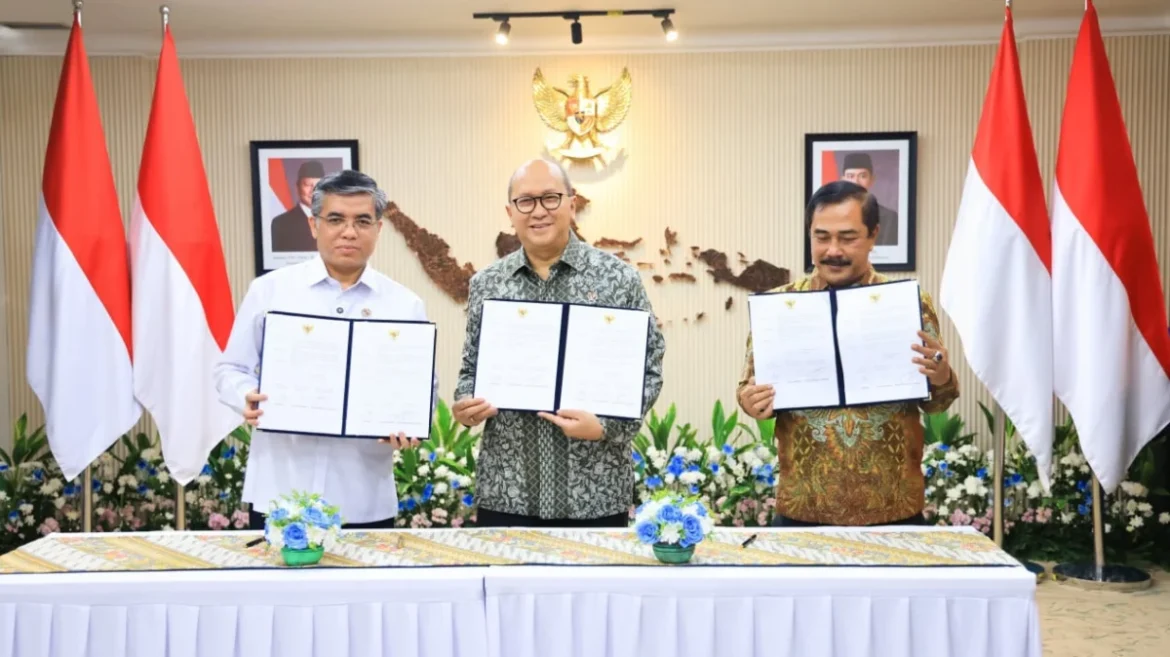
In a significant move to overhaul the regulatory landscape for foreign investment, the Indonesian government has officially integrated the administrative process for the employment of foreign workers (TKA) into the Online Single Submission (OSS) platform. This policy shift, formalized through a Joint Decree (SKB) signed on Wednesday, September 9, 2026, marks the transition toward a unified "single entry" service model, effectively consolidating procedures that were previously fragmented across multiple ministries.
The initiative, spearheaded by the Ministry of Manpower in collaboration with the Ministry of Investment and Downstreaming and the Ministry of Immigration and Corrections, is designed to reduce bureaucratic friction. By centralizing the application process, the government aims to create a more transparent, predictable, and efficient environment for international businesses operating within the archipelago.
Chronology and the Path to Integration
The push for a single-entry system for foreign worker permits did not happen in a vacuum. It follows a series of high-level administrative reviews conducted throughout 2025 and 2026, aimed at improving Indonesia’s "Ease of Doing Business" rankings. Historically, foreign investors faced a labyrinthine process, requiring separate submissions to the Ministry of Manpower for work permits and the immigration authorities for stay permits.
In early 2026, the coordinating ministries identified that the lack of synchronization between the Ministry of Manpower’s "SIAPKerja" system and the "All Indonesia" portal managed by the Ministry of Immigration caused significant delays. Business associations, including the Indonesian Chamber of Commerce and Industry (KADIN), had repeatedly lobbied for a centralized portal to minimize the time-to-market for capital projects. The signing of the Joint Decree on September 9 serves as the culmination of these inter-ministerial negotiations, signaling a shift toward digital-first governance.
Technical Framework: How the Single Entry Works
Under the new system, the OSS platform—administered by the Ministry of Investment and Downstreaming—will serve as the primary gateway for all TKA-related documentation. The integration links the Ministry of Manpower’s SIAPKerja database with the Ministry of Immigration’s All Indonesia system.
The mechanism functions as follows:
- Unified Submission: Companies no longer need to navigate multiple government portals. A single submission on the OSS platform triggers automated data sharing between the participating ministries.
- Automated Verification: Qualifications, competency requirements, and employment contracts are verified against the Ministry of Manpower’s standards, while immigration status and visa prerequisites are cross-checked simultaneously.
- Streamlined Approval: By removing the need for serial approvals, the government anticipates a significant reduction in the total duration of the licensing cycle, potentially cutting waiting times by up to 40% for compliant applicants.
Official Perspectives on Policy Reform
Minister of Manpower Yassierli emphasized that the goal of this integration is not merely to digitize existing hurdles, but to simplify the underlying processes. "This integration is part of the government’s commitment to facilitating the business community. The process must be simpler, faster, and more certain. We must ensure that this integration does not introduce new layers of bureaucracy, but rather enhances the quality of public service," Yassierli stated following the signing ceremony.
The Minister further underscored the strategic importance of foreign expertise. He clarified that TKA are not viewed as replacements for domestic labor, but as catalysts for skill transfer. "In the current investment climate, foreign workers play a vital role in meeting specific competency needs. Their presence is essential for technology transfer and the professional development of Indonesian workers, which ultimately strengthens the competitiveness of our local workforce," he added.
Minister of Investment and Downstreaming and Head of the Investment Coordinating Board (BKPM), Rosan P. Roeslani, echoed these sentiments, framing the collaboration as a direct execution of presidential directives. "This synergy is a concrete manifestation of the President’s instruction to strengthen inter-ministerial cooperation. The collaboration must move quickly and effectively while remaining strictly compliant with the law, ensuring that these reforms deliver tangible benefits to the economy, job creation, and public welfare," Roeslani stated.
The Ministry of Immigration and Corrections, represented by Minister Agus Andrianto, noted that the foundation for this cooperation had been under development for some time. The focus, according to Andrianto, has been to balance the necessity of attracting foreign capital with the imperative of maintaining national security and immigration integrity.
Economic Implications and Strategic Impact
The move to integrate TKA licensing is a critical component of Indonesia’s broader "Downstreaming" (Hilirisasi) policy. As the nation seeks to climb the global value chain—particularly in sectors like electric vehicle (EV) battery production, mineral processing, and digital infrastructure—the demand for highly specialized foreign expertise has surged.
Analysis of Potential Impacts:
- Improved Investment Climate: Investors often cite administrative unpredictability as a deterrent. By providing a "single window" for permits, the government reduces the risk of project delays, making Indonesia a more attractive destination for Foreign Direct Investment (FDI).
- Enhanced Compliance: A centralized system allows for better monitoring of TKA movements and contract adherence. Because the data is synced across three critical ministries, the government can perform more accurate audits and ensure that firms are adhering to local employment requirements, such as the obligation to have an Indonesian counterpart for every foreign expert.
- Economic Multiplier Effect: Faster licensing translates to faster mobilization of foreign talent, which in turn accelerates the construction and operational phases of large-scale infrastructure and industrial projects. This velocity of capital is expected to have a positive impact on regional economies, particularly in industrial zones outside of Java.
The Role of Technology in Governance
The reliance on the OSS platform represents a broader trend in the Indonesian government to move away from legacy manual processing. The SIAPKerja and All Indonesia systems were previously isolated data silos. By bridging these systems, the government is essentially creating a "Data Lake" that will allow for better policy formulation in the future.
For instance, the data generated by this integrated system will provide policymakers with real-time insights into which sectors are most dependent on foreign labor, which skill sets are currently lacking in the domestic market, and where investments in vocational training need to be prioritized. This data-driven approach is expected to guide the Ministry of Manpower’s future curriculum development for technical and vocational schools.
Challenges and Future Considerations
While the reform is widely praised, the success of the new system will hinge on its technical implementation. Stakeholders have noted that the "user experience" of the OSS platform will determine whether the reform achieves its potential. Past digital initiatives have sometimes suffered from server downtime or system incompatibilities during the transition phase.
Furthermore, the government must balance this ease of access with robust enforcement. As the licensing process becomes more automated, the reliance on digital integrity becomes paramount. The ministries involved will need to invest in cybersecurity and data protection to ensure that the integrated portal remains resilient against potential fraud or data breaches.
Conclusion: A New Standard for Indonesian Bureaucracy
The integration of TKA licensing services is a definitive step toward a more professional and business-friendly administrative environment in Indonesia. By aligning the objectives of the Ministry of Manpower, the Ministry of Investment, and the Ministry of Immigration, the administration is signaling a departure from siloed governance.
As the system goes live, the business community will be closely watching for improvements in processing times and service stability. If successful, this model of inter-ministerial integration could serve as a blueprint for other areas of regulation, potentially unlocking further efficiency gains across the Indonesian economy. The collaboration between Yassierli, Rosan P. Roeslani, and Agus Andrianto reflects a pragmatic, outcome-oriented approach to governance—one that prioritizes economic growth and global competitiveness in an increasingly interconnected international market. For investors, the message is clear: Indonesia is modernizing its regulatory infrastructure to welcome global talent and capital with greater ease and transparency than ever before.