
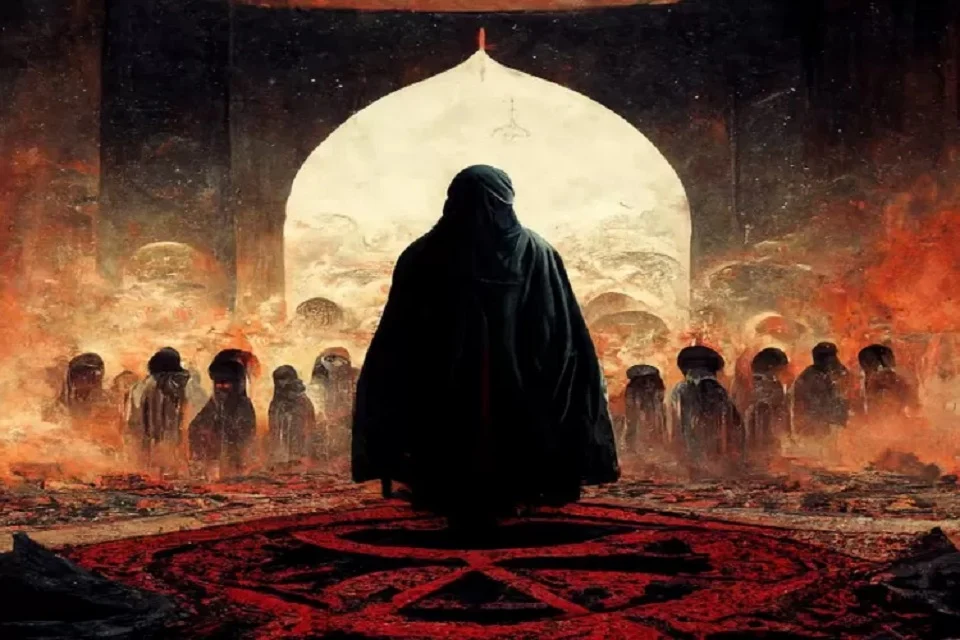
The theological framework of Islamic eschatology provides a detailed account of the events preceding the Day of Judgment, with the emergence of the Dajjal, or the False Messiah, serving as one of the most significant trials for humanity. Central to this narrative are specific prophetic traditions, or Hadiths, that delineate the composition of the Dajjal’s following, most notably highlighting a group of 70,000 individuals from the city of Isfahan and a significant demographic of women. These accounts, preserved in the canonical collections of Sahih Muslim and Musnad Ahmad, offer a glimpse into the perceived socio-religious landscape of the end times, framing the Dajjal not merely as a singular villain but as a global phenomenon that attracts specific cohorts through deception and the promise of worldly power.
The Prophetic Warnings and the 70,000 of Isfahan
According to the testimony of Anas bin Malik, a prominent companion of the Prophet Muhammad SAW, the Prophet explicitly identified a core group of the Dajjal’s supporters. The Hadith, recorded in Sahih Muslim (2944), states: "The Dajjal will be followed by seventy thousand Jews from Isfahan, wearing thayalisah." This specific detail regarding the number and the location provides a geographical and cultural anchor to the eschatological prophecy.
Isfahan, a city in modern-day Iran, has a history that stretches back millennia. In the context of the Hadith, the mention of "thayalisah" is particularly significant. A thayalisah (plural of tailasan) refers to a specific type of mantle or shawl worn over the shoulders, often associated with scholars, dignitaries, or specific ethnic groups in the ancient Near East and Persia. By identifying this garment, the prophecy provides a visual marker for the Dajjal’s vanguard. Scholarly interpretations suggest that the "70,000" may represent a literal count or, in the linguistic tradition of the time, a figure denoting a vast and formidable multitude.
The presence of a Jewish community in Isfahan is historically documented, with the city once housing a significant district known as Yahudiyyah. While modern demographics have shifted, the theological narrative focuses on the spiritual and political alignment that occurs during the "Fitnah" (trial) of the Dajjal. From an Islamic perspective, these followers are seen as those who mistake the Dajjal for the true Messiah, a central point of divergence between the three Abrahamic faiths.
The Vulnerability of Women in the End-Time Narrative
Beyond the specific group from Isfahan, Islamic tradition also emphasizes that women will constitute a large portion of the Dajjal’s followers. A Hadith narrated by Utsman bin Abil ‘Ash and recorded in Musnad Ahmad (4/216-217) notes: "Most of the followers of the Dajjal will be Jews and women."
This aspect of the prophecy has been the subject of extensive commentary by Islamic scholars throughout history. The inclusion of women in this demographic is often interpreted not as a commentary on gender, but as a reflection of the Dajjal’s deceptive tactics. The Dajjal is described in scripture as possessing the ability to manipulate the physical world—bringing rain, reviving the dead (through demonic trickery), and providing food during times of famine.
Scholars like Ibn Kathir have noted that the Dajjal preys on the emotional and the vulnerable, as well as those whose ties to religious knowledge have been severed. In another narration found in Musnad Ahmad, the Prophet SAW warned that the Dajjal’s influence would be so pervasive that a man might return to his home and tie down his female relatives—his mother, daughter, sister, and aunt—to prevent them from rushing out to meet the Dajjal and falling under his spell. This metaphorical or literal warning underscores the perceived intensity of the Dajjal’s "fitnah" and the high stakes of spiritual preservation.
Comparative Eschatology: The "Al-Masih bin Dawud" Perspective
The Islamic narrative of the Dajjal intersects in complex ways with Jewish and Christian eschatology. In the source material, it is noted that within certain Jewish traditions, the figure Muslims identify as the Dajjal is viewed as a long-awaited king or messianic figure. The name "Al-Masih bin Dawud" (The Messiah, son of David) is mentioned as the title given to this figure by his followers.
In Jewish eschatology, the arrival of the Mashiach (Messiah) is a cornerstone of faith, representing a leader who will restore the Davidic kingdom and bring a period of global peace. However, Islamic theology posits that the Dajjal is a "Masih ad-Dajjal" (The Deceptive Messiah) who mimics these signs to lead people astray. This creates a theological "clash of messiahs," where the figure one group sees as a savior, another sees as the ultimate personification of evil.
The Dajjal is described as a one-eyed man with the word Kafir (disbeliever) written between his eyes—a sign that only true believers will be able to read, regardless of their literacy. This serves as a divine safeguard, ensuring that the distinction between truth and falsehood remains accessible to those with spiritual insight, even as the world at large is captivated by the Dajjal’s "miracles."
Chronology of the Dajjal’s Emergence and Reign
The appearance of the Dajjal is considered one of the "Major Signs" of the Hour (Qiyamah). The chronological sequence according to various Sahih (authentic) reports is as follows:
- The Period of Hardship: Prior to his emergence, the world will experience three years of increasing drought and famine. In the first year, the sky withholds one-third of its rain; in the second, two-thirds; and in the third, no rain falls at all, leading to the death of livestock and widespread starvation.
- The Emergence from the East: The Dajjal will appear from a path between Syria and Iraq, or according to other reports, from the region of Khorasan or Isfahan.
- The Forty-Day Reign: He will travel the earth for forty days. The Prophet SAW explained that "one day will be like a year, one day like a month, one day like a week, and the rest of his days like your (normal) days." This indicates a temporal distortion or a period of rapid global conquest.
- The Siege of Cities: The Dajjal will attempt to enter every city on earth, but he will be barred from entering Mecca and Medina by angels guarding the gates.
- The Descent of Isa (Jesus) AS: As the Dajjal corners the believers in Jerusalem (Bayt al-Maqdis), Prophet Isa AS will descend at the white minaret in Damascus. He will lead the final battle against the Dajjal.
- The End at the Gate of Ludd: The Dajjal will be pursued and eventually killed by Prophet Isa AS at the Gate of Ludd (in modern-day Israel), signaling the collapse of his empire and the beginning of a period of justice on earth.
Theological and Social Implications: Analysis of the Fitnah
The narrative of the Dajjal’s followers serves several purposes within the Islamic faith. First, it acts as a call to spiritual vigilance. The mention of specific demographics—Jews and women—is often used by scholars to highlight the importance of "Ilm" (knowledge). By understanding the signs of the Dajjal, believers are encouraged to ground themselves in theology so as not to be swayed by external appearances or material promises.
From a sociological perspective, the Dajjal represents the ultimate "cult of personality." His ability to provide sustenance during a famine symbolizes how economic desperation can lead to the abandonment of moral and spiritual principles. The "70,000 from Isfahan" represent the organized, political, and military support that such a figure would require to exert global influence.
Furthermore, the emphasis on women in the Hadith has led to a traditional focus on the education of women within Muslim households. If the "fitnah" is most dangerous to those who are disconnected from the community or the mosque, then ensuring that women have equal access to religious education and protective community structures becomes a theological necessity rather than just a social goal.
Responses from the Ulama and Academic Perspectives
Contemporary Islamic scholars (Ulama) often contextualize these Hadiths within the modern era. Many argue that the "Dajjalic system" is already in play—referring to a world order that prioritizes materialism and godlessness. The Council of Senior Scholars in various Muslim nations often issues guidance emphasizing that the "followers of Dajjal" are not just those who will be present at his physical arrival, but those who currently adopt his values of deception and arrogance.
Academic researchers in the field of religious studies view these prophecies as "crisis literature." Such texts often emerge or gain popularity during times of political upheaval or perceived moral decay. By identifying specific groups and locations, the texts provide a map for the faithful to navigate a chaotic world.
While the literal interpretation of 70,000 Jews from Isfahan remains a staple of orthodox belief, some modern thinkers suggest that the Dajjal’s following represents any group that chooses earthly power over divine truth. However, the preservation of these specific Hadiths in Sahih Muslim ensures that the traditional, literalist view remains the dominant framework for the majority of the world’s 1.8 billion Muslims.
Conclusion: The Enduring Power of the Eschatological Narrative
The story of the Dajjal and his 70,000 followers remains one of the most potent narratives in Islamic tradition. It serves as a stark reminder of the frailty of human conviction in the face of overwhelming deception. By detailing the origins and characteristics of those who will follow the False Messiah, the prophetic traditions seek to arm the believer with the "Basira" (insight) necessary to distinguish between the mirage of the Dajjal’s paradise and the reality of his fire.
As the world continues to grapple with misinformation, economic instability, and shifting global powers, the eschatological warnings regarding Isfahan, the thayalisah garments, and the vulnerability of the masses continue to resonate. For the faithful, these are not merely stories of the past, but a roadmap for a future that requires unwavering faith and a critical eye toward the "miracles" of the material world. The ultimate message of the narrative is one of hope: that despite the overwhelming odds and the vast numbers following the Dajjal, the forces of truth, led by the return of Isa AS, will ultimately prevail.
