
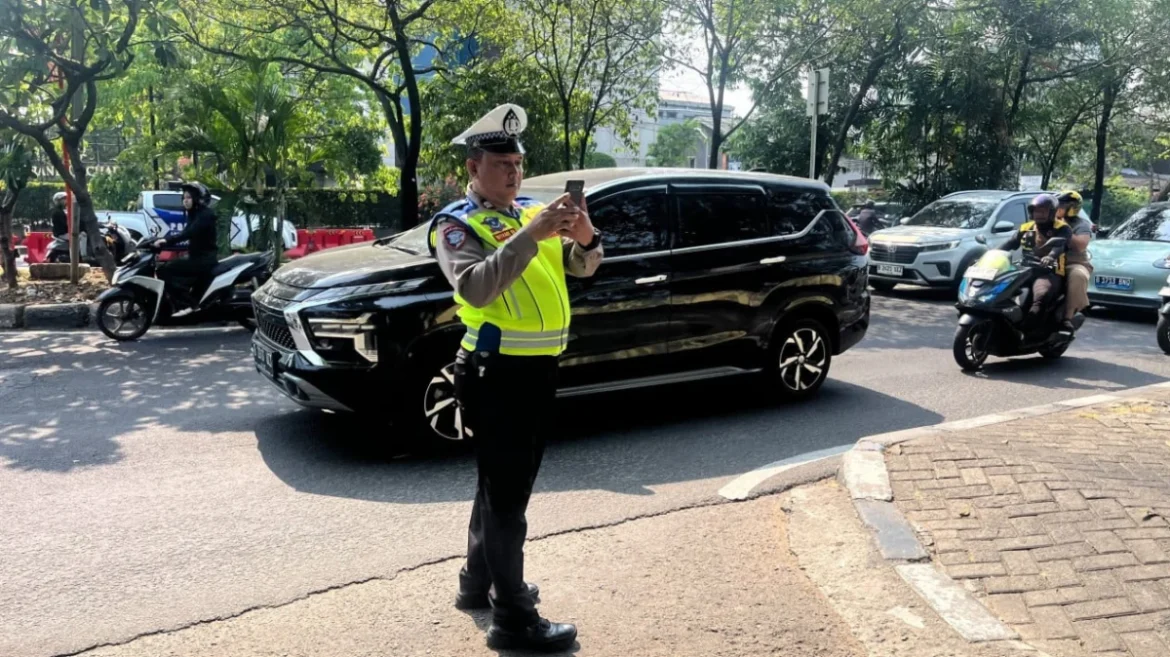
JAKARTA, July 25, 2026 – Despite the presence of advanced Electronic Traffic Law Enforcement (ETLE) technology, a significant number of motorcyclists continue to flout traffic regulations in the Kemayoran area of Central Jakarta. Over a mere ninety-minute period, authorities documented hundreds of infractions, highlighting a persistent challenge in fostering a culture of road safety and adherence to the law.
The extent of these violations was starkly revealed during a recent monitoring operation conducted by the Central Jakarta Metro Police Traffic Unit in the Rajawali, Kemayoran area. During this focused surveillance, which lasted approximately an hour and a half, law enforcement officers meticulously recorded the actions of passing motorcyclists. The data collected paints a concerning picture: a total of 213 motorcyclists were documented committing various traffic offenses.
This figure is broken down further by the technology employed. The ETLE Mobile units, designed for dynamic traffic monitoring, captured 100 distinct violations. Complementing this, ETLE Handheld devices, used for more targeted enforcement, documented an additional 113 infractions. The combined total underscores the pervasive nature of the problem within this specific corridor.
Pattern of Persistent Violations Uncovered
The types of violations observed are not new to traffic enforcement agencies but remain alarmingly prevalent. Among the most frequently committed offenses were the blatant disregard for helmet mandates and the dangerous practice of riding against the flow of traffic. These actions, while seemingly simple, significantly elevate the risk of severe injury or fatality in the event of an accident.
Beyond these fundamental safety breaches, other concerning behaviors were also noted. A number of riders were observed deliberately obscuring their vehicle license plates. This tactic is often employed to evade identification and subsequent ticketing by ETLE systems, suggesting a premeditated effort to circumvent the law. Furthermore, the use of modified exhaust systems, commonly referred to as "brong" or "racing" exhausts, which exceed technical specifications and produce excessive noise pollution, was also a recurring violation.
Aiptu Adi Setiadi, the Team Leader for the ETLE Handheld unit within the Central Jakarta Metro Police Traffic Unit, acknowledged the persistence of these behaviors. "The violations we are seeing in this area are still numerous, including riders not wearing helmets, riding against traffic, covering license plates to avoid ETLE identification, and using loud, non-compliant exhausts," Setiadi stated, as quoted by VIVA Otomotif from Korlantas Polri. His remarks indicate that these patterns are not isolated incidents but rather habitual practices observed during routine patrols.

ETLE: More Than Just Enforcement, a Tool for Behavioral Change
The implications of these violations extend far beyond mere administrative penalties. Aiptu Setiadi emphasized that these infractions are not simply breaches of traffic regulations but actively contribute to an increased risk of road accidents. The dangers are compounded by the fact that Kemayoran is a busy thoroughfare, with a mix of local traffic, commuters, and potentially higher-speed vehicles.
The implementation of ETLE, therefore, serves a dual purpose. While it is an effective tool for identifying and penalizing offenders, its ultimate aim is to foster a more disciplined and safety-conscious driving public. The system aims to create a deterrent effect, encouraging individuals to reconsider their actions and adhere to traffic laws consistently.
In addition to the technological enforcement measures, the Central Jakarta Metro Police Traffic Unit also recognizes the importance of proactive engagement and education. Personnel were observed not only issuing citations but also engaging with road users to provide direct guidance and reminders. These educational efforts are crucial for reinforcing the message of safe and responsible driving.
Motorcyclists were explicitly advised to consistently use SNI (Standar Nasional Indonesia) certified helmets, to refrain from riding against the flow of traffic, to ensure their license plates are clearly visible and not obscured, and to utilize exhaust systems that comply with all technical regulations. This multi-pronged approach, combining enforcement with education, is considered essential for addressing the deep-rooted issues of traffic law non-compliance.
Broader Context of Traffic Enforcement in Jakarta
The situation in Kemayoran is emblematic of broader traffic management challenges faced by Jakarta, one of the most densely populated megacities in the world. With a burgeoning vehicle population and a complex road network, maintaining order and safety on the streets is a constant undertaking.
Jakarta’s traffic enforcement landscape has evolved significantly with the introduction and expansion of ETLE technology. Initially rolled out to combat specific violations like red-light running and lane discipline, ETLE has become a cornerstone of the city’s traffic management strategy. The system’s ability to capture photographic and video evidence of violations provides irrefutable proof, minimizing the subjectivity often associated with traditional traffic stops.

However, the persistent violations in areas like Kemayoran suggest that technological solutions alone are insufficient. Factors such as cultural attitudes towards traffic laws, perceived impunity, and the sheer volume of vehicles can create an environment where violations become normalized. The deliberate act of covering license plates, as observed, points to a segment of the driving population actively seeking to evade accountability, highlighting a gap in societal respect for traffic regulations.
The Role of Public Awareness and Education
The educational component of the police’s efforts is therefore critical. Raising public awareness about the dangers of specific violations, such as not wearing helmets or riding against traffic, needs to be a continuous campaign. This includes emphasizing the personal risks involved, not just the legal consequences. The emotional and financial toll of accidents on individuals and their families can be a powerful motivator for behavioral change.
Furthermore, the effectiveness of ETLE relies on public perception and acceptance. When enforcement is seen as fair, consistent, and focused on genuine safety concerns, it is more likely to gain public trust and compliance. The use of advanced technology like ETLE Mobile and Handheld aims to achieve this by ensuring that enforcement is widespread and less prone to bias.
Statistical Trends and Future Outlook
While specific year-on-year comparative data for Kemayoran’s violations was not provided in the initial report, broader trends in Jakarta’s traffic enforcement often reveal fluctuations based on targeted operations and the expansion of ETLE coverage. The sheer number of violations recorded in a short period in Kemayoran suggests that this area may require sustained and intensified enforcement efforts.
The Korlantas Polri (National Police Traffic Corps) continues to advocate for technological advancements and policy refinements to improve road safety across Indonesia. The data from Kemayoran will likely inform future strategies, potentially leading to increased patrols, enhanced public awareness campaigns tailored to specific behavioral patterns, and perhaps even adjustments to penalty structures for repeat offenders.
The underlying challenge remains to shift the mindset of a significant portion of road users from a reactive approach to traffic laws to a proactive commitment to safety and compliance. The ongoing efforts in Kemayoran, combining the technological might of ETLE with the human element of education and community engagement, represent a critical battle in the larger war for safer streets in Jakarta and beyond. The ultimate success will be measured not just by the number of tickets issued, but by a demonstrable reduction in accidents and a visible increase in responsible road user behavior.
