
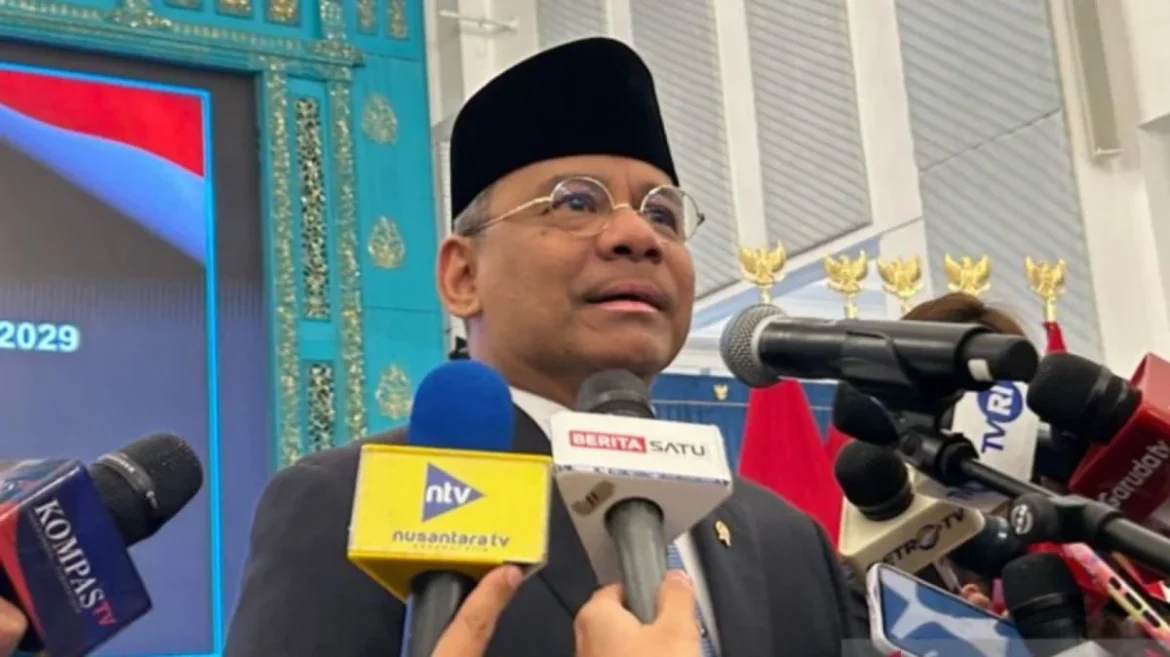
The Ministry of Finance of the Republic of Indonesia is currently conducting a comprehensive review of the recent structural reshuffle within the Directorate General of Taxes (DJP) and the Directorate General of Customs and Excise (DJBC). Minister of Finance Suahasil Nazara confirmed that the ministry is meticulously evaluating the appointment and inauguration processes of officials to ensure that the new administrative landscape aligns with the government’s broader objectives for institutional synergy and operational efficiency.
Speaking at the Presidential Palace complex in Jakarta on Wednesday, September 16, 2026, Minister Suahasil Nazara addressed the ongoing uncertainty regarding the status of these leadership changes. The ministry is presently weighing the validity and the structural implications of the appointments that have already been executed, including those conducted through both in-person and hybrid modalities.
Contextualizing the Administrative Review
The administrative scrutiny follows a period of significant transition within the economic cabinet of President Prabowo Subianto. As the government seeks to stabilize fiscal policy and optimize revenue collection, the roles of the Directorate General of Taxes and the Directorate General of Customs and Excise have become increasingly critical. These two bodies represent the primary engines of state revenue, and any volatility in their leadership structures can have immediate ramifications for the national budget.
Minister Suahasil emphasized that the appointment of officials within the Ministry of Finance is a multi-layered, rigorous process. It is not merely a selection of individuals but a strategic realignment of human capital intended to bridge the gaps between different Echelon I units. The objective, according to the Minister, is to move away from siloed operations and toward a more integrated, cross-unit collaborative model.
"We are currently in the discussion phase, observing the processes and the activities that have already transpired," Suahasil stated. "The appointment of officials involves several levels of hierarchy and is conducted collectively by all Echelon I units. We need to ensure that the structural changes we implement actually serve the purpose of strengthening coordination and internal synergy."
The Rationale Behind Cross-Unit Synergy
In the Indonesian bureaucratic framework, Echelon I units often operate with a high degree of autonomy. While this allows for specialized focus in areas such as tax auditing, customs enforcement, or treasury management, it can sometimes lead to fragmented data sharing and policy misalignment. The Ministry of Finance’s current initiative appears aimed at breaking these barriers.
By creating structures that mandate coordination across unit lines, the ministry hopes to streamline revenue collection and enhance compliance. For instance, the integration of data between the Directorate General of Taxes and Customs and Excise is vital for tracking cross-border transactions and ensuring that trade-related taxes are correctly assessed and collected.

Minister Suahasil underscored that the current evaluation is not necessarily a precursor to a wholesale cancellation of previous appointments. Instead, it is a quality assurance process. The ministry is reviewing the appointments to ensure they meet the institutional requirements for the upcoming fiscal year, which demands higher levels of performance and inter-agency cooperation.
Chronology of Recent Bureaucratic Shifts
The current atmosphere of flux within the Ministry of Finance comes shortly after high-level leadership changes at the top of the ministry itself. The transition from the former Minister of Finance to the current administration has necessitated a review of key personnel across all critical departments.
- Early September 2026: Initial discussions regarding the performance evaluation of Echelon I and II officials across the Ministry of Finance.
- Mid-September 2026: Implementation of various appointment and inauguration ceremonies for new officials in the DJP and DJBC, with some sessions conducted via hybrid video conferencing.
- September 16, 2026: Minister Suahasil Nazara publicly acknowledges the ongoing internal review, noting that the ministry is auditing the "processes and activities" of the recent changes.
- September 17, 2026: Confirmation that the ministry is still awaiting feedback from all Echelon I heads to finalize the structure of the new leadership team.
The shift in leadership, including the transition involving Purbaya Yudhi Sadewa, has been characterized by government spokespersons as a standard administrative procedure. The Palace has maintained that changes in personnel at the ministerial and sub-ministerial levels are routine and should not be viewed as an indicator of political instability.
Supporting Data and Fiscal Challenges
The urgency of these administrative reviews is underscored by the current economic climate. In 2026, the Indonesian government has faced mounting pressure to meet ambitious tax-to-GDP ratio targets. The Directorate General of Taxes (DJP) is currently tasked with implementing a more robust digital transformation, including the integration of the Core Tax Administration System (CTAS).
The performance of the Directorate General of Customs and Excise (DJBC) is equally pivotal, particularly in regulating the influx of imported goods and protecting domestic industries from unfair trade practices. Recent data indicates that fluctuations in global commodity prices and changes in international trade regulations have placed significant strain on customs operations.
Efficient leadership within these departments is essential for:
- Revenue Optimization: Ensuring that tax loopholes are closed and administrative burdens are reduced.
- Compliance and Integrity: Reducing the potential for corruption by establishing clear, transparent, and monitored hierarchies.
- Digital Integration: Managing the transition to modernized IT systems that require strong leadership and cross-departmental buy-in.
Official Stance and Future Outlook
When questioned about the possibility of reversing previous appointments, Minister Suahasil remained cautious. He noted that the complexity of the "hybrid" nature of the appointments—some of which involved officials attending in person while others joined remotely—requires a thorough review of the legal and administrative records.
"We will look at what was done yesterday," the Minister explained. "Because there were hybrid inaugurations, we need to combine all the information to ensure the overall integrity of the process."

The Ministry of Finance is expected to provide a definitive statement on the finalized structure of the tax and customs leadership in the coming weeks. For stakeholders, investors, and the business community, the stability of these institutions is of paramount importance. A clear, well-coordinated leadership team at the DJP and DJBC is seen as a necessary prerequisite for maintaining investor confidence and ensuring a predictable tax and regulatory environment.
Analysis of Implications
The ongoing review reflects a broader trend within the Prabowo administration to prioritize "Institutional Strengthening." By focusing on the mechanics of how officials are appointed and how they coordinate, the administration is signaling a shift toward performance-based governance.
If the review leads to a re-adjustment of the current personnel, it could suggest that the government is prioritizing technical competence and cross-functional experience over traditional seniority-based promotions. Furthermore, the emphasis on "synergy" suggests that the Ministry of Finance intends to reduce the operational friction that has historically hampered inter-agency collaboration.
However, the uncertainty of the current review period may also present challenges. Frequent reshuffles, or the threat thereof, can lead to "bureaucratic inertia," where officials are hesitant to make long-term decisions until their positions are solidified. To mitigate this, the ministry must conclude its evaluation expeditiously to provide clarity to the thousands of civil servants and stakeholders who rely on the continuity of tax and customs policy.
Conclusion
As the Ministry of Finance continues its assessment of the leadership structures within the Directorate General of Taxes and the Directorate General of Customs and Excise, the focus remains on ensuring that the nation’s financial machinery is running at peak efficiency. Minister Suahasil Nazara’s commitment to reviewing the processes of appointment highlights a cautious, deliberate approach to governance.
The success of these reforms will ultimately be measured by the ability of the new leadership to navigate the complexities of 2026’s economic landscape. Whether through the maintenance of existing appointments or the strategic adjustment of key roles, the goal remains clear: to build a more cohesive, transparent, and effective Ministry of Finance capable of supporting the national interest in an increasingly competitive global environment.
The coming days will be critical, as the ministry reconciles the feedback from its various Echelon I units and moves to solidify the leadership team that will carry out the government’s fiscal agenda for the remainder of the year and beyond. The public and the business sector will be watching closely for the next steps in this institutional realignment, waiting for confirmation of a stable and unified front within Indonesia’s most vital financial institutions.
