
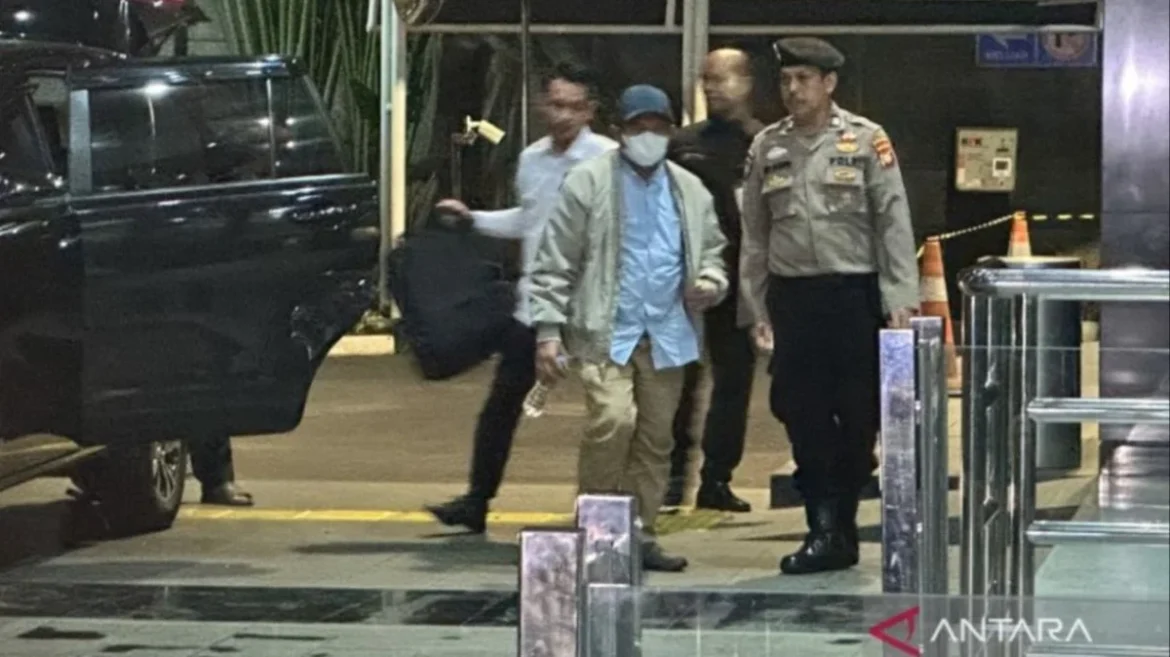
Jakarta, VIVA – The Corruption Eradication Commission (KPK) has officially named Lalu Ahmad Zaini (LAZ), the sitting Regent of Lombok Barat for the 2025-2030 period; Sudirman (SUD), the President Director of PT Air Minum Giri Menang (Perseroda); and ALG, a private sector executive identified as the Director of PT MSI, as suspects in an alleged corruption case. The announcement, made on Tuesday, July 21, 2026, at the KPK’s Red and White Building in Jakarta, follows an extensive investigation that began with a robust sting operation. This development marks a significant blow to regional governance and public trust in West Nusa Tenggara, underscoring the KPK’s unwavering commitment to tackling graft at all levels of government and state-owned enterprises.
Chronology of the Investigation and Arrests
The path to these arrests began swiftly and decisively on Monday, July 20, 2026, when the KPK launched a large-scale sting operation (Operasi Tangkap Tangan – OTT) in Lombok Barat. This operation initially led to the apprehension of 19 individuals. The focus of the initial phase was to secure evidence and identify key players involved in the alleged illicit activities. Following preliminary questioning on location, a select group of seven individuals deemed central to the investigation was immediately transported to the KPK’s headquarters in Jakarta for more intensive scrutiny. These individuals included Regent Lalu Ahmad Zaini himself, along with Sudirman, the President Director of PT Air Minum Giri Menang (Perseroda).
As the investigation progressed rapidly overnight, the KPK’s investigative team conducted further analysis of the evidence and testimonies gathered. This intensive review led to the decision to bring in an eighth individual for questioning in Jakarta, further broadening the scope of the probe. The eight individuals subjected to extended examination in Jakarta comprised Regent Lalu Ahmad Zaini, Sudirman (President Director of PT Air Minum Giri Menang), Lalu Ratnawi (Head of the Lombok Barat Public Works, Spatial Planning, Housing, and Settlement Areas Agency – PUPRPKP), the Regent’s aide, Sudirman’s aide, Sudirman’s driver, and two private sector individuals, one of whom was later identified as ALG, the Director of PT MSI.
By Tuesday, July 21, 2026, based on the compelling preliminary evidence and sufficient supporting materials, the KPK officially escalated the case to the investigative stage. During a press conference held at their Jakarta headquarters, Pelaksana Tugas Direktur Penyidikan (Acting Director of Investigation) Achmad Taufik Husein confirmed the formal designation of the three primary suspects: Lalu Ahmad Zaini (LAZ), Sudirman (SUD), and ALG. Simultaneously with their suspect status, the KPK announced the immediate detention of all three individuals for the first 20 days of the investigation, spanning from July 21 to August 9, 2026. They are currently held at the KPK’s detention facility within the Red and White Building in Jakarta, a standard procedure to prevent tampering with evidence and ensure their presence for ongoing questioning.
Allegations and Legal Framework
The core of the allegations against Regent Lalu Ahmad Zaini and Sudirman revolves around a deeply entrenched conflict of interest within the procurement of goods and services within the Lombok Barat Regency Government and its affiliated entities, notably PT Air Minum Giri Menang (Perseroda). The KPK suspects that Zaini and Sudirman leveraged their positions to manipulate procurement processes, likely for personal gain or to benefit specific parties, including PT MSI.
Specifically, Zaini and Sudirman are charged under Article 12 letter i of Law Number 31 of 1999 concerning the Eradication of Criminal Acts of Corruption, as amended by Law Number 20 of 2001. This article addresses illicit acts committed by state officials or those entrusted with state duties who, directly or indirectly, participate in the procurement of goods or services where they have a conflict of interest. This particular charge highlights the exploitation of their official roles for personal or group enrichment through public contracting.

Furthermore, Zaini and Sudirman are also suspected of acting as recipients of bribes. For this, they are charged under Article 12 letter a or letter b and/or Article 12B of Law Number 31 of 1999, as amended by Law Number 20 of 2001. These articles pertain to gratification, which is defined as receiving money, goods, discounts, commissions, loans without interest, travel tickets, facilities for accommodation, tours, free medical treatment, and other facilities, which is related to their position and contrary to their obligations or duties. The inclusion of Article 12B, concerning gratification, suggests a pattern of receiving benefits that could influence their official decisions, blurring the lines between legitimate remuneration and corrupt practices. These charges are further compounded by Article 20 letter c Jo Article 21 of Law Number 1 of 2023 concerning the Criminal Code (KUHP), which would deal with the specific criminal acts and penalties under the new penal code.
On the other side of the alleged transaction, ALG, as the Director of PT MSI, is suspected of being the briber. He faces charges under Article 605 or Article 606 Paragraph (1) of Law Number 1 of 2023 concerning the Criminal Code (KUHP) Jo Law Number 1 of 2026 concerning Criminal Sanction Adjustments. These articles in the new KUHP would address the act of giving bribes or gratification, which is a criminal offense designed to influence public officials in their duties. The reference to Law No. 1 of 2026 suggests the application of updated penalties and procedural adjustments relevant to the current legal framework. The combination of these charges paints a clear picture of a reciprocal corruption scheme involving public officials and private sector entities.
Background and Context of Corruption in Indonesia
This case in Lombok Barat is not an isolated incident but rather a stark reminder of the persistent challenges Indonesia faces in its fight against corruption, especially at the regional level and within state-owned enterprises (BUMDs). Regional heads, such as Regents and Mayors, hold significant power over local budgets, development projects, and appointments, making them vulnerable targets for corruption. The KPK, since its establishment in 2002, has consistently identified public procurement as one of the most susceptible areas to corruption. Data from previous years indicates that cases related to procurement often account for a substantial percentage—sometimes over 40%—of all corruption cases handled by the KPK. This is largely due to the complexity of tenders, the large sums of money involved, and the discretion officials often have in awarding contracts.
PT Air Minum Giri Menang (Perseroda) exemplifies a regional state-owned enterprise (BUMD). These entities are crucial for providing essential public services, in this case, clean water, to the community. While intended to serve the public interest, BUMDs often become fertile ground for corruption due to weak oversight, political interference, and the lucrative nature of their operations and procurement needs. The involvement of the President Director of such a vital public utility highlights the potential for corruption to directly impact basic services for citizens.
Lombok Barat, located in West Nusa Tenggara, is a region with significant tourism potential and ongoing development projects. The need for infrastructure, public services, and economic growth often translates into substantial public spending, which, without stringent oversight and integrity, can become an opportunity for illicit enrichment. The alleged actions of the Regent and the water utility director could undermine public trust, hinder sustainable development, and divert crucial funds away from projects that genuinely benefit the local populace.
The KPK itself was formed as an independent body with broad powers to investigate, prosecute, and prevent corruption. Its mandate includes conducting investigations, making arrests, and pursuing legal action against high-profile corruption cases that involve state officials. Over the years, the KPK has successfully prosecuted numerous governors, regents, mayors, ministers, and members of parliament, demonstrating its vital role in upholding the rule of law and promoting good governance in Indonesia. This particular case further solidifies the KPK’s reputation as a relentless anti-corruption force.
Implications and Broader Impact
The arrest and naming of a sitting Regent, a key BUMD director, and a private executive as suspects carry profound implications for Lombok Barat and the broader Indonesian anti-corruption landscape.

Impact on Regional Governance and Public Trust:
The immediate consequence for Lombok Barat is a likely disruption in governance. With the Regent in detention, an acting regent will need to be appointed to ensure the continuity of public services and local administration. This leadership vacuum, even temporary, can slow down decision-making and project implementation. More critically, the incident erodes public trust in local government institutions. Citizens rely on their elected officials and public service providers to act with integrity. Allegations of corruption, especially involving basic services like water, can foster cynicism and apathy, making it harder for legitimate government initiatives to gain public support.
Integrity of Public Services and BUMDs:
The involvement of the President Director of PT Air Minum Giri Menang (Perseroda) is particularly concerning. If procurement processes for water infrastructure, maintenance, or supplies were compromised due to corruption, it could directly impact the quality, reliability, and affordability of clean water services for the residents of Lombok Barat. Such illicit practices can lead to inflated project costs, substandard materials, or incomplete projects, ultimately burdening taxpayers and harming the community. This case serves as a stark warning to other BUMDs across Indonesia to strengthen their internal controls and transparency mechanisms.
Deterrence and KPK’s Role:
For the KPK, this operation reaffirms its independence and effectiveness. Each successful prosecution, especially involving high-ranking officials, acts as a deterrent. It sends a clear message that no position is immune from scrutiny and accountability. The use of a swift OTT followed by immediate suspect designation and detention demonstrates the KPK’s operational efficiency and commitment to following through on credible intelligence. This will likely encourage citizens to report suspicious activities and bolster the morale of anti-corruption advocates.
Economic Ramifications:
Corruption siphons public funds that could otherwise be used for essential development projects, education, healthcare, or poverty alleviation programs. In Lombok Barat, the alleged misuse of funds could mean stalled infrastructure projects, reduced investment in critical sectors, and a less attractive environment for ethical investors. The long-term economic cost of such practices far outweighs any short-term personal gain for those involved.
Strengthening Legal and Oversight Mechanisms:
This case will undoubtedly spark renewed calls for strengthening internal oversight mechanisms within regional governments and BUMDs. It may also prompt discussions on legislative reforms to close loopholes in procurement laws and to enhance the protection for whistleblowers. The continuous evolution of legal instruments, as seen with the application of the new KUHP and the Law on Criminal Sanction Adjustments, reflects Indonesia’s ongoing effort to refine its legal arsenal against corruption.
Official Responses and Forward Path
Following the announcement, Achmad Taufik Husein, representing the KPK, reiterated the commission’s unwavering commitment to eradicating corruption without fear or favor. "Based on valid preliminary evidence and sufficient legal tools, the KPK escalated this case to the investigative stage and designated three individuals as suspects," Taufik stated, emphasizing the meticulous process undertaken. "This action underscores our firm resolve to uphold the rule of law and ensure that public funds are utilized solely for the welfare of the people." He further assured the public that the investigation would be conducted thoroughly, professionally, and transparently, urging all relevant parties to cooperate fully.
In response to the unprecedented situation, the Lombok Barat Regional Government is expected to issue an official statement emphasizing its full cooperation with the KPK. Such a statement would typically confirm the appointment of an interim official to ensure the continuity of governance and public services, particularly in critical areas like water supply. Local officials would likely express regret over the incident while reaffirming their commitment to good governance, transparency, and internal reforms to prevent similar occurrences in the future. Steps might include reviewing procurement policies and strengthening internal audit functions within the regional administration and PT Air Minum Giri Menang (Perseroda).
Civil society organizations and anti-corruption watchdogs in Indonesia are anticipated to welcome the KPK’s decisive action. Groups like Transparency International Indonesia or local NGOs would likely issue statements commending the KPK for its relentless pursuit of justice, while also calling for a thorough and expedited judicial process. They might also seize the opportunity to advocate for greater public participation in oversight, enhanced whistleblower protection, and more robust asset recovery mechanisms to ensure that stolen public funds are returned to the state. The case of Lombok Barat serves as a potent reminder that the fight against corruption is a continuous battle requiring vigilance from all sectors of society.
