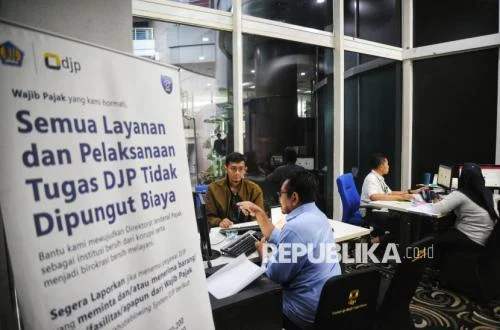
JAKARTA – Amid persistent economic challenges and a notable weakening of both business activity and public purchasing power, the Center for Indonesian Taxation Analysis (CITA) has urged the Indonesian government to adopt a more realistic fiscal strategy. Fajry Akbar, Head of Research at CITA, has proposed a dual approach: lowering ambitious tax revenue targets while simultaneously enhancing the efficiency of government spending. This recommendation comes at a critical juncture, as the Directorate General of Taxes (DJP) has recently unveiled an expanded and technologically advanced surveillance policy aimed at boosting compliance and widening the tax base, a move that has sparked considerable debate and concern among tax observers and the business community.
Akbar’s counsel underscores a fundamental tension in Indonesia’s fiscal policy: the drive for optimal tax collection versus the realities of a still-recovering economy and a historically weak tax base. He contends that an aggressive push for revenue optimization is untenable when the underlying economic conditions and the capacity of the tax base have not shown significant improvement. "If we use data from the International Labour Organization (ILO), the average income of workers in Indonesia is among the lowest in ASEAN. It is therefore reasonable that our tax ratio also stands as one of the lowest in the region," Akbar explained in Jakarta on Saturday, July 18, 2026, highlighting the structural limitations that impede higher tax collection.
Economic Context and the Call for Fiscal Realism
The backdrop to CITA’s recommendation is a global and domestic economic landscape marked by uncertainty. Post-pandemic recovery has been uneven, challenged by lingering supply chain disruptions, inflationary pressures, and geopolitical tensions that impact international trade and investment. Domestically, while certain sectors have shown resilience, many businesses, particularly micro, small, and medium enterprises (MSMEs), continue to grapple with subdued demand, increased operational costs, and tight credit conditions. Consumer purchasing power, a vital engine for economic growth, remains constrained by rising prices and stagnant wage growth for a significant portion of the workforce.
In this environment, CITA argues that setting overly ambitious tax targets can lead to counterproductive outcomes. When businesses are struggling, aggressive tax enforcement can stifle growth, deter investment, and potentially push more economic activity into the informal sector, further eroding the tax base. Instead, Akbar advocates for a pragmatic adjustment of revenue targets to align with economic realities. Concurrently, he stresses the importance of expenditure efficiency, suggesting that streamlining government spending can free up resources, reduce the need for excessive tax collection, and ensure that public funds are utilized optimally to stimulate sustainable growth and provide essential services. This approach aims to create a virtuous cycle where efficient spending supports economic recovery, which in turn organically strengthens the tax base over time.
Indonesia’s Persistent Tax Challenge: Low Tax Ratio and Income Levels
Indonesia’s tax ratio, which typically hovers around 10-11% of its Gross Domestic Product (GDP), has been a long-standing concern for policymakers and economists. This figure consistently places Indonesia among the lower tier of ASEAN countries, lagging behind peers such as Thailand (typically 16-17%), Malaysia (15-16%), and Vietnam (19-20%). The implications of a low tax ratio are profound: it limits the government’s fiscal space for critical public investments in infrastructure, education, healthcare, and social safety nets, potentially hindering long-term development.
Several factors contribute to this persistent challenge. A significant portion of Indonesia’s economy operates within the informal sector, where businesses and individuals often fall outside the formal tax net. This informal economy, while providing livelihoods for millions, represents a substantial untapped revenue source. Furthermore, as Akbar pointed out, the average income levels of Indonesian workers, particularly those in lower-skilled occupations, remain relatively low compared to some regional counterparts. This constrains the individual income tax base and impacts consumption-based taxes. While Indonesia has a large population, the effective taxable income per capita is modest. The existing tax structure also includes various exemptions and incentives, some of which, while intended to stimulate specific sectors, can narrow the tax base if not carefully managed and regularly reviewed. Addressing these structural issues requires comprehensive reforms, including enhancing tax literacy, simplifying compliance procedures, and integrating the informal sector into the formal economy through supportive policies rather than punitive measures alone.
The Directorate General of Taxes’ Ambitious New Approach: SE-8/PJ/2026
In stark contrast to CITA’s call for moderation, the DJP has embarked on an ambitious expansion of its taxpayer compliance oversight mechanisms, formalized through Circular Letter (Surat Edaran) Number SE-8/PJ/2026. This beleid signals a significant shift towards leveraging advanced technology and a broader data collection network to enhance tax revenue. The circular, issued with the primary objective of optimizing tax collection and ensuring compliance, is a direct response to the government’s continuous need for revenue to fund its development agenda and meet fiscal targets.
The core of SE-8/PJ/2026 involves a sophisticated integration of modern technological tools and an unprecedented expansion of data coverage down to the village level. Among the technologies slated for deployment are:
- Remote Sensing: This involves the use of satellite imagery, drone technology, and other geospatial data to identify potential undeclared assets, evaluate property values, monitor business activities, and detect discrepancies in land use or building permits that might indicate under-reported income or wealth. For instance, new construction or expansions in commercial areas or luxury residential zones could trigger further investigation.
- Web Scraping: The DJP plans to systematically collect and analyze publicly available data from the internet. This includes information from e-commerce platforms (tracking sales volumes, types of goods, and seller identities), social media (identifying lifestyle indicators suggestive of undeclared wealth or high-value transactions), and other online business directories or public registries. This aims to capture the burgeoning digital economy and informal online businesses.
- Expanded Database Scope: Beyond technology, the circular mandates a significant expansion of the geographical scope of data collection. By extending its reach to the village level, the DJP intends to tap into previously underserved or untaxed segments of the population and businesses, particularly in rural and semi-urban areas. This initiative is designed to identify unregistered businesses, properties, and individuals who may have taxable income or assets but have not yet entered the formal tax system.
This multi-pronged strategy represents the DJP’s determined effort to modernize its tax administration, reduce the tax gap, and broaden its tax base by leveraging the power of big data and artificial intelligence. However, the implementation of such advanced surveillance, particularly in a nation with diverse socio-economic conditions and varying levels of digital literacy, raises complex questions regarding data privacy, accuracy, and the potential for unintended consequences.
A Militaristic Overreach? The Controversial Role of Security Forces
Perhaps the most contentious aspect of SE-8/PJ/2026 is the explicit directive to forge "information networks" by collaborating with local security forces: the Bintara Pembina Desa (Babinsa) and Bhayangkara Pembina Keamanan dan Ketertiban Masyarakat (Bhabinkamtibmas). Babinsa are non-commissioned officers from the Indonesian Army assigned to villages, primarily for territorial defense, community development, and disaster relief. Bhabinkamtibmas are community police officers stationed in villages, responsible for maintaining public order, crime prevention, and community engagement. Their traditional roles are deeply rooted in fostering security and social cohesion, not in fiscal administration or tax enforcement.
Fajry Akbar’s immediate critique of this involvement as creating a "militaristic impression" in tax collection highlights a deep-seated concern about the blurring of civilian and military/police roles. In a democratic society, tax administration is typically seen as a purely civilian function, governed by specific tax laws and administrative procedures. Involving uniformed personnel, who possess inherent authority and coercive power, could be perceived as intimidating and potentially lead to an environment where citizens feel compelled rather than voluntarily compliant. This approach could erode public trust in both the tax agency and the security forces, whose primary mandate should remain community protection and peace-keeping.
Furthermore, Akbar emphasized the heightened "concern for pelaku UMKM (Micro, Small, and Medium Enterprises) in pedesaan (rural areas)." These businesses, often operating with limited financial literacy, informal bookkeeping, and minimal understanding of complex tax regulations, are particularly vulnerable. The presence of Babinsa or Bhabinkamtibmas in the context of tax information gathering could easily be misinterpreted, leading to fear, confusion, and potential exploitation. Without clear guidelines on what constitutes "information networking" and what the "boundaries" of their involvement are, there is a significant risk of overreach, misinterpretation of data, or even abuse of power. The circular’s lack of explicit detail on these crucial aspects leaves ample room for ambiguity and potential procedural irregularities, raising alarm bells among civil society groups and business associations.
Potential for Disputes and the Burden on Taxpayers
The reliance on technology like remote sensing and web scraping, combined with expanded human networks, while promising in theory, introduces significant risks, particularly regarding data quality and accuracy. As Fajry Akbar warned, "It will certainly give rise to new disputes, especially if the data quality is low or if the fiscus (tax official) has a different interpretation of the data."
Inaccurate or incomplete data obtained through these new methods could lead to unwarranted tax assessments, forcing taxpayers to expend considerable time, effort, and resources to dispute claims. This administrative burden disproportionately affects smaller businesses and individual taxpayers who lack the legal and accounting resources of larger corporations. The potential for an increase in tax disputes could overwhelm the existing dispute resolution mechanisms, including tax courts, leading to backlogs and prolonged legal battles. Moreover, differing interpretations of data between tax officials and taxpayers, especially when dealing with complex financial transactions or informal business practices, could further exacerbate these conflicts. A system that frequently generates disputes risks alienating taxpayers and undermining the very compliance it seeks to foster, shifting the focus from voluntary adherence to an adversarial relationship.
Strategic Focus: Targeting Government Spending Beneficiaries
As an alternative to broad-based surveillance, Fajry Akbar proposed a more targeted approach for tax collection, particularly given the economic drivers observed in the first half of 2026. He noted that economic growth during this period was primarily propelled by government spending. "What drove the economy in Semester I? More because of government spending. Who enjoys government spending? The SPPG entrepreneurs and those related. Their taxes should be pursued," he articulated.
This recommendation highlights a strategic principle: focusing tax enforcement efforts on sectors and entities that directly benefit from state funds. Government spending, especially on large-scale infrastructure projects, procurement of goods and services, and social programs, injects significant capital into the economy. This directly benefits contractors, suppliers, consultants, and various service providers. By directing tax audits and oversight towards these "SPPG entrepreneurs" (likely referring to government procurement partners and related entities), the DJP could potentially achieve higher revenue yields with greater efficiency and perceived fairness. This approach is rooted in the logic that those who profit substantially from public coffers should demonstrably contribute their fair share back to the public purse. It suggests a shift from a generalized, potentially intrusive, data-gathering approach to a more focused, intelligence-led enforcement that targets areas of known economic activity and potential high returns.
Broader Implications and the Path Forward
The implementation of SE-8/PJ/2026 and the reactions it has garnered have significant broader implications for Indonesia’s economic climate, governance, and social contract.
Firstly, Taxpayer Trust and Compliance Culture are at stake. While the DJP’s intent to broaden the tax base and enhance compliance is understandable, the methods employed could have unintended consequences. If taxpayers perceive the system as overly intrusive, arbitrary, or reliant on potentially flawed data, it could erode trust in the tax administration. This erosion of trust can, paradoxically, lead to decreased voluntary compliance, as individuals and businesses might become more inclined to seek ways to avoid taxes rather than embrace their civic duty. A healthy tax system thrives on transparency, fairness, and mutual trust between the tax authority and taxpayers.
Secondly, the Investment Climate and Business Sentiment could be affected. Businesses, particularly foreign investors and larger domestic enterprises, value predictability, regulatory certainty, and a fair playing field. Concerns about aggressive tax enforcement, potential disputes arising from questionable data, or the involvement of non-civilian entities could introduce an element of uncertainty and risk, potentially deterring new investments or encouraging existing businesses to reconsider expansion plans. SMEs, the backbone of the Indonesian economy, are particularly sensitive to regulatory burdens and potential harassment.
Thirdly, the debate underscores the critical need for Clarity, Transparency, and Accountability in the application of these new powers. The DJP must provide clearer guidelines on the scope and limitations of data collection, the methodologies for ensuring data accuracy, and robust mechanisms for taxpayers to challenge assessments without undue burden. Furthermore, the roles, training, and ethical conduct of Babinsa and Bhabinkamtibmas, if they are to remain involved, must be meticulously defined and strictly monitored to prevent any form of intimidation or abuse. Engaging civil society organizations, business associations like KADIN (Indonesian Chamber of Commerce and Industry) and Apindo (Indonesian Employers Association), and legal experts in a transparent dialogue could help refine the implementation framework and build consensus.
Ultimately, Indonesia faces a delicate balancing act: the imperative to secure sufficient state revenue for development while fostering an environment conducive to economic growth, maintaining public trust, and upholding democratic principles. While leveraging technology for tax administration is a global trend, its application must be context-sensitive and carefully calibrated to avoid unintended negative consequences. A long-term vision for tax reform, encompassing not just enforcement but also simplification of regulations, enhancement of taxpayer education, and a systematic approach to integrating the informal sector, remains crucial for building a resilient and equitable tax system that truly serves the nation’s development aspirations.