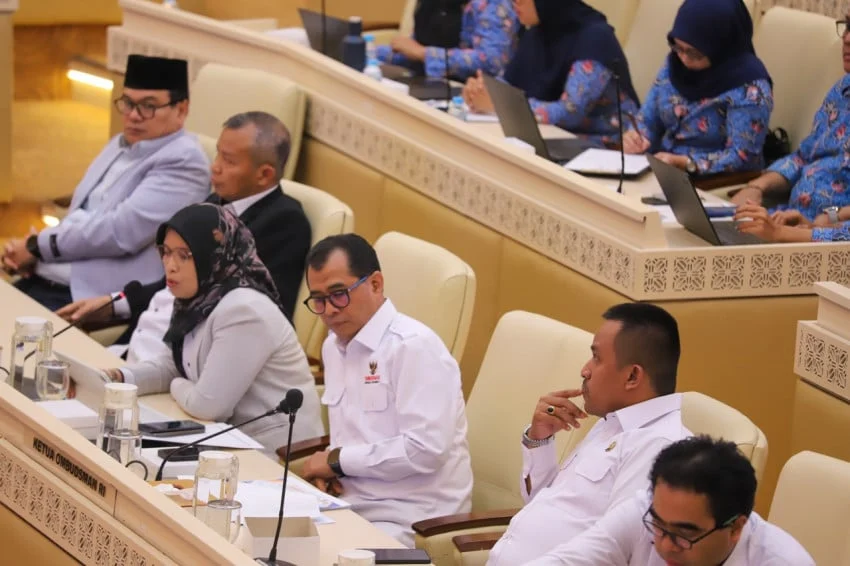
The correctional system in Indonesia has once again come under intense public and institutional scrutiny following explosive revelations by the Ombudsman of the Republic of Indonesia. During a high-stakes hearing with Commission II of the House of Representatives (DPR RI) at the parliamentary complex in Senayan, Jakarta, the oversight body exposed a series of severe systemic failures, illicit financial extortions, and deteriorating living conditions inside the Class I State Detention Center (Rutan) in Pondok Bambu, East Jakarta. Among the most alarming findings presented to lawmakers was an alleged multi-million-rupiah bribery scheme allowing inmates to illegally access mobile communication devices behind bars, sitting alongside chronic infrastructure decay, severe overcrowding, and a severe clean water crisis.
The comprehensive report was delivered by Ombudsman member Syafrida R. Rasahan before the legislative committee, shedding light on the harsh realities faced by inmates—locally referred to as warga binaan—within the women-centric correctional facility, which also houses various administrative detainees. The disclosures have reignited national debates regarding the persistent culture of corruption, regulatory laxity, and human rights violations plaguing correctional facilities across the archipelago, prompting immediate demands for structural reform and rigorous internal investigations within the Ministry of Corrections and related law enforcement agencies.
Chronology of the Oversight Operation and Unannounced Inspection
The sequence of events leading to the parliamentary hearing began weeks prior when the Ombudsman deployed an investigative team to conduct an unannounced inspection, commonly known as a sidak, at the Pondok Bambu detention facility on September 15, 2026. Armed with reports and tip-offs from civil society organizations and families of inmates regarding potential malpractices, the oversight team initiated a comprehensive sweep of the residential blocks, administrative offices, and communal spaces within the perimeter.
During the surprise visit, investigators documented immediate red flags regarding the allocation of space and population distribution. While certain housing units maintained manageable populations, other blocks exhibited staggering levels of human congestion. The investigative findings were subsequently compiled, verified, and structured into an official oversight dossier presented to Commission II of the DPR RI on Tuesday, September 29, 2026. This parliamentary session served as a critical platform to hold institutional leadership accountable, bridging the gap between field investigations and legislative oversight.
Severe Overcrowding and Spatial Disparities in Residential Blocks
One of the foundational issues highlighted in the Ombudsman’s report is the acute overcrowding gripping specific housing blocks within Rutan Pondok Bambu. Syafrida detailed to the lawmakers that the inspection team discovered significant discrepancies in population density across different zones of the facility.
Specifically, Blocks C and D were found to be critically overcrowded, housing inmates far beyond their designated architectural capacity. This high density severely compromises basic living standards, limiting personal space, increasing physical tension among detainees, and heightening health risks. Conversely, Block A was observed to be operating at a relatively normal capacity, illustrating a profound systemic failure in internal population management and inmate distribution logistics.
When confronted with these spatial disparities during the inspection, the leadership and head warden (Kalapas) of Rutan Pondok Bambu acknowledged the imbalance. They offered assurances that corrective actions would be swiftly implemented. Facility management promised to initiate a comprehensive reallocation and restructuring process, reorganizing inmates to balance population levels and fully utilize under-occupied blocks like Block A to alleviate the pressure on the heavily congested units. However, the Ombudsman emphasized that unverified promises are insufficient, maintaining that independent monitoring will continue to ensure compliance.
Systemic Corruption: Illicit Fees for Cellular Access and Room Transfers
Beyond structural logistics, the most damaging revelations brought to light by the Ombudsman involve widespread administrative corruption and informal economic extortion operating within the secure perimeter of the detention facility. Interviews conducted confidentially with inmates revealed a pervasive underworld of illicit fees and bribes demanded by individuals wielding internal influence.
Most startling was the disclosure regarding illicit communication privileges. Inmates reported that gaining permission to possess and operate a mobile phone inside the detention center carries an exorbitant price tag, with extortion fees reaching up to Rp250 million. The possession of communication devices inside correctional facilities strictly violates national prison regulations, as it creates avenues for inmates to continue illicit operations, intimidate witnesses, or coordinate external criminal networks. The existence of a six-figure payoff system underscores deep-seated security compromises within the institution’s guard force.
In addition to high-tier communications bribery, smaller-scale extortion tactics were documented targeting everyday inmate mobility. Syafrida testified that inmates routinely face illegal levies simply to change their sleeping quarters. Known colloquially as "turun kamar" fees, detainees are reportedly forced to pay approximately Rp500,000 just to secure a transfer to a different room or block. These micro-extortions exploit vulnerable inmates seeking refuge from hostile roommates, overcrowded quarters, or unsanitary conditions, compounding the financial distress of detainees and their families.
Infrastructure Decay: The Clean Water Crisis
Compounding the challenges of overcrowding and extortion, the Ombudsman’s inspection uncovered critical infrastructure failures, chief among them being a severe disruption in the supply and quality of clean water. Access to safe and reliable water is recognized internationally as a fundamental human right, a standard that Rutan Pondok Bambu currently fails to meet.
According to the oversight findings, the water supply flowing through the facility’s taps is visibly discolored, carrying a persistent yellow tint that signals chemical contamination or decaying subterranean infrastructure. Furthermore, mechanical and plumbing failures frequently render the water taps entirely non-functional. This unreliability leaves inmates facing intermittent water shortages, severely restricting their ability to maintain personal hygiene, wash clothing, or access safe drinking water.
The confluence of yellowish, contaminated water and erratic supply lines poses severe public health risks, raising alarms over potential outbreaks of waterborne diseases, skin infections, and gastrointestinal illnesses among the detained population. The Ombudsman stressed that immediate infrastructural rehabilitation is non-negotiable to prevent a humanitarian health crisis within the walls of the detention center.
Broader Patterns: Commercialization of Luxury and Systemic Vulnerabilities
The revelations at Pondok Bambu do not exist in a vacuum; rather, they form part of a troubling nationwide pattern of correctional facility mismanagement uncovered by oversight bodies. Coinciding with the Pondok Bambu findings, the Ombudsman recently voiced parallel concerns regarding the commercialization of luxury facilities within other penal institutions, such as the Lapas Cibinong, where privileged inmates allegedly purchase preferential treatment and high-end amenities.
These recurring scandals point to deep systemic vulnerabilities within Indonesia’s Directorate General of Corrections under the Ministry of Law and Human Rights. Chronic underfunding, low compensation for frontline guards, outdated infrastructure, and a lack of transparent auditing mechanisms create fertile ground for predatory behavior, graft, and institutional abuse. When basic necessities like water and space become commodities to be bought and sold, the primary rehabilitative mandate of the correctional system is fundamentally subverted.
Implications and the Path Forward
The presentation of the Ombudsman’s findings to Commission II of the DPR RI carries profound implications for correctional policy and governance in Indonesia. Lawmakers are now under intense public pressure to move beyond rhetorical condemnation and enforce structural accountability.
Analysts and legal experts argue that addressing the root causes of these violations requires a multi-pronged approach. First, the Ministry of Corrections must initiate independent internal affairs investigations to identify and prosecute personnel complicit in the Rp250 million mobile phone bribery scheme and the systematic room-transfer extortions. Second, immediate capital expenditure must be directed toward infrastructural overhauls to resolve the clean water crisis and upgrade plumbing systems at Pondok Bambu. Third, broader national strategies to combat systemic prison overcrowding—such as expanding restorative justice programs, increasing the use of non-custodial sentences for non-violent offenders, and accelerating the construction of new regional facilities—must be prioritized.
As civil society organizations and legislative watchdogs continue to monitor the situation, the revelations at Rutan Pondok Bambu serve as a stark reminder of the urgent need for comprehensive reform. Only through rigorous oversight, zero-tolerance policies toward corruption, and sustained political will can the Indonesian correctional system restore its integrity and uphold the basic human rights of every individual under its custody.