The fierce and longstanding rivalry in Indonesian football faces another critical test as Persija Jakarta prepares to host arch-rivals Persib Bandung in the second week of the Super League 2026-2027 season. Scheduled for Saturday afternoon, September 12, 2026, the high-profile match at the iconic Gelora Bung Karno Main Stadium (SUGBK) in Jakarta has drawn immense anticipation from millions of fans across the archipelago. However, amid the excitement surrounding what is widely regarded as Indonesian football’s premier fixture, the governing body of the sport has issued a stern reminder regarding safety, security, and the lessons of the past.
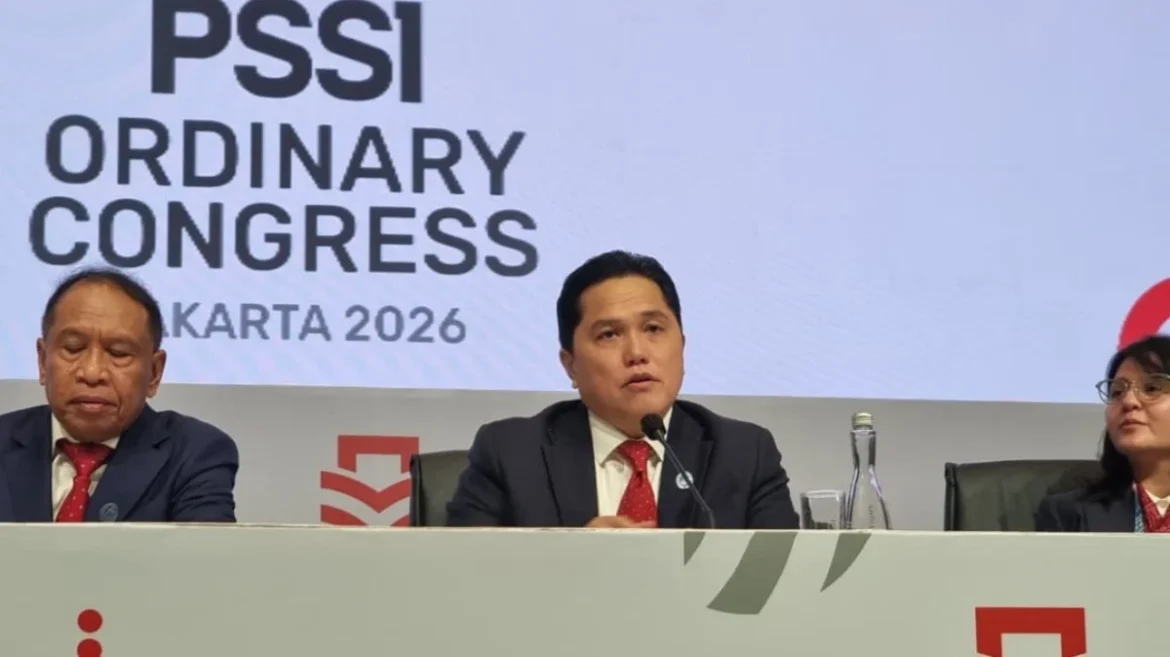
Football Association of Indonesia (PSSI) General Chairperson Erick Thohir has publicly urged supporters of both clubs to keep the tragic events of the Kanjuruhan tragedy firmly in mind. Thohir’s warning serves as a direct appeal to ensure that the intense sporting rivalry does not transcend boundaries into violence, vigilantism, or behavior that could jeopardize the physical safety of anyone attending the match. As police, club officials, and supporter groups finalize operational frameworks, the overarching objective remains clear: ensuring that every single spectator returns home safely.
Context and High-Stakes Rivalry at GBK
The fixture between Persija Jakarta and Persib Bandung—frequently dubbed the "El Clasico" of Indonesian football—inherently carries profound emotional and psychological weight. Matches featuring these two entities consistently attract massive television audiences and capacity crowds, driven by fiercely loyal supporter bases: The Jakmania for Persija and the Viking supporters, alongside other factions, for Persib.
Football analysts note that playing at the Gelora Bung Karno Main Stadium introduces a unique dynamic. While hosting the match in Jakarta grants Persija the psychological advantage of playing in front of tens of thousands of home supporters, experts suggest it can simultaneously generate immense internal pressure for the "Macan Kemayoran" squad. The weight of expectations from a roaring home crowd can sometimes create a volatile atmosphere both inside and outside the stadium perimeter.
Recognizing these vulnerabilities, PSSI and law enforcement agencies have proactively implemented stringent security protocols. The match represents not only a critical battle for league points early in the Super League campaign but also a crucial litmus test for the ongoing cultural and operational transformation of Indonesian football governance.
The Imperative of Remembering Kanjuruhan
At the heart of Erick Thohir’s recent statements is a solemn acknowledgment of the historical trauma embedded within the domestic football ecosystem. The Kanjuruhan Stadium disaster, which occurred on October 1, 2002, remains the darkest chapter in modern Indonesian sports history, resulting in the loss of 135 lives following a league match between Arema FC and Persebaya Surabaya in Malang, East Java.
By explicitly invoking the tragedy ahead of the Persija versus Persib encounter, Thohir aims to dismantle the hyper-aggressive tribalism that has historically plagued fixtures between rival Indonesian clubs.

"I remind everyone not to forget the Kanjuruhan incident," Thohir stated on Friday, September 11, 2026, emphasizing that the collective memory of that disaster must function as an ongoing deterrent against crowd control failures, aggressive pitch invasions, and destructive behavior in the stands.
Thohir stressed that the boundaries of passionate support must strictly exclude physical intimidation, rioting, and the use of prohibited pyrotechnics or dangerous missiles. The PSSI leadership has made it clear that while competitive spirit on the pitch is encouraged, safety must universally supersede club loyalties.
Strict Legal Enforcement and Zero-Tolerance Policy
To underscore the seriousness of these safety directives, PSSI, in direct coordination with the Indonesian National Police (Polri), has instituted a strict zero-tolerance policy regarding violence and provocation during the match day timeline.
Thohir warned that legal consequences will be swift and absolute for any individual found inciting violence, engaging in physical altercations, or provoking opposing fan groups. The regulatory framework established in the wake of previous football reforms grants authorities the mandate to prosecute offenders rigorously.
"Whoever the individual is who creates violence or provocation, or if there are supporters who do not return home safely, we have agreed alongside the National Police to ensure that legal processes will take place," Thohir asserted.
This collaborative enforcement strategy extends far beyond the immediate perimeter of the Gelora Bung Karno Stadium. Security frameworks are designed to monitor digital spaces as well, cracking down on inflammatory rhetoric, hate speech, and coordinated provocations disseminated across social media platforms in the days leading up to and during the match.
Cross-Regional Security Coordination and Supporter Engagement
Mitigating risks during a fixture of this magnitude requires meticulous logistical planning and cross-regional cooperation between local law enforcement agencies and supporter leadership groups. Because of the vast geographical distribution of both fan bases, security cannot be managed exclusively at the venue level in Jakarta.
Ahead of Saturday’s kickoff, regional police commands—most notably the Metro Bekasi Police—have established proactive communications channels with prominent supporter factions, including The Jakmania Bekasi Raya and Viking Bekasi chapters. These preemptive dialogues are designed to manage the massive influx and movement of supporters traveling from neighboring cities into the capital, as well as to oversee public watch parties (nonton bareng) organized by Persib supporters in West Java.

By integrating fan leadership into the security apparatus, authorities seek to foster internal accountability within supporter communities. Peer-to-peer monitoring by senior members of fan groups has proven effective in recent seasons at de-escalating tensions before minor disagreements can spiral into broader civil disturbances.
Institutional Responsibilities: Persija and Persib
PSSI has placed direct operational expectations on both participating clubs to act as active stewards of safety. Persija Jakarta, operating as the host club, bears the primary responsibility for venue management, ingress and egress efficiency, crowd density monitoring, and ensuring that stadium facilities comply with contemporary safety regulations.
Simultaneously, Persib Bandung and its associated supporter organizations share the institutional burden of maintaining a peaceful environment, particularly within West Java, where large numbers of fans gather to watch the broadcast. Managing celebratory behavior following the match—regardless of the final score—remains a core focus for club officials, who recognize that post-match euphoria can occasionally devolve into street-level conflicts if left unchecked.
Broader Implications for the Super League 2026-2027 Season
The manner in which the Persija versus Persib fixture is conducted carries profound implications for the credibility and stability of the Super League 2026-2027 season. Indonesian football has spent the past several years engaged in a comprehensive structural and cultural overhaul aimed at restoring international confidence, satisfying FIFA safety compliance standards, and rebuilding trust among domestic spectators and commercial sponsors.
Any significant security breakdown during a match of this magnitude would threaten to reverse years of painstaking reform efforts, potentially inviting renewed international scrutiny, stadium bans, or government-mandated restrictions on spectator attendance. Conversely, a smooth, safely executed match characterized by intense sporting competition and peaceful coexistence in the stands will serve as positive proof that Indonesian football is successfully maturing.
As the referee prepares to blow the opening whistle at Gelora Bung Karno Stadium on this Saturday afternoon, the collective gaze of the nation’s sporting community will be fixed not merely on the tactical battles on the grass, but on the behavior of the tens of thousands watching from the stands. Through the proactive warnings of PSSI leadership, rigorous police coordination, and the growing maturity of fan groups, Indonesian football hopes to demonstrate that fierce rivalry can—and must—coexist with unwavering mutual respect and the absolute preservation of human life.