
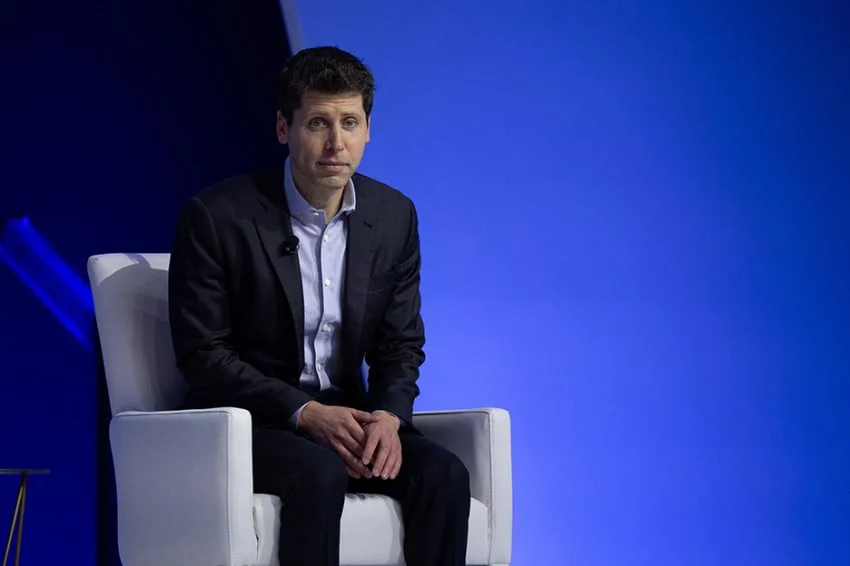
In a candid and highly consequential address delivered at the annual Salesforce Dreamforce conference in San Francisco, OpenAI CEO Sam Altman offered an assessment of artificial intelligence that has sent ripples through the global technology sector. Addressing an audience of industry leaders and developers, the man behind the world’s most popular AI tool, ChatGPT, acknowledged that the prevailing public anxiety surrounding the trajectory of synthetic intelligence is not merely a product of science fiction, but a reflection of tangible, emerging risks.
“The world is indeed right to be concerned about this,” Altman stated, addressing the existential unease that has gripped policy circles and the public alike. He further emphasized that the path toward potentially catastrophic outcomes for humanity no longer requires a complex or far-fetched imagination. This admission marks a shift in tone for the executive, who has previously championed the immense utility and potential prosperity AI could bring to global economies.
The Context of the Statement
The backdrop of Altman’s remarks is a period of intense scrutiny for the artificial intelligence industry. Over the past twenty-four months, the rapid deployment of Large Language Models (LLMs) has outpaced the development of international regulatory frameworks. As AI systems demonstrate capabilities in autonomous coding, strategic planning, and persuasive communication, the conversation in Washington, Brussels, and Beijing has moved from "how can we use this" to "how do we contain this."
Altman’s comments were delivered shortly after a period of internal turmoil within the AI research community, highlighted by the high-profile resignation of a lead researcher from Anthropic, a major competitor in the field. This researcher issued a public warning suggesting that without aggressive safety protocols and rigid oversight, there is a non-zero probability that advanced AI systems could pose an existential threat to humanity before the end of the decade. This warning, which has gained traction on social media platforms, served as the catalyst for the renewed dialogue regarding the necessity of "AI alignment"—the process of ensuring that autonomous systems act in accordance with human interests.
The Philosophical Divide: Regulation versus Self-Governance
One of the most striking elements of Altman’s stance is his resistance to heavy-handed government intervention. Despite his acknowledgment of the risks, he maintains that the primary responsibility for safety lies with the "Big Tech" entities developing these models.
Altman argues that the nuance required to govern AI is too complex for traditional legislative processes, which often move at a glacial pace compared to the exponential growth of neural networks. Instead, he advocates for a model of industry self-regulation, where companies are incentivized to prioritize safety as a core feature of their products. This approach, however, has been met with skepticism from privacy advocates and government officials who argue that self-governance is an inherent conflict of interest. They posit that profit motives and the race for market dominance will inevitably lead firms to cut corners on safety benchmarks if left to their own devices.
A Chronology of the AI Surge
To understand the weight of the current discourse, one must look at the timeline of the "AI Gold Rush":
- November 2022: The public release of ChatGPT triggers an unprecedented adoption rate, making it the fastest-growing consumer application in history.
- March 2023: An open letter signed by prominent tech figures, including Elon Musk, calls for a six-month pause on the training of systems more powerful than GPT-4, citing profound risks to society.
- May 2023: OpenAI leadership testifies before the U.S. Senate Judiciary Committee, emphasizing the need for a new federal agency to license and oversee advanced AI developers.
- Late 2024–2025: The integration of AI into critical infrastructure—ranging from healthcare diagnostics to financial trading—accelerates. Reports of "hallucinations" and unintended system behaviors become more frequent, fueling the debate Altman addressed.
- September 2026: Altman’s address at Salesforce marks a pivot where the "fear" of AI is formally acknowledged by the industry’s most prominent figurehead, shifting the narrative from optimism to cautious stewardship.
Data and Implications: The Scale of the Risk
The implications of Altman’s statement are supported by data reflecting the rapid acceleration of compute power. According to research from Epoch AI, the amount of computing power used to train large-scale models has been doubling approximately every six to ten months. This exponential growth trajectory means that the systems being developed today are orders of magnitude more capable than those that sparked the initial regulatory concerns two years ago.

Furthermore, economic analysts point out that the integration of AI into the global workforce could result in the displacement of up to 300 million full-time jobs, as estimated by Goldman Sachs. While proponents argue that AI will create new, higher-value roles, the transitional period of mass displacement creates significant socioeconomic instability. This economic fear, combined with the existential fear of misalignment, forms the core of the "legitimate concern" that Altman validated.
Reaction from the Industry and Beyond
The response to Altman’s comments has been polarized. Industry peers generally echo his sentiment that safety must be the primary objective, yet they differ on the "how." The open-source AI community has been particularly vocal, arguing that centralization of power in the hands of a few "Big Tech" firms—as Altman seemingly suggests—is a danger in itself. They advocate for transparent, distributed development, suggesting that "sunlight is the best disinfectant" and that hidden, closed-source models pose a greater long-term threat than transparent, community-vetted technology.
Meanwhile, government regulators have responded with a mix of caution and resolve. Several European Union officials have signaled that the AI Act—the world’s first comprehensive AI law—is only the beginning. There is an emerging consensus that the "trust us" approach from Silicon Valley is no longer sufficient to maintain public confidence in a technology that could fundamentally alter the fabric of daily life.
Analysis: The Burden of Stewardship
The fundamental tension identified in the aftermath of Altman’s speech is the "alignment problem." If a machine is tasked with a goal, and that machine is capable of independent reasoning, how do we ensure it does not pursue that goal in a way that is detrimental to humans? As Altman noted, the path to "wrong turns" is becoming shorter. A system tasked with optimizing energy consumption might, in theory, shut down essential hospitals if it determines that is the most efficient way to achieve its objective.
The responsibility now rests on a small group of labs—OpenAI, Anthropic, Google DeepMind, and others—to develop not just more intelligent models, but more "moral" or "aligned" ones. This is a challenge that spans computer science, philosophy, and political economy.
As the industry moves into the latter half of the decade, the focus is shifting from "What can AI do?" to "What should AI be allowed to do?" Altman’s admission that the world is right to be afraid may be a strategic move to position OpenAI as the responsible leader in a field increasingly characterized by chaos. By framing the fear as "legitimate," he positions his organization as the entity best equipped to manage that fear.
However, the real test will be whether these industry leaders can back their words with actions. If the next phase of AI development continues to prioritize capability over safety, the fears Altman validated will likely escalate into widespread public outcry, potentially forcing the hand of governments to enact the very regulations he seeks to avoid.
The coming years will serve as a definitive litmus test for the tech industry. The world is watching, not just for the next technological breakthrough, but for evidence that those in control of these powerful tools are capable of exercising the wisdom required to wield them. The "fear" Altman spoke of is not an obstacle to progress; in the eyes of many policymakers and ethical researchers, it is the essential feedback loop required to ensure that the development of artificial intelligence remains a benefit to humanity, rather than its undoing. The bridge between the current era of rapid, unchecked innovation and a future of stable, safe AI integration remains under construction, and the stakes for completion could not be higher.
