Every seventeenth of August, the Republic of Indonesia comes to a standstill in a unified display of national pride, paying homage to the sacrifices of founding fathers and the historic proclamation of independence in 1945. The national flag-raising ceremony, held annually as the cornerstone of Independence Day celebrations, has evolved from an impromptu, modest gathering on the streets of Jakarta into a highly structured, state-of-the-art national tradition. While the State Palace traditionally serves as the epicentre of these solemn proceedings, the echoes of this patriotic ritual reverberate across the archipelago, uniting millions of citizens from remote villages to bustling metropolitan centres.
Beyond its visual grandeur and rhythmic military precision, the ceremony functions as a living archive of Indonesia’s arduous journey toward self-determination. Each component of the modern protocol—ranging from the precise moment of the Proclamation’s reading to the synchronized steps of the elite youth flag-raising corps—carries profound historical weight. As the nation continues to navigate the complexities of the twenty-first century, examining the origins, evolution, and sociological impact of this historic tradition offers invaluable insight into the enduring identity of the world’s largest archipelago nation.
The Humble Beginnings: August 17, 1945
The historical genesis of Indonesia’s independence ceremony stands in stark contrast to the elaborate state productions observed today. On the scorching morning of August 17, 1945, just days after the capitulation of Japan in the Pacific theatre, the political landscape of Southeast Asia shifted irreversibly. At Jalan Pegangsaan Timur Nomor 56 in Central Jakarta, nationalist leaders gathered under a cloud of intense political uncertainty and revolutionary fervour.
In a modest front yard, surrounded by eager citizens, youth activists, and press representatives, nationalist leader Sukarno—flanked by fellow independence architect Mohammad Hatta—read the historic text of the Proclamation of Independence. The declaration was brief, yet it permanently severed centuries of colonial rule under the Dutch East Indies administration and the subsequent Japanese military occupation.
Immediately following the proclamation, a profound sense of urgency and triumph manifested in the physical raising of the national flag. The sacred banner—affectionately known as the Sang Saka Merah Putih—had been meticulously sewn by Fatmawati, Sukarno’s wife, utilizing simple cotton textile. With no elaborate pulleys or musical brass bands, Latief Hendraningrat, a soldier from the Defenders of the Homeland (PETA) volunteer army, hoisted the red and white flag onto a bamboo pole. As the fabric caught the morning breeze, the assembly spontaneously broke into a resounding rendition of "Indonesia Raya," the national anthem composed by Wage Rudolf Supratman. This spontaneous act of defiance and hope laid the immediate foundation for what would later become institutionalized as a mandatory national ritual.
Chronological Evolution: From Wartime Necessity to State Protocol
In the immediate aftermath of independence, orchestrating standardized national ceremonies was an impossibility. The newly born republic was immediately thrust into a defensive war of survival, fighting against the return of colonial forces during the Indonesian National Revolution from 1945 to 1949. During these tumultuous years, celebrations of August 17 were frequently conducted under frontline conditions, marked by guerrilla resilience rather than bureaucratic pageantry.
Following the international recognition of Indonesia’s sovereignty in late 1949, the celebration of Independence Day gradually transformed into a formal state agenda. The centre of gravity shifted firmly to the Istana Merdeka (Merdeka Palace) in Jakarta. The complex, rich with Dutch colonial history yet reclaimed as the heart of the sovereign Indonesian government, became the permanent stage for the "Detik-Detik Proklamasi" (Seconds of the Proclamation) commemoration.
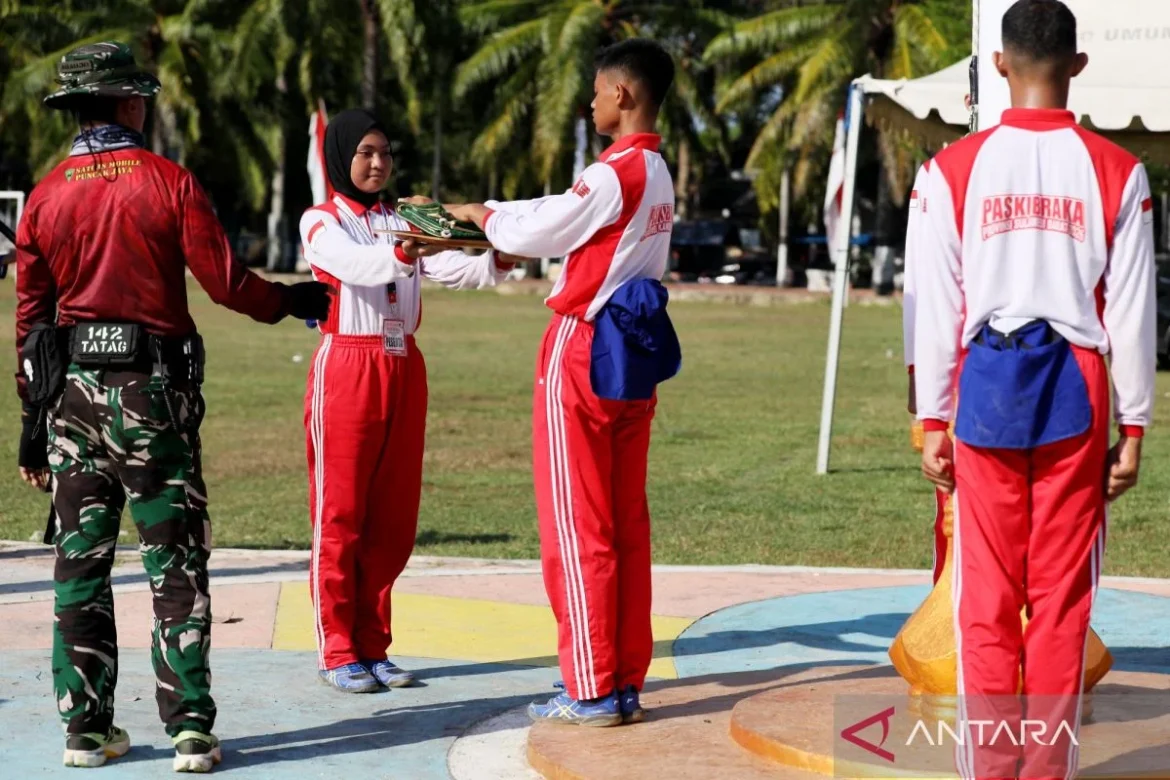
Throughout the decades of the twentieth and twenty-first centuries, the structure of the ceremony underwent systematic refinement. The chaotic spontaneity of 1945 was replaced by meticulous choreography. The introduction of the Pasukan Pengibar Bendera Pusaka (Paskibraka)—an elite corps of high school students selected from all provinces across the country—added a powerful element of youth representation and national unity. Furthermore, the ritual expanded to include a nationwide moment of silence at exactly 10:00 AM Western Indonesia Time, connecting millions of citizens simultaneously in silent tribute to fallen freedom fighters.
The Role of Paskibraka and the Sacred Heritage of the Flag
At the psychological heart of every Independence Day ceremony lies the symbolic transmission of the flag. For decades, the focal point of the Merdeka Palace ceremony was the original, hand-sewn Bendera Pusaka. Because of its delicate fabric and immense historical value, the original flag was retired from active service in 1969 to prevent physical degradation and is now preserved under controlled conservation conditions at the National Monument (Monas) museum.
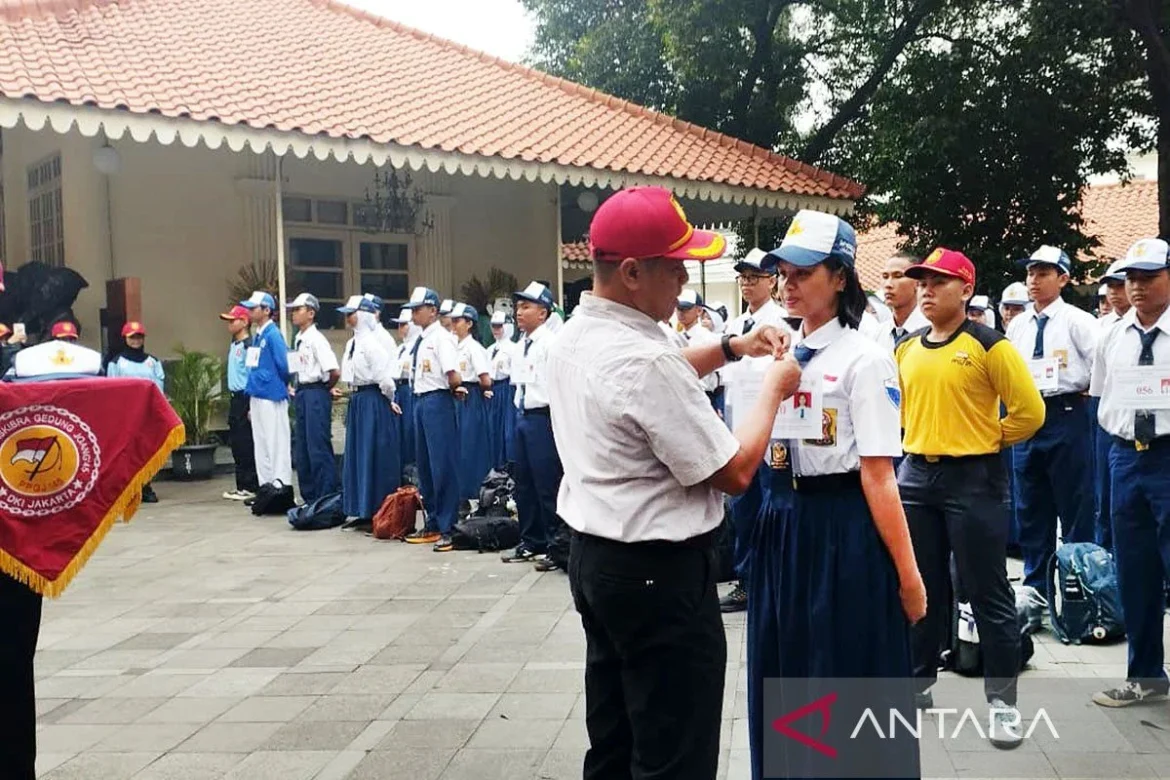
In its place, an exact replica is hoisted annually, yet the psychological and ceremonial weight remains undiminished. The selection and training of the Paskibraka members represent one of the most rigorous youth development programs in the country. Thousands of teenagers undergo municipal, provincial, and ultimately national selection processes, testing not only their physical endurance, marching discipline, and mental fortitude, but also their knowledge of national history, Pancasila philosophy, and cultural diplomacy.
When the primary flag-bearer steps forward to receive the flag from the state podium, executes the precise sharp turns, and ascends the staircase of the presidential stage, the action signifies the passing of the torch from the revolutionary generation to the digital era youth of modern Indonesia.
Decentralization and the Historic Shift to Nusantara
The contemporary era has introduced new dimensions to how the Republic observes its national birthday. While the Istana Merdeka in Jakarta has historically anchored the celebration, the state apparatus has demonstrated a willingness to adapt the tradition to strategic national developments.
A watershed moment in the modern history of the ceremony occurred on August 17, 2024, when the Indonesian government officially split the commemoration of the 79th Independence Day between two locations: Jakarta and the newly developing capital city, Ibu Kota Nusantara (IKN), in East Kalimantan. Presided over by state leadership from the heart of the country’s future administrative hub, the dual-location ceremony symbolized both continuity with the historical past and a bold leap toward the future vision of decentralized national development.
This historic adjustment highlighted the versatility of the national ritual. Despite the thousands of kilometres separating the traditional capital on Java and the emerging smart-forest city in Borneo, the core liturgies—the reading of the proclamation, the moment of silence, and the raising of the red and white banner—remained identical, binding the nation across geographic divides.
Sociological Analysis: The Ceremony as Social Glue
Sociologists and political analysts frequently point to the August 17 flag-raising ceremony as a vital stabilizing mechanism within Indonesia’s vast and pluralistic society. Comprising over 17,000 islands, hundreds of ethnic groups, and numerous linguistic and religious traditions, Indonesia relies heavily on unifying cultural touchstones to maintain national cohesion.
The ceremony acts as a civic equalizer. On any given August 17, the identical ritual is replicated thousands of times over:
- Cabinet ministers in traditional attire stand alongside foreign diplomats at state palaces.
- Office workers in urban corporate towers pause their daily workflows in office courtyards.
- Rural villagers gather in muddy fields or local neighbourhood association (RT/RW) squares.
- Schoolchildren from urban academies to remote border island classrooms stand at attention under the tropical sun.
This simultaneous collective action reinforces a shared narrative of civic belonging. It bridges socio-economic divides, allowing marginalized communities and urban elites alike to participate in a common civic identity. Furthermore, the surrounding cultural traditions—such as community-wide neighborhood sports competitions, culinary festivals, and local artistic performances—transform the solemnity of the morning ceremony into a joyful celebration of communal solidarity in the afternoon and evening.
Implications for the Future of Indonesian Nationalism
As Indonesia approaches its centennial milestone in 2045, the significance of the annual flag-raising ceremony faces both continuity challenges and modernization opportunities. Observers note that while traditional participation remains exceptionally high, educational institutions and cultural policymakers must continually find innovative ways to engage tech-native generations who consume information through digital media rather than traditional state broadcasts.
Nevertheless, the enduring resilience of the August 17 tradition suggests that its foundational appeal remains untouched by time. The ceremony is not merely a backward-looking glance at historical events of the mid-twentieth century; it is an active renewal of the national social contract. By publicly reaffirming the values of sovereignty, justice, and unity inscribed in the national constitution, the ceremony equips contemporary citizens to face modern geopolitical, economic, and environmental challenges.
Ultimately, whether performed on the asphalt of Jalan Pegangsaan Timur in 1945, the manicured lawns of the Jakarta state palaces, the developing hills of East Kalimantan, or a tiny schoolyard in a remote maritime border region, the Indonesian flag-raising ceremony endures as the ultimate choreography of national resilience—a living testament to a nation that forged its freedom through collective sacrifice and continues to sustain it through shared devotion.