
The Minister of Human Rights, Natalius Pigai, has officially directed the Regional Office of the Ministry of Human Rights in East Nusa Tenggara (Kanwil Kemenham NTT) along with his Special Staff to take immediate and decisive action in resolving the violent communal clash that recently erupted in East Adonara District, Flores Timur Regency. This directive emphasizes a shift in strategy, prioritizing a cultural and traditional approach over standard law enforcement procedures to ensure a sustainable peace in the region. The move comes as a response to a tragedy that has already claimed multiple lives, caused significant physical injuries, and resulted in the destruction of dozens of residential properties, leaving the local community in a state of trauma and instability.
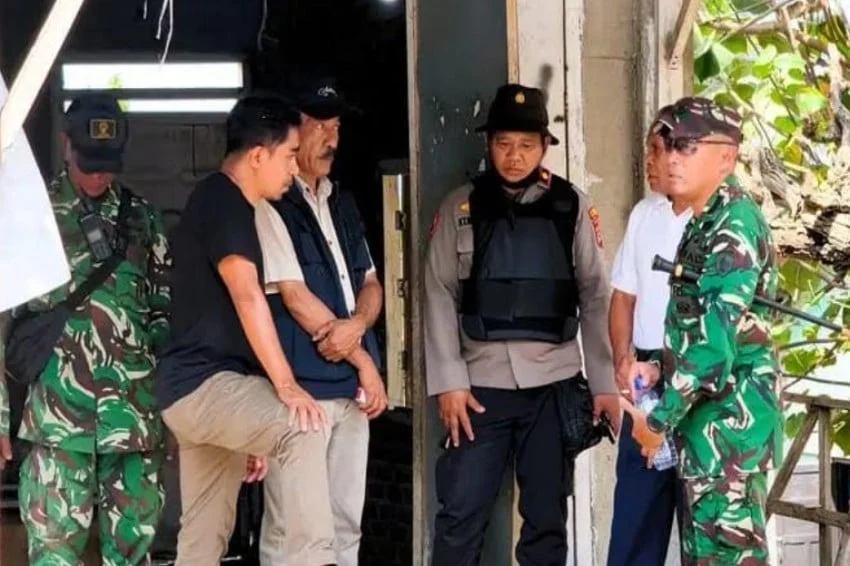
According to preliminary reports from the ground, the conflict, which broke out between residents of two neighboring villages, has resulted in at least three fatalities. In addition to the loss of life, several individuals are currently receiving medical treatment for various injuries sustained during the height of the confrontation. The material toll is equally devastating, with reports confirming that approximately 20 to 30 houses were razed to the ground during the arson attacks that accompanied the physical brawls. This escalation of violence has necessitated a heavy presence of joint security forces, including the Indonesian National Police (Polri) and the Indonesian National Armed Forces (TNI), who remain stationed at the site to prevent further retaliatory strikes.
The Minister’s Mandate: Prioritizing Cultural Mediation
Minister Natalius Pigai, known for his extensive background as a human rights activist and his deep understanding of the socio-political landscape of Eastern Indonesia, stated that the intervention must go beyond mere security stabilization. In a statement released on Sunday, July 19, 2026, Pigai asserted that based on his years of experience handling sensitive regional disputes, a purely legalistic or police-centric approach often fails to address the underlying grievances that trigger such communal violence.
"Based on our experience in handling cases in that region, we assess that a solution through a cultural approach is far more effective than a purely policing one," Pigai remarked. He explained that while the police are necessary to maintain immediate order, the deep-seated tensions—often rooted in ancestral land claims or historical grievances—require the mediation of traditional figures who hold moral authority over the community.
The Minister’s strategy involves deploying a specialized team to the field to gain a comprehensive overview of the post-conflict conditions. This team is tasked with identifying the specific needs of the affected populations and facilitating a dialogue that respects the local customs (adat). The findings from this field monitoring will serve as the foundation for coordinated efforts involving the local provincial government, traditional elders, religious leaders, and other key stakeholders.
Chronology and Escalation of the Conflict
The clash in East Adonara is believed to have been triggered by a long-standing dispute over land boundaries, a common yet volatile issue in the Flores Timur Regency. While the situation had been simmering for some time, it reached a breaking point in the early hours of the morning when groups from the opposing villages confronted one another.
The initial verbal altercation quickly spiraled into physical violence, with residents reportedly using traditional weapons and improvised tools. As the chaos intensified, several houses were targeted for arson, leading to the rapid spread of fire across the densely packed village clusters. The three victims who perished in the clash were reportedly caught in the crossfire or unable to escape the burning structures in time.
Local authorities were alerted early on, but the geographic challenges of Adonara Island and the intensity of the mob violence made it difficult for initial responders to quell the flames and the fighting immediately. It was only after reinforcements from the Flores Timur Police (Polres Flotim) and the local military command (Kodim) arrived that the situation was brought under a tenuous control. Currently, a perimeter has been established, and residents from both sides have been urged to retreat to their respective territories to allow for mediation.
Socio-Historical Context of Adonara
To understand the severity of the situation, one must look at the historical and sociological context of Adonara Island. Historically, Adonara has a reputation for being a "land of warriors," where communal honor and land ownership are intertwined with the identity of various clans. Traditional warfare, known locally as "perang tanding," has historically been a method used to settle disputes that could not be resolved through negotiation.
While modern law has largely replaced these practices, the psychological and cultural remnants of these traditions remain. In many cases, a court ruling on land ownership is viewed as insufficient if it does not align with the traditional "adat" understanding of the land. This is precisely why Minister Pigai is advocating for a cultural solution. By involving the Tua Adat (clan elders), the resolution carries a weight of spiritual and social legitimacy that a standard police report or court injunction might lack.
The Role of Local Stakeholders and Human Rights Monitoring
The Regional Office of the Ministry of Human Rights in NTT has been tasked with a dual role: acting as a mediator and ensuring that the rights of the displaced victims are upheld. The destruction of over 20 homes has created a minor humanitarian crisis, with families losing their livelihoods and personal belongings.
Minister Pigai emphasized that the government’s presence must provide a sense of security and justice. "We will continue to coordinate with the local government, security forces, and community leaders to ensure that the resolution process is peaceful, respects human rights, and provides a sense of safety for all affected citizens," he stated.
Human rights observers have noted that in the aftermath of such clashes, there is often a risk of "sweeping" operations by security forces that can inadvertently violate the rights of innocent villagers. The Ministry’s involvement aims to mitigate this risk, ensuring that the investigation into the criminal aspects of the clash—such as the murders and the arson—is conducted with precision and without infringing on the collective rights of the community.
Supporting Data: Communal Conflicts and Land Disputes in NTT
Data from various agrarian reform consortiums and human rights organizations indicate that East Nusa Tenggara remains a hotspot for land-related conflicts. In the last five years, NTT has seen a recurring pattern of communal friction, often linked to the lack of formal land certification and the overlap between traditional communal land (tanah ulayat) and administrative boundaries.
In Flores Timur specifically, the scarcity of arable land on volcanic islands like Adonara heightens the stakes for every hectare. When these disputes are left unresolved by the state for decades, they become "ticking time bombs" that can be ignited by minor provocations. Statistics suggest that mediation involving religious leaders—given that NTT is a deeply religious province with a strong Catholic and local spiritual presence—has a 40% higher success rate in preventing "revenge cycles" compared to cases that are handled solely through the criminal justice system.
Broader Implications and the Path Forward
The situation in Adonara serves as a critical test for the newly structured Ministry of Human Rights under the current administration. By prioritizing a "solusi budaya" (cultural solution), Minister Pigai is signaling a shift toward a more empathetic and localized form of governance. If successful, this model could be replicated in other conflict-prone regions of Indonesia, such as Papua or parts of Kalimantan, where traditional laws hold significant sway over the populace.
However, the challenges are formidable. The cultural approach requires immense patience and the willingness of both warring parties to come to the table. It also requires the state to acknowledge the limitations of its own legal reach in the face of ancient traditions.
The immediate focus for the Kanwil Kemenham NTT and the Special Staff will be:
- Victim Identification and Aid: Ensuring that the families of the deceased and those who lost their homes receive immediate government assistance and psychological support.
- Establishing a Neutral Dialogue Space: Organizing a "Musyawarah" (communal consensus meeting) in a neutral location, facilitated by respected figures who are not affiliated with either village.
- Legal Clarity with Adat Integration: Working with the National Land Agency (BPN) to provide a legal framework for the land in question that incorporates the traditional agreements reached during the cultural mediation.
Minister Pigai expressed his hope that the atmosphere in Adonara would soon become conducive to normal life. "We hope the situation in Adonara immediately becomes conducive so that the community can return to their normal activities," he concluded. For now, the island remains under a watchful eye, as the nation hopes that the wisdom of the elders and the intervention of the Ministry can heal the wounds of a community torn apart by violence. The success of this intervention will be measured not just by the absence of fighting, but by the restoration of trust between neighbors who must continue to live side by side on the small, rugged island of Adonara.
