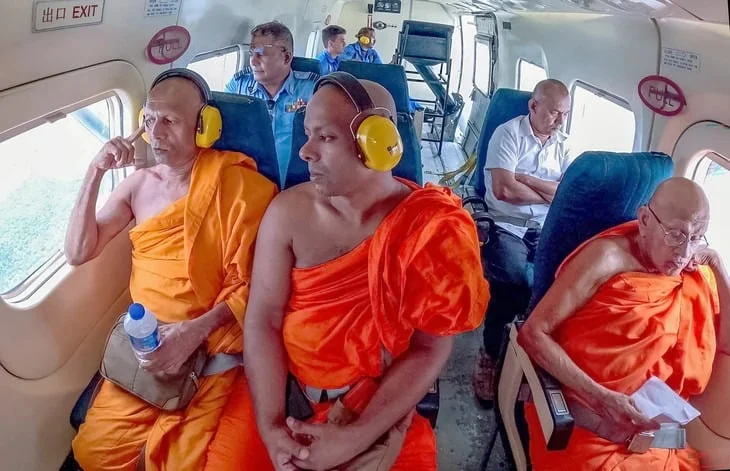
SRI JAYAWARDENAPURA KOTTE – In a rare intersection of military logistics and traditional spiritual practice, the Sri Lanka Air Force (SLAF) conducted a specialized flight mission on September 19, transporting three Buddhist monks aboard a Y-12 transport aircraft to perform an aerial prayer ritual aimed at alleviating the island nation’s prolonged drought conditions. The mission, which saw the monks chanting prayers and dispersing "blessed" water from the skies, serves as both a symbolic gesture of national solidarity and a reflection of the profound desperation facing the country’s agricultural sector as climate-induced weather patterns threaten food security.
Chronology of the Aerial Intervention
The operation commenced under the cover of night on September 19, following weeks of mounting pressure on the government to address the worsening water scarcity across Sri Lanka’s central and northern provinces. According to official statements released by the Sri Lanka Air Force on September 20, the decision to facilitate the flight was made in response to requests from religious leaders seeking divine intervention for the parched regions.
The three monks, clad in traditional saffron robes, boarded the Y-12 aircraft at a military airbase. As the plane reached the required altitude over the affected drought zones, the clergy engaged in rhythmic chanting, a practice believed in Buddhist tradition to invoke the protection of deities and harmonize the elements. Simultaneously, military personnel on board assisted in dispersing water that had been ritually consecrated, pouring it from five-liter containers through the aircraft’s doors, effectively creating a symbolic "rain-making" event over the clouds. By the morning of September 20, the imagery of the mission had circulated globally, sparking a multifaceted conversation about the role of faith in modern governance and environmental crisis management.
Meteorological Context and Climate Drivers
The urgency behind this ritual stems from a confluence of climatic factors currently destabilizing the region. Sri Lanka, like much of South and Southeast Asia, has been grappling with the erratic impacts of the El Niño-Southern Oscillation (ENSO). El Niño, characterized by the warming of sea-surface temperatures in the central and eastern Pacific, is historically linked to shifts in global precipitation patterns.
Meteorological data indicates that the current cycle is intensifying, with projections from international weather agencies suggesting a "super" El Niño event by October. This phenomenon is typically associated with record-breaking heat waves and suppressed monsoon activity in the Indian Ocean basin. For Sri Lanka, the implications are severe. The country relies heavily on the Maha and Yala monsoon seasons to fill its irrigation reservoirs and provide water for its vital rice paddies. When these rains fail or arrive inconsistently, the cascading effect on the national economy—which remains heavily dependent on agriculture—is immediate.
The drought has not only impacted Sri Lanka; the wider region is facing similar challenges. In Vietnam, for instance, central and southern provinces have reported significant soil moisture deficits, leading to fears of crop failure and water shortages for human consumption. Experts warn that if the "super" El Niño projections hold, the region could witness a series of extreme weather events, including prolonged heatwaves and hydrological droughts that could persist well into the following year’s dry season.
The Role of State and Spiritual Symbolism
The involvement of the Sri Lanka Air Force in this ritual has drawn both criticism and praise. From a state perspective, the military’s participation is framed as a matter of "solidarity with those in need." In a country where Buddhism is deeply woven into the cultural and political fabric, the government’s support for such rituals is seen by many as a necessary acknowledgment of the citizens’ emotional and spiritual distress.
"When the country is facing a drought, the takeoff of this aircraft is a symbolic act of solidarity with those in need," an official representative of the SLAF stated on social media. This response highlights the government’s strategy of utilizing state assets to maintain social cohesion during periods of hardship. By facilitating the monks’ mission, the military provided a tangible demonstration that the state is "doing something," even when technical cloud-seeding operations—which are significantly more expensive and logistically complex—might be unavailable or deemed ineffective under current atmospheric conditions.
However, secular observers and environmental scientists have pointed out the limitations of such measures. They argue that while the ritual provides psychological comfort to the populace, it cannot replace the need for long-term climate adaptation strategies, such as improved reservoir infrastructure, the adoption of drought-resistant crop varieties, and robust water-sharing agreements between provinces.
Socio-Economic Implications and Public Reaction
The agricultural sector in Sri Lanka is currently experiencing a period of significant volatility. Farmers, who have already struggled with the aftermath of previous economic crises and fertilizer shortages, are particularly vulnerable to the current drought. The failure of crops like paddy, tea, and rubber threatens the livelihood of millions.
The public reaction to the aerial prayer mission has been polarized. For the rural population, which often adheres to traditional beliefs that the state has a duty to invoke divine protection during natural calamities, the event was a welcome sign of empathy. Social media feedback within the country showed a mixture of hope and gratitude toward the military for their efforts. Conversely, urban intellectuals and international observers have questioned the prioritization of resources, suggesting that the fuel and maintenance costs associated with military flights would be better utilized in direct aid or infrastructure repair.
From a sociological standpoint, the event represents a "culture of resilience." When faced with systemic threats that are beyond human control—such as a global climate anomaly—societies often revert to traditional rituals to cope with anxiety. The Air Force’s participation effectively bridges the gap between modern military technology and ancient cultural practices, creating a unique synthesis of state power and spiritual tradition.
Analytical Outlook: The Path Ahead
The outlook for the remainder of the year remains concerning. As the "super" El Niño matures, the likelihood of sustained drought conditions increases. Climate scientists emphasize that the atmospheric pressure anomalies being observed are not merely temporary deviations but are indicative of a broader trend of climate instability.
For policymakers in Sri Lanka and across the broader Southeast Asian region, the lessons of this drought are twofold. First, there is an urgent need to transition from reactive measures—such as ritualistic interventions or emergency water trucking—to proactive climate resilience. This includes investing in early warning systems, restoring degraded watersheds, and implementing digital agriculture technologies that allow farmers to optimize water usage in real-time.
Second, the government must balance the cultural expectations of its citizens with the requirement for empirical climate science. While the aerial prayer ritual served its purpose as a gesture of national unity, it must be supported by substantial economic and environmental policy. Failure to address the root causes of water insecurity could lead to internal migration, increased food prices, and social unrest.
Conclusion
The image of a military aircraft carrying Buddhist monks over the drought-stricken landscape of Sri Lanka is a poignant reminder of the fragility of human civilization in the face of a changing climate. It is an event that captures the intersection of hope and hardship. As the nation watches the skies for the arrival of the monsoon, the underlying reality remains: while prayer may provide the strength to endure, it is the strategic, data-driven, and long-term commitment to environmental stewardship that will ultimately determine the resilience of the nation against the encroaching threats of a changing global climate. The Sri Lankan government, by acknowledging both the spiritual needs of its people and the technical realities of its climate crisis, stands at a crossroads where tradition must eventually inform a more robust, science-based approach to surviving the era of extreme weather.