
The Indonesian government has issued a comprehensive response to the United States Trade Representative’s (USTR) newly announced tariff policy, which is slated to impose additional duties on imports from several partner countries, including Indonesia, starting July 24, 2026. This forward-looking policy, which specifies a 10 percent tariff for Indonesia and 16 other nations or regions, and 12.5 percent for 38 others including China, follows a complex legal landscape involving the US Supreme Court’s earlier decision to overturn some of the more aggressive tariff measures previously proposed by the Trump administration. Jakarta’s immediate focus is on ensuring its commitment to fair labor practices and its robust regulatory framework for preventing forced labor are fully recognized by the USTR, while simultaneously developing proactive strategies to mitigate the potential economic impact.
Background to the USTR’s Tariff Policy
The USTR’s decision stems from ongoing investigations under Section 301 of the Trade Act of 1974, a powerful tool that grants the USTR broad authority to investigate and respond to foreign government practices deemed unfair or discriminatory against U.S. commerce. Historically, Section 301 has been a cornerstone of U.S. trade enforcement, particularly gaining prominence during the Trump administration’s trade disputes with China. The current tariff announcement, effective in 2026, appears to be a recalibrated approach following legal challenges to earlier, more sweeping tariff proposals. The mention of the US Supreme Court having "cancelled the most aggressive tariff policies previously put forward by Trump" suggests a legal constraint that has led to a more structured and perhaps more legally defensible framework for these new tariffs. This two-year lead time for implementation offers a unique window for affected nations, including Indonesia, to engage in dialogue and prepare strategic responses.
The investigations that underpin these tariffs have primarily focused on two critical areas: "excess capacity" in manufacturing sectors and the prohibition of goods produced with "forced labor." Excess capacity refers to situations where a country’s production significantly outstrips its domestic demand, often leading to export surges that can distort global markets and harm industries in importing nations. This has been a recurring concern for the U.S., particularly regarding sectors like steel, aluminum, and more recently, electric vehicles and renewable energy components, where alleged state subsidies can exacerbate overproduction.
The issue of forced labor, meanwhile, has gained significant international attention, reflecting a global commitment to human rights and ethical supply chains. The USTR’s focus aligns with broader international efforts, including those championed by the International Labor Organization (ILO), to eradicate all forms of forced labor. The U.S. has increasingly implemented stringent measures, such as the Uyghur Forced Labor Prevention Act (UFLPA), to prevent goods made with forced labor from entering its market, demonstrating a robust stance against such practices.
Indonesia’s Proactive Engagement and Diplomatic Maneuvers
Despite being named among the countries facing new tariffs, Indonesia has been actively engaged in the Section 301 investigation process. The Coordinating Ministry for Economic Affairs (Kemenko Perekonomian) highlighted Indonesia’s recognition by the USTR as a nation with a demonstrable commitment and regulatory framework designed to prevent and eradicate forced labor within global supply chains. Haryo Limanseto, spokesperson for Kemenko Perekonomian, emphasized this acknowledgement, stating, "The Indonesian government notes the USTR’s recognition that Indonesia is one of the countries actively committed to and possessing a regulatory framework to prevent and eradicate forced labor in global supply chains." This acknowledgment is a crucial point of leverage for Jakarta in its ongoing consultations.
Indonesia’s engagement has been comprehensive, involving continuous communication with the U.S. government throughout the investigation. This included submitting written documents, attending public hearings where stakeholders could present their cases, and participating in inter-governmental consultations. These efforts covered both the excess capacity issue and the prohibition of forced labor products, demonstrating Indonesia’s transparency and willingness to address U.S. concerns directly.
Furthermore, Indonesia has identified that several of its products have been included in the list of "product exemptions" from the new tariffs. This suggests a nuanced application of the policy, potentially reflecting successful lobbying efforts or specific product categories where U.S. reliance on Indonesian supply is high, or where no unfair practices were found. Haryo Limanseto indicated that the government is awaiting further investigation results concerning excess capacity, which are expected to be published shortly. Indonesia remains optimistic that the eventual tariffs will be structured to remain beneficial for its trade, particularly by accommodating products that have already secured exemptions through bilateral agreements like the Agreement on Reciprocal Trade (ART). "The government is actively consulting with the USTR to obtain the best and most competitive tariffs," Haryo affirmed, underscoring Jakarta’s commitment to securing favorable trade terms.
Economic Implications for Indonesia’s Exports
The U.S. is a vital trading partner for Indonesia, consistently ranking among its top export destinations. In 2023, Indonesia’s exports to the U.S. amounted to approximately USD 27.5 billion, representing a significant portion of its total non-oil and gas exports. Key Indonesian export commodities to the U.S. include apparel and textiles, footwear, rubber products, electrical machinery, furniture, and fisheries products. A 10 percent tariff, if applied broadly to these sectors, could significantly impact their competitiveness by increasing their price in the U.S. market, potentially leading to a decrease in demand and a shift towards alternative suppliers.
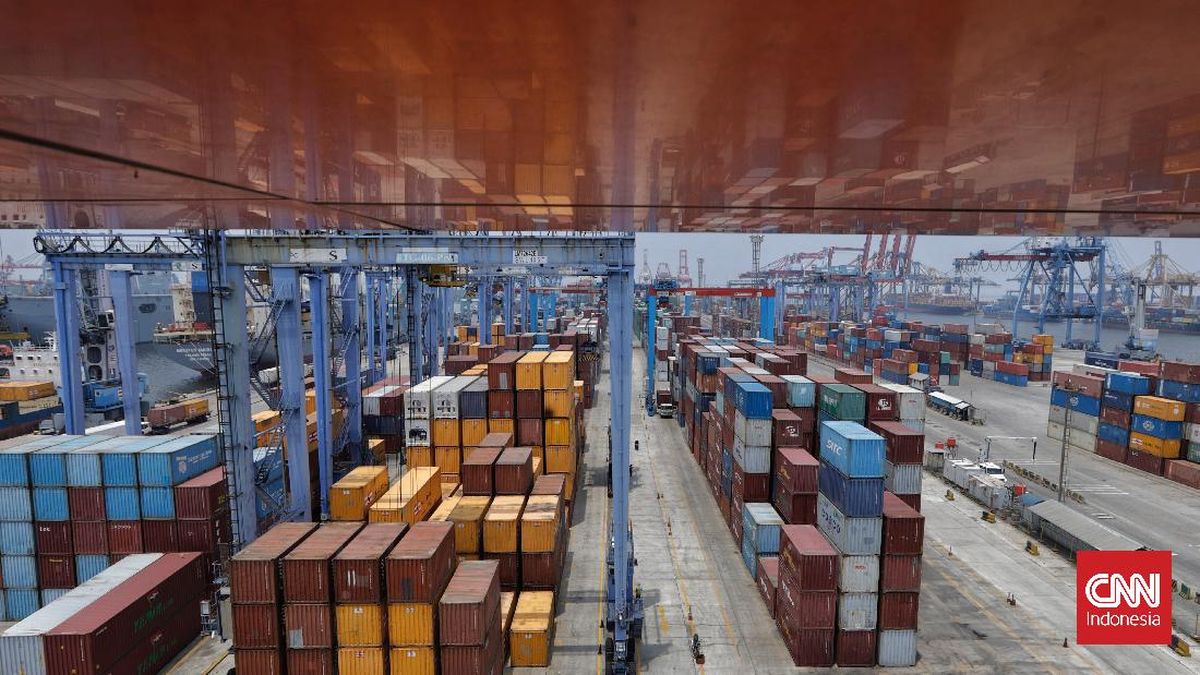
For instance, the Indonesian textile and apparel industry, which employs millions, relies heavily on exports to the U.S. A 10 percent tariff could erode profit margins, force price increases, or necessitate cost-cutting measures that might affect labor. Similarly, the footwear industry, a major employer and foreign exchange earner, could face similar challenges. The long lead time until 2026, however, offers Indonesian businesses and policymakers a crucial period to adapt, re-strategize, and explore new avenues.
Indonesia’s Two-Pronged Mitigation Strategy
In anticipation of the 2026 tariff implementation, the Indonesian government has outlined a robust, two-pronged strategy to safeguard national export competitiveness. This approach tackles challenges from both domestic and international perspectives.
Domestically, the government aims to streamline regulations pertaining to raw material imports. The goal is to reduce production costs for export-oriented industries, thereby enhancing the price competitiveness of Indonesian products in global markets. This could involve simplifying customs procedures, reducing import duties on specific raw materials not available domestically, or accelerating permit processes. Such measures are vital to ensure that Indonesian manufacturers can absorb some of the tariff impact without passing the full cost onto consumers, or losing market share due to higher prices. For example, the textile industry often relies on imported synthetic fibers or specialized dyes. Easing the import of these inputs could provide a critical buffer.
On the international front, Indonesia is aggressively pursuing market diversification and leveraging existing trade agreements. This strategy seeks to reduce over-reliance on any single market, particularly the U.S., by strengthening trade ties with other economic blocs and nations. The government plans to optimize existing comprehensive economic partnership agreements (CEPAs) and free trade agreements (FTAs), including:
- Indonesia-Australia Comprehensive Economic Partnership Agreement (IA-CEPA): In force since 2020, this agreement offers enhanced market access and reduces trade barriers between the two countries. Indonesia can explore opportunities to increase exports of certain goods to Australia that might face challenges in the U.S. market.
- Indonesia-Korea Comprehensive Economic Partnership Agreement (IK-CEPA): Effective since 2023, IK-CEPA facilitates greater trade and investment flows with South Korea. This agreement opens new avenues for Indonesian manufactured goods and agricultural products.
- Regional Comprehensive Economic Partnership (RCEP): As the world’s largest free trade agreement, encompassing ASEAN, Australia, China, Japan, New Zealand, and South Korea, RCEP, which became effective for Indonesia in 2023, offers immense potential for diversifying trade within the Asia-Pacific region. Indonesia can strategically re-route supply chains or focus on increasing intra-RCEP trade to offset potential U.S. market contraction.
Beyond optimizing current agreements, Indonesia is also accelerating negotiations for new market access through ongoing FTAs. These include:
- Indonesia-Eurasian Economic Union Free Trade Agreement (I-EAEU FTA): This agreement, currently under negotiation, aims to open up markets in Russia, Kazakhstan, Belarus, Kyrgyzstan, and Armenia, providing a significant new avenue for Indonesian exports.
- Indonesia-European Union Comprehensive Economic Partnership Agreement (IEU-CEPA): Negotiations for this ambitious agreement are well underway. A successful conclusion would grant Indonesian products preferential access to the vast and affluent EU market, serving as a crucial alternative to the U.S.
- Indonesia-Canada Comprehensive Economic Partnership Agreement (ICA-CEPA): Also under negotiation, ICA-CEPA seeks to strengthen trade and investment ties with Canada, offering another diversified market option in North America.
These proactive diplomatic and economic initiatives underscore Indonesia’s strategic foresight in navigating a complex global trade environment, aiming to build resilience against external shocks and ensure sustained export growth.
Broader Global Trade Context and Outlook
The USTR’s tariff announcement, even with a 2026 effective date, reflects a persistent theme in U.S. trade policy, particularly under an administration focused on domestic industry protection and addressing perceived unfair trade practices. The statement from a senior White House official, "The President will not allow his primary trade policies and objectives to be hindered simply because one legal instrument is restricted by the courts or other factors," clearly signals a determination to leverage various tools to achieve trade objectives, even when previous methods face judicial setbacks. This implies a continued aggressive stance on trade enforcement, regardless of the specific mechanisms employed.
The global trade landscape has been characterized by increasing protectionism, supply chain re-alignment, and heightened scrutiny of labor and environmental standards. Countries like Indonesia are finding themselves caught between the major economic powers, necessitating agile and adaptable trade policies. The focus on forced labor also highlights a growing consumer and regulatory demand for ethical sourcing, placing a burden on exporting nations to demonstrate robust compliance.
For Indonesia, the two-year lead time is a double-edged sword. While it provides ample opportunity for preparation and diplomatic engagement to soften the blow, it also creates prolonged uncertainty for businesses and investors. The government’s immediate challenge is to not only mitigate the direct impact of the tariffs but also to reinforce investor confidence in Indonesia’s long-term export prospects. Success in securing product exemptions and competitive tariffs through ongoing consultations will be a critical indicator of Indonesia’s diplomatic prowess. Simultaneously, the effective implementation of domestic reforms and the successful conclusion and utilization of new trade agreements will be paramount in securing Indonesia’s economic resilience in a challenging global trade environment.
