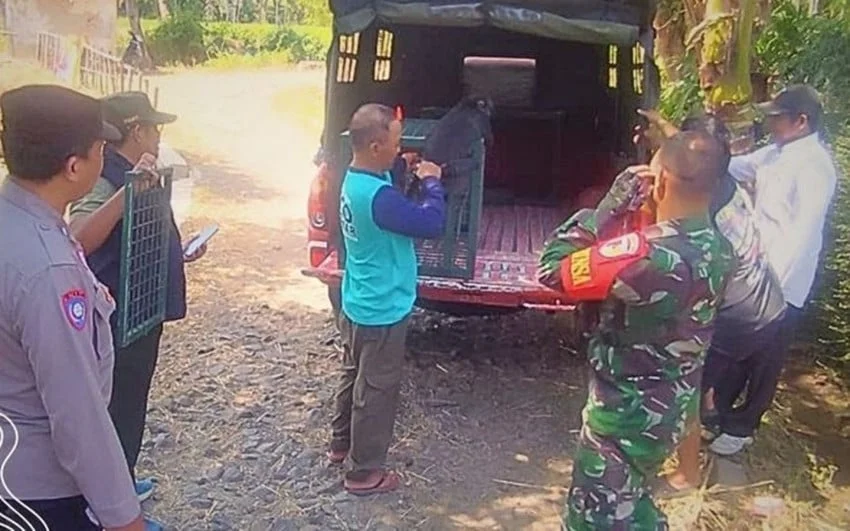
BONDOWOSO, East Java – In a significant boost to Indonesia’s wildlife conservation efforts, a Javan Lutung (Trachypithecus auratus), a primate species listed as endangered, was voluntarily surrendered by a resident in Sukosari Lor Village, Sukosari District, Bondowoso Regency, East Java. The critically important rescue operation was successfully carried out by the Ministry of Forestry (Kemenhut) through its regional arm, the East Java Natural Resources Conservation Agency (BBKSDA). The lutung, affectionately named "Momon" by its former caretaker, is now undergoing comprehensive observation and rehabilitation, marking a crucial step towards its potential reintroduction into its natural habitat or placement in a suitable conservation facility. This event underscores the growing public awareness and collaborative spirit essential for protecting Indonesia’s rich, yet vulnerable, biodiversity.
The successful evacuation of Momon is a direct reflection of Kemenhut’s intensified commitment to safeguarding protected wildlife and preserving Indonesia’s vast biological diversity. Under the leadership of Minister of Forestry Raja Juli Antoni, the ministry has been actively pursuing a multi-pronged strategy that includes strengthening patrol and law enforcement activities, enhancing the capacity for wildlife rescue operations, facilitating the rehabilitation and eventual release of rescued animals, and fostering extensive collaborations with local governments, security forces, conservation organizations, and the wider community. This concerted approach aims to create a more robust framework for wildlife protection across the archipelago, tackling issues ranging from illegal poaching and trade to habitat degradation.
The Plight of the Javan Lutung: A Species on the Brink
The Javan Lutung, also known as the Javan Langur or "Budeng" in local parlance, is an Old World monkey endemic to the Indonesian islands of Java, Bali, and Lombok. Distinguished by its striking black fur, which often has a reddish-brown tinge, especially in juveniles, these arboreal primates play a vital role in their ecosystem as seed dispersers. They primarily inhabit lowland and montane rainforests, thriving in areas with dense canopy cover. Their diet consists predominantly of leaves, supplemented by fruits, flowers, and insect larvae. Javan Lutungs are highly social animals, typically living in groups of five to ten individuals, led by a dominant male.
However, the future of the Javan Lutung is precarious. The International Union for Conservation of Nature (IUCN) classifies the species as "Endangered," primarily due to severe habitat loss and fragmentation caused by agricultural expansion, urbanization, and logging. An equally significant threat is the illegal wildlife trade, where young lutungs are often captured for the pet market, leading to significant population declines in the wild. The species is also listed under Appendix II of CITES (Convention on International Trade in Endangered Species of Wild Fauna and Flora), which means that trade in these animals is strictly controlled to prevent over-exploitation. The exact population numbers in the wild are difficult to ascertain but are estimated to be declining rapidly, making every individual rescued a critical asset for the species’ survival. Conservation efforts focus on protecting their remaining habitats, combating illegal trade, and implementing effective breeding and rehabilitation programs.
A Coordinated Rescue Effort: The Journey of "Momon"
The journey of Momon from a private home to a dedicated conservation facility highlights the proactive measures being taken by Indonesian authorities. While the exact timeline leading up to the surrender is not fully detailed, such operations typically begin with intelligence gathering, often from concerned citizens, local authorities, or conservation partners, indicating the presence of a protected animal in private hands. Upon receiving information about Momon, officials from the East Java BBKSDA initiated contact with the resident in Sukosari Lor. This initial engagement is crucial, as it often involves educating the owner about the protected status of the animal and the legal ramifications of keeping such species without proper permits.
In Momon’s case, the interaction proved successful, culminating in the voluntary surrender of the lutung. This willingness on the part of the owner to cooperate with authorities is a positive indicator of growing public awareness and responsibility regarding wildlife conservation. Following the agreement, a specialized team from BBKSDA, equipped with the necessary expertise and animal handling equipment, proceeded to the residence on July 25, 2026, to safely retrieve Momon. The process involved a careful assessment of Momon’s physical condition and behavior to ensure a smooth transition. The animal was then securely transported to a designated Kemenhut facility for further care. The voluntary nature of the surrender avoided the need for enforcement actions, underscoring the effectiveness of community-based conservation approaches.
The Road to Rehabilitation: A New Beginning for Momon
Upon arrival at the Kemenhut facility, Momon immediately commenced a critical phase of observation and rehabilitation. This process is meticulously designed to assess the animal’s health, behavioral patterns, and potential for future release. Initial veterinary checks include a thorough physical examination, blood tests, and screening for any diseases or parasites that might have been acquired during its time in captivity. Nutritional assessment and a tailored diet plan are also crucial, as animals kept as pets often receive inappropriate food, leading to health issues.
Beyond physical health, behavioral rehabilitation is paramount. Lutungs, being highly social and arboreal, often develop abnormal behaviors in isolation or confined spaces. Rehabilitation aims to re-socialize them, encourage natural foraging behaviors, and re-acclimatize them to a naturalistic environment. This can involve providing enrichment items, introducing them to other lutungs in a controlled setting (if suitable), and gradually exposing them to conditions mimicking their wild habitat. The duration of rehabilitation varies greatly depending on the individual animal’s condition, age, and how long it was kept in captivity. For some, a full return to the wild is possible after extensive training and health clearance, often in protected release sites. For others, particularly those with irreversible behavioral issues or health conditions, placement in a reputable conservation breeding program or a permanent sanctuary might be the most viable option, ensuring their welfare and contributing to genetic diversity. Momon’s case will be continuously evaluated by wildlife experts to determine the most appropriate long-term conservation strategy.
Indonesia’s Steadfast Commitment to Biodiversity
The rescue of Momon is more than an isolated incident; it reflects a broader, unwavering commitment from the Indonesian government to protect its unparalleled biodiversity. Minister of Forestry Raja Juli Antoni has consistently emphasized the importance of a holistic approach to conservation. His leadership has seen an increased focus on not just reactive measures like rescue operations, but also proactive strategies. These include expanding protected areas, implementing sustainable forest management practices, combating illegal logging, and strengthening international cooperation to curb cross-border wildlife trafficking.
Furthermore, the ministry is investing in technological advancements for monitoring wildlife populations and detecting illegal activities. Drone surveillance, satellite imagery, and advanced data analytics are increasingly being employed to enhance the effectiveness of conservation efforts. The government also recognizes that sustainable conservation cannot be achieved without the active participation of local communities. Initiatives to empower communities living near protected areas, providing them with alternative livelihoods and education on the importance of conservation, are crucial in fostering a sense of shared responsibility and reducing human-wildlife conflict. These policy directions aim to ensure that Indonesia’s natural heritage, including iconic species like the Javan Lutung, is preserved for future generations.
The Power of Community Engagement: A Collective Responsibility
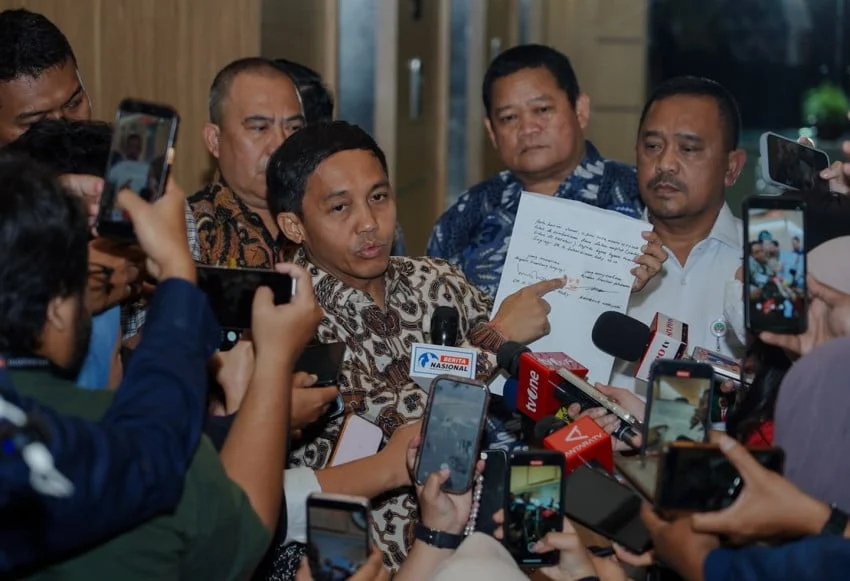
Ristianto Pribadi, Head of the Public Relations and Foreign Cooperation Bureau at Kemenhut, underscored the critical role of public support in wildlife protection efforts. "The success in rescuing Momon demonstrates that protecting wild animals cannot be achieved by the government alone," Pribadi stated. "It requires the unwavering support and care of the community." This sentiment highlights a fundamental truth in conservation: government agencies, despite their mandate and resources, cannot be omnipresent. The eyes and ears of local communities are invaluable in identifying illegal activities, reporting protected animals in captivity, and participating in conservation initiatives.
The voluntary surrender of Momon by the Bondowoso resident exemplifies this principle. It suggests a growing awareness among the populace about the importance of protecting endangered species and understanding the legal implications of possessing them. Often, individuals who keep protected animals as pets may not initially be aware of their protected status or the harm it causes. Educational outreach and positive engagement, rather than punitive action as a first resort, can be highly effective in fostering compliance and turning potential violators into conservation allies. This case serves as a powerful reminder that every citizen has a role to play in safeguarding Indonesia’s natural heritage, whether by reporting suspicious activities, supporting legitimate conservation efforts, or simply making responsible choices regarding wildlife.
Broader Conservation Challenges and Future Implications
While the rescue of Momon is a cause for celebration, it also casts a spotlight on the persistent challenges facing wildlife conservation in Indonesia. The illegal wildlife trade remains a multi-billion dollar industry globally, driven by demand for exotic pets, traditional medicine, and bushmeat. Primates, particularly infants, are highly sought after, leading to brutal capture methods that often result in the death of adult females protecting their young. This clandestine trade not only depletes wild populations but also poses significant public health risks due to the potential transmission of zoonotic diseases.
Indonesia, with its vast biodiversity, is unfortunately a hotspot for both supply and demand in this illegal trade. Statistics from various conservation organizations reveal thousands of illegal wildlife seizures annually, encompassing a wide range of species from pangolins and parrots to tigers and primates. These numbers, however, represent only a fraction of the actual trade, indicating the scale of the challenge. The successful rehabilitation and release of a single animal, while significant, is a small victory in a much larger war against wildlife crime and habitat destruction.
However, each success story like Momon’s provides valuable data and experience for future operations. It reinforces the importance of inter-agency cooperation, public education campaigns, and the consistent application of conservation laws. The incident also sends a clear message to potential illegal wildlife owners that authorities are vigilant and serious about enforcement. Looking ahead, sustained efforts in community education, rigorous law enforcement, international collaboration to dismantle trafficking networks, and dedicated funding for protected areas and rehabilitation centers will be critical. The fate of the Javan Lutung, and countless other endangered species, hinges on the collective will and action of government, conservationists, and the public working in unison to ensure a sustainable future for Indonesia’s irreplaceable natural wealth.