
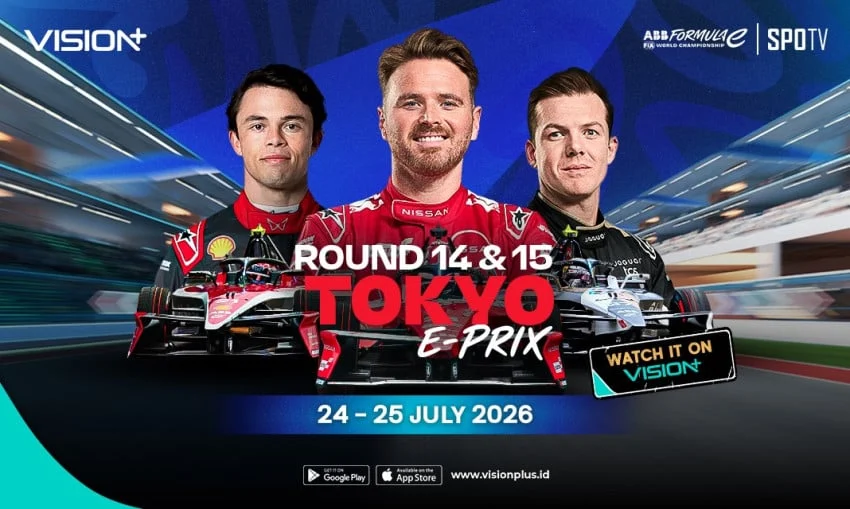
The electrifying world of Formula E is set to captivate motorsport enthusiasts once again as the Tokyo E-Prix returns for Rounds 14 and 15 on July 24-26, 2026. Unlike traditional motorsport, Formula E races are a complex ballet of speed, energy management, and strategic brilliance, where fractions of a second can dictate the outcome of a thrilling contest. This highly anticipated event, scheduled to be broadcast on VISION+, promises to deliver an unforgettable spectacle as drivers navigate the challenging urban circuit of Japan’s vibrant capital.
A Return to Tokyo’s Iconic Streets
The decision to host the Formula E Tokyo E-Prix on the city’s streets signifies a crucial moment for the championship, highlighting its commitment to sustainable urban mobility and its growing global appeal. Tokyo, a metropolis renowned for its cutting-edge technology and efficient infrastructure, provides a fitting backdrop for a racing series that champions electric innovation. The circuit layout, characterized by its technical demands and numerous tight corners, will push drivers and their teams to their absolute limits. Precision driving, impeccable car setup, and astute energy conservation will be paramount, as even the smallest miscalculation can lead to a significant loss of track position.
This leg of the season holds particular significance as it approaches the latter stages of the championship. With every point becoming increasingly valuable, teams will be fiercely vying for supremacy. The Free Practice sessions will serve as critical windows for teams to fine-tune their car configurations, optimize aerodynamic settings, and meticulously analyze energy consumption patterns. Following these preparatory sessions, the focus will inevitably shift to Qualifying. This high-stakes segment is where drivers will battle to secure an advantageous starting grid position, a factor that often proves decisive on a circuit where overtaking opportunities may be limited.
The Evolution of Formula E and Its Tokyo Debut
Formula E, established in 2014, has rapidly evolved from a nascent racing series into a premier global championship. Its core principle is to promote electric vehicle technology and sustainable transportation solutions. The championship has consistently attracted leading automotive manufacturers and innovative engineering firms, fostering a competitive environment that drives technological advancements. The inaugural Tokyo E-Prix in 2024 marked a significant milestone, showcasing the city’s readiness to embrace electric racing and its commitment to a greener future. The positive reception and the success of the previous event paved the way for its inclusion in the 2026 calendar, reinforcing Tokyo’s position as a key destination for international motorsport.
The selection of a street circuit in Tokyo presents a unique set of challenges and opportunities. Street circuits, by their nature, are often tighter, bumpier, and less forgiving than purpose-built race tracks. This demands a different approach to car setup, emphasizing agility and responsiveness. Drivers must exhibit exceptional car control and spatial awareness to navigate the unforgiving barriers that line the track. The fan experience is also significantly enhanced by street circuits, bringing the thrill of motorsport directly into the heart of urban centers, allowing spectators to witness the cutting-edge technology and raw speed up close.
Strategic Imperatives: Energy Management and Driver Prowess
Formula E’s distinctive characteristic lies in its emphasis on energy management. Unlike conventional racing, where fuel is a constant concern but typically not a limiting factor in race duration, Formula E races are intrinsically linked to battery capacity. Drivers must constantly balance the need for outright speed with the imperative to conserve energy, making calculated decisions about when to deploy their "Attack Mode" – a system that grants a temporary power boost – and when to adopt a more conservative driving style. This strategic layer adds a compelling dimension to the racing, often leading to dramatic shifts in position during the latter stages of a race as drivers manage their remaining energy reserves.
The Tokyo circuit’s technical layout will amplify the importance of precise energy deployment. Drivers who can effectively manage their battery levels throughout the race, while simultaneously executing overtaking maneuvers and defending their positions, will undoubtedly hold a significant advantage. Furthermore, the teams’ ability to devise and adapt race strategies on the fly, factoring in factors such as tire degradation, safety car periods, and the performance of rival teams, will be crucial for success. This intricate interplay of driver skill and strategic foresight is what sets Formula E apart and makes each race a captivating intellectual and physical contest.
Supporting Data and Historical Context
Since its inception, Formula E has witnessed remarkable growth. The championship currently features 11 teams and 22 drivers, with manufacturers like Jaguar, Porsche, Nissan, and DS Automobiles consistently investing in the technology and competing for titles. The average race speeds have steadily increased over the seasons, reflecting the advancements in electric powertrain technology. For instance, in the early seasons, race times were often significantly longer due to battery limitations. However, with the introduction of more advanced battery systems and more efficient powertrains, such as the Gen3 cars, the racing has become faster and more intense.
The Gen3 Formula E car, which is currently in use, represents a significant leap forward in electric racing technology. These cars are capable of speeds exceeding 200 mph (320 km/h) and feature regenerative braking systems that can recover up to 50% of the energy used during a lap. This technology not only enhances performance but also underscores Formula E’s commitment to developing sustainable automotive solutions. The Tokyo E-Prix, as a high-profile event, will serve as a crucial platform for showcasing the capabilities of these advanced machines on a challenging urban circuit.
Historically, street circuits have often produced unpredictable and exciting races in Formula E. The Monaco E-Prix, for example, is renowned for its tight confines and strategic battles. Similarly, the Berlin E-Prix, held on a former airport, has also delivered captivating contests. The Tokyo E-Prix, with its unique urban landscape and technical demands, is expected to add another chapter to this legacy of thrilling street racing.
Chronology of the Tokyo E-Prix 2026
The three-day event is meticulously structured to maximize both the competitive action and the fan experience:
Friday, July 24, 2026:
- Free Practice 1 (FP1): This initial session allows teams and drivers to familiarize themselves with the circuit, test different car setups, and gather crucial data on tire wear and energy consumption. It is a critical period for understanding the track’s nuances and identifying potential challenges.
- Free Practice 2 (FP2): Building on the insights from FP1, FP2 provides teams with another opportunity to refine their strategies, make further adjustments to the car, and simulate race conditions. This session often sees drivers pushing the limits as they prepare for the intensity of qualifying.
Saturday, July 25, 2026:
- Qualifying: This is a pivotal session where drivers compete in a knockout format to determine their starting positions for the race. The challenging nature of the Tokyo circuit means that securing a front-row start can be a significant advantage.
- Race 1 (Round 14): The first of the two races takes place, marking the beginning of the weekend’s competitive action. Drivers will be focused on maximizing their points haul and establishing a strong position for the following day.
Sunday, July 26, 2026:
- Race 2 (Round 15): The second race of the weekend concludes the Tokyo E-Prix. This race often sees teams employing different strategies based on the results of Race 1, leading to an unpredictable and exciting finale. It is the final opportunity for drivers and teams to score crucial championship points.
Inferred Statements and Reactions
While specific quotes are not yet available, the anticipation surrounding the Tokyo E-Prix can be inferred from the general sentiment within the Formula E paddock. Team principals often emphasize the importance of adapting to new circuits and the strategic depth required for success. For instance, a team principal might express: "Tokyo presents a unique challenge with its tight and technical layout. Our engineers and drivers have been working diligently to optimize our car for these conditions. Energy management will be absolutely key, and we will need to be flawless in our execution throughout both races."
Drivers, too, are likely to be excited about the prospect of racing in Tokyo. A prominent driver might comment: "I’m incredibly excited to race in Tokyo again. It’s an amazing city, and the circuit is a real test of skill. The fans are passionate, and the atmosphere is electric. We’re aiming for strong results this weekend, and I believe our package is competitive here."
The local organizing committee, in partnership with the Tokyo Metropolitan Government, would likely express their enthusiasm for hosting a global sporting event that aligns with the city’s vision for sustainability. A statement from an official might read: "We are thrilled to welcome Formula E back to Tokyo. This event not only showcases cutting-edge electric mobility but also brings the excitement of world-class motorsport to our citizens and visitors. We are committed to ensuring a successful and sustainable event that highlights Tokyo’s commitment to innovation and environmental responsibility."
Broader Impact and Implications
The Formula E Tokyo E-Prix 2026 carries significant implications beyond the immediate thrill of competition. It serves as a powerful platform for promoting electric vehicle adoption and raising public awareness about sustainable transportation solutions. By demonstrating the performance and viability of electric vehicles in a demanding motorsport environment, Formula E inspires consumers and policymakers alike to embrace cleaner alternatives.
Furthermore, the event contributes to Tokyo’s reputation as a global hub for innovation and technology. The intricate planning and execution of a street circuit race require extensive collaboration between the city government, local businesses, and the Formula E organization, fostering economic development and international partnerships. The influx of international visitors also provides a boost to the local tourism industry.
The strategic importance of the Tokyo E-Prix cannot be overstated. As the championship progresses towards its climax, the points accumulated in these two races could significantly influence the final standings. Teams that can master the intricacies of the Tokyo circuit and execute flawless race strategies will be well-positioned to contend for the drivers’ and teams’ championships. The event is a testament to Formula E’s continued growth and its ability to deliver compelling motorsport narratives against the backdrop of some of the world’s most iconic urban landscapes. The intersection of cutting-edge automotive technology, strategic racing, and the vibrant setting of Tokyo promises a captivating spectacle for motorsport fans worldwide.
