
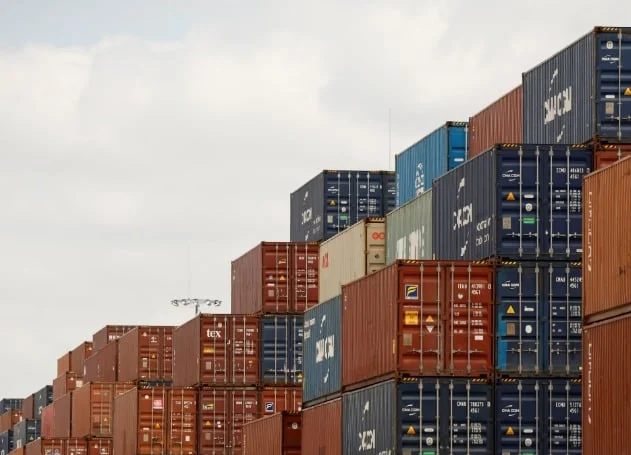
The World Trade Organization (WTO) has issued a stark warning that the global trading system is currently standing at a precarious critical juncture, urging member nations to pursue immediate and comprehensive reforms to prevent a slide into systemic fragmentation. In its latest annual assessment, the Geneva-based international body cautioned that the failure to modernize multilateral trade rules threatens to undermine decades of economic integration, with the most severe consequences expected to fall upon the shoulders of low-income and developing nations.
As geopolitical tensions continue to reshape the map of international commerce, the WTO highlights that the existing framework, largely established in the post-Cold War era, is no longer adequately equipped to manage the complexities of modern economic statecraft. From the rapid acceleration of digital trade to the resurgence of protectionist industrial policies, the global trade landscape is undergoing a structural transformation that threatens to dampen long-term global economic growth.
The Anatomy of the Current Crisis
Chief Economist at the WTO, Rob Staiger, underscored the gravity of the situation, noting that the multilateral system is under unprecedented duress. According to Staiger, the primary drivers of this instability include a shifting distribution of global economic power, an increase in state interventionism, and a persistent rise in trade friction between major powers.
"The rules-based system is under immense pressure, and the consequences are already manifesting in global supply chain volatility," Staiger stated. "If the multilateral framework were to effectively collapse or lose its relevance, our simulations indicate that the economic costs would be catastrophic, particularly for the most vulnerable segments of the global population who rely on trade as a pathway to development."
The WTO’s report emphasizes that the rules governing international trade are increasingly failing to keep pace with the realities of the 21st-century economy. The emergence of aggressive national industrial strategies—where governments subsidize domestic industries to gain a competitive edge—has created a "tit-for-tat" environment that stifles innovation and raises costs for consumers worldwide.
Chronology of Rising Trade Tensions
The current state of affairs did not emerge in a vacuum. The trajectory toward fragmentation has been building for nearly a decade, marked by several key turning points that have weakened the foundations of the WTO:
- 2016–2018: The Return of Protectionism. The initiation of widespread tariff hikes, particularly between the United States and China, marked the end of the post-2008 consensus on trade liberalization. The imposition of duties on steel, aluminum, and subsequently a wide array of consumer goods, signaled a pivot toward "America First" policies and a retaliatory response from global trading partners.
- 2020–2021: Pandemic-Induced Supply Chain Shocks. The COVID-19 pandemic exposed the fragility of just-in-time global supply chains. Nations began prioritizing "reshoring" or "friend-shoring," moving away from global efficiency toward regional security, often at the expense of trade openness.
- 2022–2023: Geopolitical Divergence. The escalation of regional conflicts, most notably the war in Ukraine, accelerated the division of the global economy into blocs. Trade sanctions and export controls on high-technology products, such as semiconductors, became the new tools of modern warfare.
- 2024–2025: The Regulatory Lag. As digital trade and artificial intelligence evolved at lightning speed, the WTO’s institutional structure struggled to establish a unified regulatory framework, leading to a patchwork of regional standards that complicate cross-border commerce.
The Vulnerability of Emerging Markets
While major economies possess the fiscal buffer to navigate trade wars, developing and least-developed countries (LDCs) are disproportionately affected by the breakdown of multilateral cooperation. In an integrated global market, these nations benefit from the "level playing field" enforced by WTO rules. When fragmentation occurs, these nations often find themselves forced to choose sides or face exclusion from vital supply chains.
The WTO’s analysis suggests that fragmentation could lead to a permanent reduction in global GDP. The loss of access to open markets reduces the ability of developing nations to attract foreign direct investment (FDI), which is essential for poverty reduction and infrastructure development. When trade barriers rise, the cost of imported essential goods—such as food, medicine, and clean energy components—tends to climb, further destabilizing the fragile economies of the Global South.
Industrial Policy and the Tariff Conundrum
A central point of contention in the current trade environment is the rise of aggressive industrial policy. Governments worldwide are increasingly deploying massive subsidies to bolster domestic industries, particularly in the sectors of green energy, semiconductors, and electric vehicles (EVs).
Recent developments serve as a prime example: the United States’ decision to impose high tariffs on Asian-made solar panels, with some rates reaching as high as 173%, illustrates how industrial policy can quickly devolve into trade protectionism. Such measures are intended to shield domestic manufacturers, but they often result in higher prices for the end-user and trigger retaliatory tariffs that hurt domestic exporters.
The WTO warns that this "subsidy race" creates a distorted market where capital is allocated based on political favor rather than economic efficiency. This leads to global overcapacity in certain sectors, followed by dumping, which eventually forces other nations to adopt their own protective barriers, creating a vicious cycle of trade friction.
Digital Trade: The Uncharted Frontier
The report also highlights the urgent need for a multilateral approach to digital trade. With the rise of the digital economy, traditional trade rules—which were written in an era of tangible goods—are increasingly obsolete. Data localization laws, cross-border digital taxation, and artificial intelligence governance are areas where there is currently no global consensus.
Without a cohesive framework, the digital economy risks fracturing into "splinternets"—separate digital ecosystems that are incompatible with one another. This would not only hinder the growth of tech startups in emerging markets but would also increase the cost of doing business for multinational corporations, ultimately passing the cost to the global consumer.
Broader Implications for Global Stability
The implications of the WTO’s warnings extend far beyond economics. Historically, high levels of trade integration have served as a deterrent to military conflict. When nations are economically interdependent, the cost of aggression is significantly higher. Conversely, the "de-risking" and "de-coupling" narratives currently gaining traction in Western capitals are viewed by many economists as a precursor to a more dangerous, bifurcated world order.
Analysts suggest that if the WTO continues to be sidelined, the world will likely revert to a system of "plurilateral" agreements. While these agreements, such as the CPTPP or the RCEP, can facilitate trade among smaller groups of nations, they are inherently exclusive and can deepen the divide between participating countries and those left behind.
The Path Forward: Reform or Irrelevance
The WTO is calling for a "re-globalization" effort, which it defines as a process of integrating more people and more countries into the global economy, rather than a retreat into protectionism. This involves:
- Dispute Settlement Reform: Restoring the functionality of the WTO’s Appellate Body, which has been paralyzed for years, to ensure that trade disputes are resolved through law rather than raw economic power.
- Transparency in Subsidies: Developing a multilateral agreement on the transparency of industrial subsidies to prevent the current race to the bottom.
- Modernizing Rulebooks: Updating agreements to cover digital trade, services, and the environmental sustainability of supply chains.
- Inclusive Development: Ensuring that future trade agreements contain provisions that specifically assist developing nations in participating in the global value chain.
As the global economy faces high inflation, volatile interest rates, and the existential threat of climate change, the cost of inaction is rising. The WTO’s message is clear: the global trade system is not merely an administrative mechanism for moving goods across borders; it is a vital pillar of global peace and prosperity. If nations fail to reconcile their national interests with the collective necessity of an open, rules-based system, the world risks entering a period of economic stagnation that could define the remainder of the decade.
The coming months will be critical as member states prepare for upcoming ministerial meetings. Whether these nations choose to prioritize short-term domestic political gains or the long-term stability of the global economy remains the defining question of our time. The WTO has sounded the alarm; it is now up to the international community to decide whether to heed the warning or continue down a path toward inevitable systemic fragmentation.
