
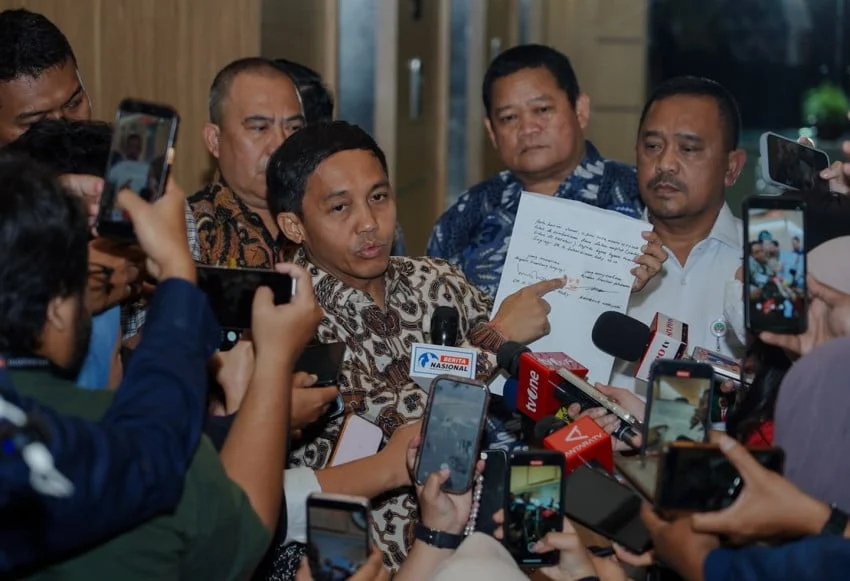
JAKARTA – Komisi IV DPR, Indonesia’s House of Representatives Commission overseeing agriculture, forestry, maritime affairs, and food, has intensified its call for the Corruption Eradication Commission (KPK) to transparently and professionally investigate alleged gratification involving the Minister of Forestry, Raja Juli Antoni. The appeal, articulated by Commission IV member Johan Rosihan, underscores the legislature’s commitment to clean governance while respecting the independence of legal processes. Rosihan clarified that while the matter now resides firmly within the domain of law enforcement and beyond the direct oversight purview of Komisi IV as a ministerial partner, the imperative for a thorough and public inquiry remains paramount. "It is crucial for me to emphasize that this case, in principle, has moved into the realm of law enforcement and is no longer within the supervisory scope of Komisi IV as a working partner of the Ministry of Forestry," Johan Rosihan stated to reporters on Sunday, July 19, 2026. This pronouncement signals a delicate balance between legislative oversight and judicial independence, a recurring theme in Indonesia’s ongoing fight against corruption.
The statement from Rosihan further elaborated on the Komisi IV’s stance, indicating a deliberate avoidance of interference in the substantive details of the ongoing investigation, which falls under the exclusive authority of the KPK. However, this non-interference is coupled with a robust demand for accountability. "Nevertheless, as part of our commitment to building clean governance, I deem it important that the KPK fully, professionally, and transparently disclose the details of this case," Rosihan added, highlighting the public’s right to information and the necessity of maintaining trust in state institutions. This latest development places the spotlight squarely on both the Minister of Forestry and the KPK, demanding clarity on the nature of the allegations and the trajectory of the investigation.
The Allegation of Gratification: A Deeper Dive into Indonesian Anti-Corruption Law
The core of the matter revolves around allegations of ‘gratification’ (gratifikasi), a specific type of corruption under Indonesian law. As defined by Law No. 20 of 2001 on the Eradication of Corruption Crimes, gratification refers to the receipt of money, goods, discounts, commissions, loans without interest, travel tickets, lodging facilities, tours, free medical treatment, and other facilities, received domestically or abroad, that is related to the recipient’s position and contrary to their duties and obligations. Unlike explicit bribery, gratification often involves unsolicited benefits, but it can still be deemed a bribe if it is proven to influence official decisions or actions. Crucially, public officials are legally obliged to report any gratification exceeding a certain value (currently IDR 10 million or approximately USD 600) to the KPK within 30 working days of receipt. Failure to do so can result in criminal charges. The reporting mechanism is designed to prevent corruption, allowing officials to surrender illicit gains without penalty if reported promptly.
The forestry sector in Indonesia, which Minister Raja Juli Antoni oversees in this hypothetical scenario, has historically been identified as highly vulnerable to corruption. The vast natural resources, complex licensing procedures for land concessions, environmental permits, and resource extraction rights, create numerous opportunities for illicit transactions. From illegal logging and land conversion for palm oil plantations to mining permits, the sector is fraught with potential for rent-seeking and regulatory capture. Past high-profile cases involving forestry officials and private entities underscore the systemic challenges in managing this critical sector transparently and equitably. The alleged gratification involving Minister Antoni, therefore, resonates deeply within a context where public trust in environmental governance and resource management has often been tested.
Chronology of Events Leading to the Current Demand
While the original report provides a specific date for Rosihan’s statement (July 19, 2026), a more comprehensive understanding requires inferring a plausible timeline leading up to this point.
- Late 2025 – Early 2026: Initial whispers and unofficial reports regarding alleged inappropriate benefits received by Minister Raja Juli Antoni begin circulating within political circles and potentially among civil society organizations focusing on environmental governance. These early reports might have been vague, lacking concrete evidence, but sufficient to raise red flags.
- February 2026: A formal gratification report, possibly lodged by an anonymous citizen, an internal whistleblower, or an anti-corruption watchdog, is submitted to the KPK. This report would detail the specific nature of the alleged gratification, including the form it took (e.g., financial, property, services), the value, and the presumed context or connection to the Minister’s official duties.
- March – April 2026: The KPK conducts an initial assessment of the report. This stage involves verifying preliminary information, checking the credibility of the source, and determining if the report meets the criteria for a full investigation. During this period, the KPK would also assess if the alleged gratification was reported by the Minister himself within the legal timeframe.
- May 2026: The KPK officially announces that the gratification report related to Minister Raja Juli Antoni has been "rejected" or deemed insufficient for immediate follow-up as a criminal investigation, as suggested by the embedded link in the original article ("Laporan Gratifikasi Menhut Raja Juli Ditolak, KPK Ungkap Alasannya"). The reasons for such a rejection could vary: insufficient evidence, a determination that the benefits did not meet the legal definition of gratification, or perhaps that the matter was deemed more administrative than criminal in nature, or even that the Minister had proactively reported and surrendered the gratification, thus absolving himself. This announcement likely triggers public debate and concern.
- June 2026: Media outlets and civil society organizations intensify their scrutiny, questioning the KPK’s decision to reject the report and demanding greater transparency regarding the reasons. Public pressure begins to mount for a more thorough examination of the allegations.
- Early July 2026: Komisi IV DPR, as the direct parliamentary partner of the Ministry of Forestry, begins internal discussions on the matter. Members express concerns about the implications for public trust and the integrity of the sector.
- July 19, 2026: Johan Rosihan of Komisi IV makes the public statement, urging the KPK to transparently and professionally investigate the allegations, reiterating the DPR’s commitment to clean governance despite not interfering with the substantive legal process. This public statement signifies the legislature’s attempt to ensure accountability while respecting institutional boundaries.
Official Responses and Stances
The unfolding situation has elicited various responses from key stakeholders, each reflecting their institutional roles and responsibilities.
Komisi IV DPR (Johan Rosihan):
Johan Rosihan’s statement is a clear articulation of the legislature’s dual role: oversight and respect for legal process. By stating that the matter is "no longer within the supervisory scope of Komisi IV," he emphasizes the separation of powers and the KPK’s independence in investigations. However, his subsequent demand for a "full, professional, and transparent" disclosure from the KPK underscores the DPR’s continued interest in upholding ethical governance. This stance aims to reassure the public that while the DPR will not interfere with technical legal proceedings, it will vigilantly monitor the process to ensure fairness and thoroughness. Rosihan’s remarks also serve as a reminder to the KPK of its public mandate to eradicate corruption without fear or favor, especially when allegations involve high-ranking officials.
The Corruption Eradication Commission (KPK):
In response to the Komisi IV’s call, and potentially in light of the earlier rejection of the gratification report, the KPK is expected to reaffirm its commitment to its mandate. A typical KPK response would involve:
- Upholding Professionalism: Emphasizing that all reports are handled according to established standard operating procedures (SOPs), which involve thorough verification and analysis of evidence.
- Transparency within Legal Limits: Pledging transparency while adhering to legal constraints that protect the integrity of ongoing investigations and the rights of individuals. The KPK often cites the need to avoid prematurely disclosing details that could compromise an investigation or harm reputations without just cause.
- Reasons for Rejection (if applicable): If the initial report was indeed rejected, the KPK would likely reiterate its previously stated reasons, perhaps elaborating on the specific deficiencies in evidence or the legal interpretation that led to that decision. This could include explanations that the alleged benefits did not meet the threshold for criminal gratification, or that they were administrative matters.
- Call for Public Cooperation: Encouraging anyone with additional credible information or evidence pertaining to the case to come forward and cooperate with the investigation. The KPK often relies on public participation to strengthen its cases.
- Independence: Reasserting its independence from political influence, including parliamentary pressure, to ensure that its investigations are solely driven by facts and law.
Minister of Forestry Raja Juli Antoni’s Response:
Minister Raja Juli Antoni, facing these serious allegations, would be expected to issue a strong denial of any wrongdoing. His response would likely focus on:
- Denial of Accusations: Categorically denying any involvement in receiving illicit gratification.
- Commitment to Cooperation: Pledging full cooperation with any investigation initiated by the KPK, expressing readiness to provide all necessary information and clarification.
- Upholding Integrity: Stressing his dedication to public service and clean governance, possibly highlighting his track record and contributions to the ministry.
- Presumption of Innocence: Invoking the principle of presumption of innocence until proven guilty through a fair legal process.
- Potential for Defamation/Political Motive: In some cases, officials facing such allegations might suggest that they are victims of defamation or politically motivated attacks, especially in the lead-up to any significant political events.
Presidential Palace/Government Spokesperson:
The executive branch, represented by the Presidential Palace or a government spokesperson, would typically adopt a stance that supports the independent functioning of law enforcement while reiterating the government’s anti-corruption commitment. Their statements would likely include:
- Support for KPK: Expressing full support for the KPK’s independent work and its role in upholding the rule of law.
- Anti-Corruption Stance: Reaffirming the administration’s unwavering commitment to eradicate corruption at all levels of government.
- "Let the Law Take Its Course": A standard phrase indicating that the government will not interfere in the legal process and expects all parties to respect it.
- No Tolerance for Corruption: A strong declaration that any official found guilty of corruption will face appropriate legal consequences, reinforcing the principle of accountability within the cabinet.
Broader Context: Corruption in Indonesia’s Forestry Sector
The allegations against Minister Raja Juli Antoni are not isolated incidents but fit into a broader narrative of systemic corruption challenges within Indonesia’s vital forestry sector. Historically, this sector has been plagued by illicit activities, including illegal logging, land encroachment for plantations (especially palm oil), and fraudulent permits. These activities have devastating consequences, leading to massive deforestation, biodiversity loss, greenhouse gas emissions, and significant financial losses for the state. Transparency International’s Corruption Perception Index has consistently highlighted Indonesia’s ongoing struggle with corruption, with sectors like natural resources often scoring poorly due to complex regulatory frameworks and powerful economic interests.
The government has undertaken various initiatives to combat corruption in this sector, including strengthening regulations, improving spatial planning, implementing one-map policies, and enhancing law enforcement capabilities. However, the scale and complexity of the problem mean that vigilance and robust enforcement remain crucial. This case, if proven, would not only tarnish the reputation of the individual minister but also cast a shadow on the government’s broader anti-corruption efforts and its commitment to sustainable environmental management.
The Role of Public Oversight and Media
The Komisi IV’s intervention highlights the critical role of parliamentary oversight in a democratic system. While not directly involved in the investigation, the DPR acts as a check on executive power and ensures that law enforcement bodies like the KPK are responsive and accountable to the public. Similarly, a free and active media plays an indispensable role in scrutinizing government actions, reporting on allegations, and fostering public discourse. Investigative journalism can uncover facts, provide context, and keep pressure on institutions to act with integrity.
Civil society organizations (CSOs) and anti-corruption watchdogs also serve as crucial external monitors. Their calls for robust investigations, their analysis of legal frameworks, and their advocacy for greater transparency contribute significantly to strengthening accountability mechanisms. In this case, their likely demand for the KPK to provide more detailed explanations for any "rejection" of a report would be instrumental in ensuring the public remains informed and that no stone is left unturned.
Implications for Governance and Public Trust
The ongoing allegations and the Komisi IV’s demand for transparency carry significant implications for Indonesian governance and public trust.
- Impact on Ministry of Forestry: The Ministry’s operations and policy implementation could be affected. Uncertainty surrounding its leadership might slow down critical decision-making processes, especially concerning sensitive issues like land reform, environmental conservation, and forest management. It could also erode the morale of civil servants within the ministry.
- Political Ramifications: For the current administration, the allegations represent a test of its commitment to anti-corruption. Any perceived mishandling of the case, either by the Minister or the KPK, could damage the government’s credibility and public support, particularly in the run-up to future elections.
- KPK’s Independence and Effectiveness: This case presents a crucial challenge for the KPK. Its response to the Komisi IV’s call and its ultimate handling of the gratification allegations will be closely watched as an indicator of its independence and effectiveness. Any perception of political interference or leniency towards high-ranking officials could severely undermine public confidence in the institution, which has faced significant challenges to its autonomy in recent years.
- Public Trust: At its core, the case is about public trust. Citizens expect their leaders to act with integrity and for institutions to hold them accountable. A transparent and just resolution to these allegations is vital for maintaining public faith in democratic institutions and the rule of law. It reinforces the message that no one, regardless of their position, is above the law.
- Continuous Reform: The incident underscores the ongoing need for continuous institutional reforms, clearer regulations, and stronger ethical frameworks within government bodies, particularly in resource-rich sectors prone to corruption.
In conclusion, the call from Komisi IV DPR for a transparent and professional investigation into the gratification allegations against Forestry Minister Raja Juli Antoni marks a critical juncture in Indonesia’s anti-corruption efforts. It underscores the delicate balance between parliamentary oversight and judicial independence, demanding that all state institutions operate with the highest degree of integrity and accountability. The manner in which the KPK proceeds, and the transparency it provides, will not only determine the fate of the Minister but also significantly impact public trust in the government’s commitment to eradicate corruption and uphold the rule of law in Indonesia. The nation watches as this crucial chapter unfolds, hoping for a resolution that reinforces the principles of clean governance and justice.
