
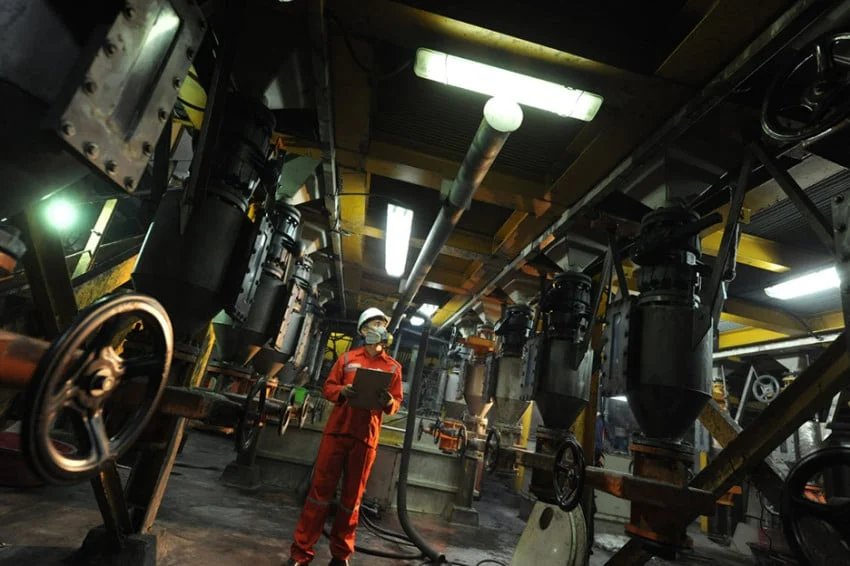
PT Aneka Tambang Tbk (ANTM), a prominent entity under the state-owned mining holding company MIND ID, is accelerating its strategic downstream initiatives by constructing a new precious metal refinery in Gresik, East Java. The facility, which is slated to commence commercial operations by 2028, represents a significant capital investment aimed at consolidating the company’s influence in the Indonesian gold market. With an estimated investment value of Rp1.1 trillion, the project underscores Antam’s commitment to expanding its manufacturing footprint and securing its leadership position in the domestic precious metals industry.
Strategic Objectives and Production Capacity
The decision to establish a new refinery in Gresik is rooted in the company’s long-term objective to enhance its mid-stream and downstream value chain. During the Public Expose Live 2026, Arini Kasmira, the Director of Finance and Risk Management at Antam, confirmed that the facility is designed to bolster the company’s total refining and manufacturing capacity significantly.
The refinery is projected to process between 30 to 40 tons of gold per annum. Beyond raw refining, the plant is expected to produce approximately 5 million pieces of gold bars and commemorative coins annually, all maintaining a purity level of 99.99 percent. This high-precision output is specifically engineered to cater to the burgeoning demand for gold-based investment products within Indonesia, a market segment that has shown consistent growth over the past decade as investors seek safe-haven assets amidst global economic volatility.
Contextualizing the Expansion: Why Gresik?
The choice of Gresik as the strategic site for this industrial complex is not arbitrary. Gresik has emerged as a vital industrial hub in East Java, characterized by robust infrastructure, access to port facilities, and proximity to major logistics corridors. By establishing a presence in East Java, Antam effectively decentralizes its production capabilities, which have traditionally been centered in the Jakarta area. This move is expected to optimize the supply chain, reduce logistics costs for distribution across the eastern part of Indonesia, and provide a competitive edge in serving regional markets.
The project is entirely owned by Antam, reinforcing the company’s strategy of maintaining full control over its core assets. By internalizing the manufacturing process, Antam aims to eliminate reliance on external refining partners, thereby ensuring higher margins and stricter quality control over its signature "Logam Mulia" brand.
Market Dynamics and Competitive Positioning
Antam currently holds a commanding market share of over 60 percent in the domestic gold market. This dominant position is the result of years of brand building and the trusted status of its refined gold products among Indonesian retail and institutional investors. However, the domestic market is becoming increasingly competitive, with private players and international bullion dealers intensifying their presence.
To defend its market share, Antam has adopted a multi-pronged approach that extends beyond mere production volume. This strategy includes:
- Vertical Integration: Securing a consistent supply chain from upstream mining activities to downstream retail sales.
- Product Diversification: Introducing various sizes and designs of gold bars to accommodate a wider demographic of investors, from first-time retail buyers to high-net-worth individuals.
- Digital Transformation: Enhancing digital sales channels to reach a younger, tech-savvy generation of investors, thereby reducing the friction associated with traditional over-the-counter purchases.
Arini Kasmira emphasized that the new refinery is a direct response to these market imperatives. By increasing capacity, Antam ensures that it can maintain its 60 percent market share while simultaneously absorbing potential surges in demand during periods of economic uncertainty.
Historical Timeline and Project Development
The journey toward the 2028 operational date is the culmination of a rigorous planning and feasibility study phase.
- Initial Feasibility (2023-2024): Antam conducted extensive environmental and economic impact assessments to determine the viability of a secondary refinery.
- Approval and Budgeting (2025): Final approval for the Rp1.1 trillion investment was secured, integrating the project into the company’s long-term capital expenditure (CAPEX) plan.
- Construction Phase (2026-2027): The current phase involves civil engineering and procurement of advanced refining machinery capable of meeting international London Bullion Market Association (LBMA) standards.
- Commercial Operation (2028): The target for full-scale output, signaling a new era in Antam’s downstream strategy.
This timeline reflects a disciplined approach to project management, ensuring that construction timelines align with the company’s financial capacity and the broader macroeconomic climate of Indonesia.
Economic Implications for the Indonesian Mining Sector
The construction of the Gresik refinery has broader implications for Indonesia’s national economy. For years, the Indonesian government has been pushing for aggressive downstreaming of natural resources—moving away from raw material exports to value-added domestic processing. Antam’s project aligns perfectly with this national policy.
By processing gold domestically, Indonesia retains the value-added component of refining within its borders. This shift reduces the necessity of sending gold dore bars to overseas refineries (such as those in Singapore or Switzerland), thereby retaining tax revenues and fostering industrial expertise within the domestic workforce. Furthermore, the construction and subsequent operation of the facility will generate employment opportunities in East Java, contributing to local economic development and the technical upskilling of the regional labor force.
Risk Management and Sustainability
Operating a large-scale precious metal refinery carries inherent risks, including fluctuating gold prices, geopolitical supply chain disruptions, and stringent environmental regulations. As Director of Finance and Risk Management, Arini Kasmira highlighted that Antam is employing rigorous risk mitigation frameworks. This includes hedging strategies to manage commodity price volatility and the implementation of international environmental, social, and governance (ESG) standards in the construction and operation of the plant.
The refinery is expected to incorporate modern waste management systems to ensure compliance with Indonesian environmental laws. The company is conscious of the environmental footprint associated with chemical refining processes and is investing in technology that minimizes hazardous byproduct discharge, reflecting a modern approach to sustainable mining practices.
Future Outlook and Strategic Synthesis
Looking ahead, the successful integration of the Gresik facility will be a litmus test for Antam’s ability to scale its operations while maintaining high profitability. As the global shift toward gold as a hedge against inflation continues, Antam’s expanded capacity will provide a buffer against market instability.
Market analysts observe that while the initial capital expenditure of Rp1.1 trillion is substantial, the long-term benefits—namely the ability to capture a larger share of the retail investment market and the reduction of logistics costs—are expected to yield a favorable internal rate of return (IRR).
Furthermore, the expansion provides a template for future downstream projects within the MIND ID ecosystem. If the Gresik model proves successful in terms of efficiency and market penetration, it may serve as a blueprint for further refining capacity expansions in other regions of Indonesia, potentially positioning the nation as a regional hub for gold refining in Southeast Asia.
Conclusion
The commitment by PT Aneka Tambang Tbk to launch its Gresik gold refinery by 2028 is a calculated move that balances expansion with market stability. By strengthening its manufacturing capacity to 30-40 tons per year, Antam is not only reinforcing its 60 percent market share but is also actively participating in the national mandate to add value to Indonesia’s natural resources. As the construction proceeds through 2026 and 2027, all eyes will be on the company’s ability to deliver this project on time and within budget, ensuring that it remains the bedrock of the Indonesian precious metals industry for years to come. Through this initiative, Antam effectively balances the dual requirements of corporate growth and contribution to the national industrial infrastructure.
