
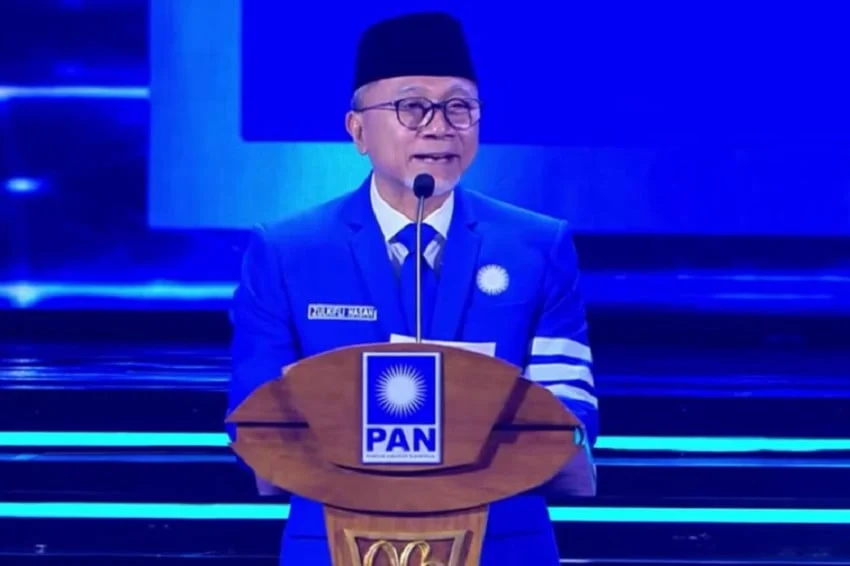
JAKARTA — The commemoration of the National Mandate Party’s (PAN) 28th anniversary at the Jakarta International Convention Center (JICC) in Senayan, Jakarta, became a platform not only for political consolidation but also for lighthearted banter among Indonesia’s political elites. Amid discussions concerning the future of the nation’s leadership and ongoing coalition dynamics, PAN Chairman Zulkifli Hasan, popularly known as Zulhas, captured the attention of attendees and political analysts alike with a series of playful yet politically significant remarks directed at fellow political party leaders.
The event, held on Friday, September 18, 2026, brought together prominent figures from across the political spectrum, cabinet ministers, and senior coalition members. While the primary official agenda focused on party milestones, organizational consolidation, and reaffirming support for the current administration, the lighthearted exchanges between party chiefs quickly dominated the discourse, offering a glimpse into the camaraderie and unspoken calculations shaping Indonesia’s evolving political landscape.
A Political Joke with Underlying Implications
The focal point of Zulhas’s remarks emerged when he addressed Golkar Party Chairman Bahlil Lahadalia from the podium. In a speech that balanced gravity with humor, Zulhas reflected on the immense responsibilities associated with leading a major political organization in the archipelago. He highlighted the pressures of steering a political party through turbulent electoral cycles and governance challenges, before pivotally pivoting to the topic of presidential ambitions.
Addressing Bahlil directly in front of the gathered dignitaries and media representatives, Zulhas remarked on the heavy burden of being a party chairman, emphasizing that the demands multiply exponentially for those who aspire to the presidency. With a chuckle, the PAN leader suggested that both he and Bahlil had reached a mutual understanding regarding future presidential races, signaling a collective decision to step aside from top executive ambitions and instead consolidate support behind the incumbent leadership.
"Pak Bahlil, becoming a party chairman is quite a heavy burden. Leading a political party is difficult, let alone becoming president. I think Pak Bahlil and I agree that the presidency should just be left to Pak Prabowo, right? Does that sound appropriate?" Zulhas asked the audience, drawing laughter and nods from various corners of the hall.
Without hesitation, Bahlil Lahadalia, seated in the VIP guest section, responded affirmatively, shouting "Cocok!" (That fits!), signaling agreement with Zulhas’s sentiment and reinforcing the public display of unity within the ruling coalition framework.
Reaffirming Coalition Solidly Behind Prabowo Subianto
Beyond the playful banter, Zulhas’s remarks underscored a serious and strategic political reality: PAN’s unwavering commitment to President Prabowo Subianto’s administration. The anniversary celebration served as a formal venue for PAN leadership to reiterate that the party remains firmly anchored within the government coalition, prioritizing national stability, policy continuity, and collaborative governance over individual or partisan electoral maneuvers for the upcoming political cycle.
Political observers note that such public declarations are crucial in maintaining coalition cohesion. As Indonesia navigates complex economic and geopolitical landscapes, leaders of major parties within the ruling coalition are keen to project stability. By publicly brushing aside personal presidential aspirations, figures like Zulhas and Bahlil aim to mitigate internal friction, align their respective parties with the executive branch’s long-term agenda, and project a unified front to both constituents and international partners.

The Context of PAN’s 28th Anniversary
The 28th anniversary of the National Mandate Party marked nearly three decades of participation in Indonesia’s democratic landscape. Founded in the wake of the 1998 reform movement, PAN has transitioned from a reformist opposition voice into an entrenched establishment party capable of securing pivotal cabinet posts and legislative influence.
The choice of the JICC in Senayan as the venue for this milestone event reflected the party’s growing stature and organizational capacity. Thousands of cadres, regional branch heads, and legislative members traveled from across the archipelago to participate in the multi-day convention. The agenda included policy workshops, strategic planning sessions for upcoming regional legislative dynamics, and high-profile speeches from founding members and current executives.
Throughout the anniversary proceedings, the central theme revolved around strengthening institutional capacity, grassroots engagement, and active contribution to national development goals. In his keynote address, Zulhas emphasized that PAN’s primary objective in the current legislative term is to ensure that government programs successfully reach grassroots communities, fostering economic resilience and social welfare.
Broader Reactions and the Political Horizon
Zulhas’s lighthearted commentary also touched upon other prominent political figures in attendance, reflecting the intricate web of negotiations and personal relationships that characterize Indonesian politics. While specific details regarding other leaders, such as National Awakening Party (PKB) Chairman Muhaimin Iskandar, were mentioned in jest—suggesting that some figures are still deliberating their future political trajectories—the overarching narrative remained centered on cooperation and coalition stability.
The reference to Muhaimin Iskandar, who has historically navigated various political alignments, highlighted the fluidity and ongoing realignment characteristic of the Indonesian party system. Even as coalition boundaries are tested by regional dynamics and future electoral calculations, public forums like the PAN anniversary provide spaces for leaders to signal intentions, test political waters, and maintain open channels of communication.
Implications for the 2029 Electoral Horizon
Although Indonesia’s next presidential election is years away, political maneuvering frequently begins well in advance. Statements made by key coalition leaders carry significant weight, signaling whether potential challengers will emerge from within the ruling coalition or if a consensus-building approach will dominate.
By publicly stating that neither he nor Bahlil intend to pursue the presidency—and implicitly endorsing the continuation of current leadership trajectories—Zulhas helps set a political tone that discourages premature internal competition. Such messaging is designed to reassure markets, stabilize investor confidence, and minimize political noise that could otherwise distract from governance and legislative performance.
Furthermore, these lighthearted exchanges demonstrate the unique political culture of Indonesia, where high-stakes negotiations and serious strategic decisions are frequently interwoven with humor, interpersonal diplomacy, and public camaraderie. As PAN looks toward its third decade of political participation, events like its 28th anniversary serve as barometers for the party’s strategic positioning, internal morale, and its ongoing role as a key pillar in national governance.
