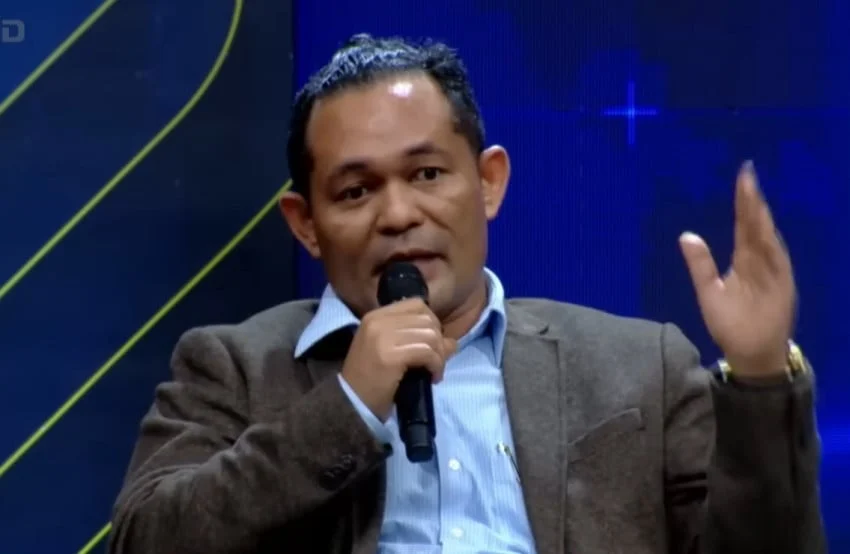
The recent attendance of Indonesian National Police (Polri) Chief General Listyo Sigit Prabowo at the Grand Consolidation event of the Federation of Indonesian Metal Workers Unions (FSPMI) in Bekasi Regency, West Java, has drawn widespread attention from political and legal observers. Among them, prominent political and legal analyst Boni Hargens has praised the move as a powerful signal of the National Police’s commitment to modern community policing and the operationalization of the "Presisi" (Predictive, Responsive, and Transparent Justice) paradigm. According to analysts and labor experts alike, this high-profile engagement serves as a vital catalyst for maintaining security amidst the complex dynamics of industrial relations and potential labor mobilizations moving forward.
The event, which brought together thousands of industrial workers, labor leaders, and stakeholders in one of Indonesia’s most critical manufacturing hubs, highlights a strategic shift in how law enforcement interacts with organized labor. Rather than viewing labor unions and mass gatherings strictly through a security or containment lens, the leadership of the National Police is increasingly leaning into dialogue, partnership, and proactive engagement to safeguard both national stability and economic productivity.
Background Context of the Event and Labor Dynamics in Bekasi
Bekasi Regency, located in West Java, stands as the beating heart of Indonesia’s manufacturing and industrial sector. Home to multiple massive industrial estates—such as Cikarang, Jababeka, and MM2100—the region accommodates thousands of national and multinational manufacturing plants, employing hundreds of thousands of workers. Because of its high concentration of capital and labor, Bekasi has historically been the epicenter of major labor negotiations, minimum wage debates, and large-scale industrial demonstrations in Indonesia.
In recent years, industrial relations in the region have faced various pressures, ranging from global economic fluctuations and supply chain disruptions to domestic policy changes regarding outsourcing, job creation laws, and wage adjustments. Labor unions, including the FSPMI, represent a formidable voice for workers’ rights, frequently utilizing collective bargaining and mass mobilizations to press their demands.
Against this backdrop, the presence of the nation’s top law enforcement official at a major union consolidation event carries profound symbolic and practical weight. Historically, high-stakes labor gatherings in heavy industrial zones were often met with heavy security deployments geared toward crowd control and public order maintenance. General Listyo Sigit Prabowo’s attendance reframes the state’s posture, shifting the paradigm from reactive containment to proactive partnership and mutual respect between law enforcement, workers, and capital owners.
Boni Hargens: A Paradigm Shift Toward Community Policing
Analyzing the significance of the event, Boni Hargens emphasized that the National Police Chief’s presence transcended routine protocol or ceremonial attendance. Instead, it represented a clear institutional determination to forge deep, trust-based connections with civil society groups, particularly the labor sector.
"The presence of General Listyo Sigit Prabowo is a concrete manifestation of the Polri leadership’s success in institutionalizing community policing—a policing model that positions the community not merely as an object of security operations, but as a strategic partner in maintaining social order," Boni stated.
Boni further underscored the delicate economic ecosystem that underpins modern industrial zones. He noted that achieving sustainable economic growth requires a synchronized alignment of interests among key stakeholders within the industrial landscape.
"The consolidation of business owners, labor unions, government regulators, and industrial estate managers serves as the primary capital needed to foster a conducive economic climate within the industrial sector," Boni added. By bridging potential gaps of distrust between labor and capital, the police force acts as an impartial stabilizer, ensuring that the legitimate aspirations of workers can be voiced and addressed without descending into civil unrest or damaging economic productivity.
The Implementation of the Presisi Paradigm in Industrial Relations
At the core of the National Police’s contemporary institutional reform is the "Presisi" framework, an acronym for Prediktif (Predictive), Responsibilitas (Responsibility), and Transparansi Berkeadilan (Transparent Justice). Introduced by General Listyo Sigit Prabowo upon taking office, this framework aims to transform Polri into a modern, trusted, and professional institution capable of anticipating social challenges before they escalate into conflicts.
The engagement with FSPMI directly aligns with the predictive and responsive pillars of the Presisi model. Through early engagement, open dialogue, and direct communication channels with labor leaders, the police can accurately gauge labor grievances, anticipate potential friction points during wage negotiations or policy rollouts, and mediate disputes before they manifest as disruptive street protests or strikes.
Furthermore, transparency and fair treatment in law enforcement build institutional trust. When labor unions perceive law enforcement as a neutral arbiter that respects constitutional rights—such as the freedom of assembly and expression—while simultaneously upholding public order and protecting vital national economic assets, the potential for friction diminishes significantly.
Broader Economic Implications and Stakeholder Reactions
The implications of this strategic outreach extend far beyond immediate security management. Indonesia remains heavily reliant on foreign direct investment (FDI) and domestic industrial expansion to achieve its long-term economic development targets. Investors—both domestic and international—closely monitor labor stability, legal certainty, and security conditions when deciding where to allocate capital.
Frequent industrial strikes, road blockades, or prolonged labor disputes can result in billions of rupiah in lost productivity and can severely dent investor confidence. Conversely, a stable industrial climate characterized by open communication channels between labor unions, employers, and state security apparatuses enhances Indonesia’s competitive edge as a predictable and secure investment destination.
Reactions from various economic sectors have been largely positive. Business associations and industrial estate managers have welcomed initiatives that promote collaborative problem-solving between labor and management. During related engagements, leadership from the National Police has consistently urged employers to view their workforce not merely as production factors, but as valuable business assets, strategic partners, and integral members of the corporate family. This human-centric approach to labor relations helps humanize the industrial environment, encouraging mutual compromise and reducing adversarial posturing.
Conclusion and Future Outlook
The participation of National Police Chief General Listyo Sigit Prabowo in the FSPMI Grand Consolidation in Bekasi marks a notable milestone in the evolution of Indonesian law enforcement and industrial relations. By embracing the principles of community policing and the Presisi framework, Polri is actively redefining its role in civil society—moving away from authoritarian-era containment models toward collaborative governance and proactive mediation.
As political and legal analysts like Boni Hargens have pointed out, maintaining a harmonious industrial climate requires continuous collaboration among entrepreneurs, laborers, the government, and security forces. Events of this nature lay the groundwork for sustainable economic resilience, ensuring that Indonesia’s industrial hubs remain engines of growth, innovation, and social stability for years to come.