
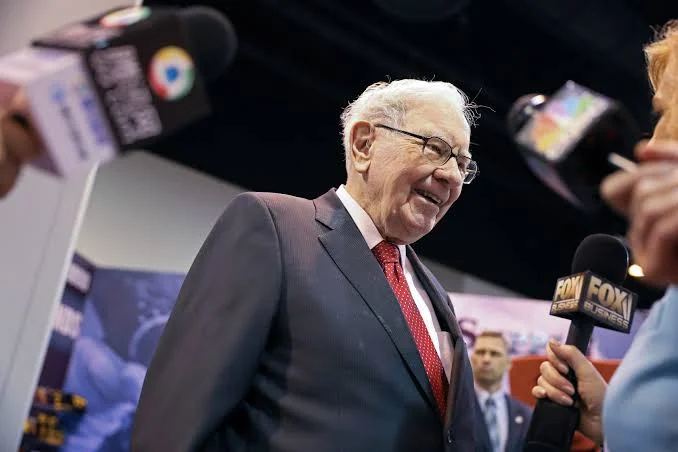
The era of Warren Buffett at the absolute helm of Berkshire Hathaway Inc. has officially come to a close. In a landmark corporate transition announced on Friday, September 19, 2026, the legendary investor stepped down from his position as Chairman of the Board, bringing an end to a remarkable executive tenure that redefined modern capitalism and corporate governance. Buffett, who celebrated his 96th birthday shortly before the announcement, transitions into the newly created role of chairman emeritus, ensuring that his institutional wisdom remains accessible to the conglomerate he spent more than six decades building.
Simultaneously, the board of directors appointed his son, Howard Buffett, to assume the chairmanship, effective immediately. This structural shift follows closely on the heels of another monumental leadership change that occurred roughly nine months prior, when long-time executive Greg Abel formally took over the reins as Chief Executive Officer from the nonagenarian investor. Together, the ascension of Abel as CEO and Howard Buffett as Chairman completes the much-anticipated succession blueprint for the Omaha-based multi-trillion-dollar empire, a topic of intense speculation among global markets, institutional shareholders, and retail investors for decades.
A Structured Handover of Power and Cultural Preservation
The division of responsibilities between executive management and board oversight has been deliberately clarified through this leadership restructuring. While Greg Abel retains full control over the daily operational mechanics, capital allocation strategies, and the sprawling network of subsidiary businesses spanning insurance, railroads, energy, retail, and manufacturing, Howard Buffett steps into a non-operational chairmanship.
Howard Buffett has served on the Berkshire Hathaway board of directors since 1993, accumulating deep familiarity with the enterprise’s idiosyncratic corporate culture. In his capacity as chairman, Howard’s primary mandate will not be day-to-day business administration, but rather the preservation of the core values, ethical standards, and decentralized management philosophies instilled by his father. These tenets emphasize relentless integrity, financial prudence, operational autonomy for subsidiary CEOs, and an unwavering commitment to long-term shareholder value over short-term market appeasement.
"The culture that Warren built and the values that he has consistently upheld will remain at the very core of Berkshire, and Howard will serve as its ultimate guardian," stated CEO Greg Abel in an official company release issued Friday. This sentiment was echoed across Wall Street, where analysts viewed the dual leadership structure as a stabilizing mechanism designed to maintain institutional continuity while handing over commercial execution to capable younger leadership.
Chronology of an Era: From a Struggling Textile Mill to a Global Powerhouse
To fully grasp the magnitude of this leadership transition, one must contextualize the extraordinary trajectory of Berkshire Hathaway under Warren Buffett’s stewardship. The timeline of this transformation remains one of the most studied case studies in financial history:
- 1965: Warren Buffett takes control of Berkshire Hathaway, then a faltering, century-old textile manufacturing enterprise located in New Bedford, Massachusetts, through his investment partnership. Facing secular decline in the textile industry, Buffett quickly shifts capital toward more promising ventures, eventually transforming the company into a holding vehicle for insurance operations and equity investments.
- 1967: Berkshire enters the insurance industry by acquiring National Indemnity Company, laying the financial foundation for its "float"—the pool of insurance premiums held before claims are paid—which Buffett deploys strategically into productive assets and common stocks.
- 1976: Berkshire purchases GEICO (Government Employees Insurance Company), eventually acquiring full ownership in 1996, establishing one of the most profitable and enduring underwriting engines in the world.
- 1985: The final textile looms at Berkshire are permanently shut down, officially marking the complete metamorphosis of the company from a traditional manufacturer into an investment conglomerate.
- 1993: Howard Buffett joins the Berkshire Hathaway board of directors, beginning a multi-decade immersion in the governance and philosophical framework of the enterprise.
- 2010: Berkshire completes its largest acquisition up to that point, purchasing Burlington Northern Santa Fe (BNSF) railroad for $44 billion, underscoring Buffett’s deep bullish bet on the long-term growth of the American economy.
- 2024–2025: Greg Abel is steadily positioned and ultimately assumes the CEO responsibilities, steering the conglomerate through an era marked by shifting macroeconomic landscapes, rising interest rates, and unprecedented cash pile accumulations.
- September 2026: Warren Buffett officially steps down as Chairman, transitioning to chairman emeritus at age 96, while retaining his seat on the board of directors. Howard Buffett assumes the role of Chairman of the Board.
Financial Footprint and Market Capitalization Milestones
Under Buffett’s visionary guidance, Berkshire Hathaway expanded from a regional New England textile firm into an economic titan boasting a market capitalization hovering around $1.1 trillion. The company’s financial reports consistently reflect an extraordinary capacity to generate robust cash flows, supported by a diversified portfolio of wholly-owned operating companies and a formidable equity portfolio featuring major stakes in corporate giants like Apple, American Express, Coca-Cola, and Bank of America.
Buffett’s investment philosophy—often characterized by value investing, rigorous fundamental analysis, emotional discipline, and a profound skepticism of financial fads—transformed him into a cultural icon. Known colloquially as the "Oracle of Omaha," his annual shareholder letters and the legendary annual general meetings held in Omaha, Nebraska, attracted tens of thousands of pilgrims, investors, and business leaders from every corner of the globe.
In his final statement as active chairman, included in a letter addressed to shareholders on Friday, Buffett reflected on his unprecedented tenure with characteristic humility and perspective. "Time always wins," Buffett wrote. "However, time has been remarkably generous to me."
Despite stepping down from the chairmanship, Buffett is not entirely severing his formal ties with the organization. He retains his seat on the board of directors, ensuring that executive leadership can continue to tap into his institutional memory and peerless advisory insights during critical strategic deliberations.
Broader Implications for Corporate Governance and Markets
Financial analysts and market historians are already evaluating the broader implications of the post-Buffett era for Berkshire Hathaway. For decades, a significant portion of Berkshire’s share price included a "Buffett premium"—a valuation cushion reflecting investor confidence in his singular, infallible capital allocation acumen. With Buffett transitioning into chairman emeritus and Abel firmly established as CEO, the market is entering a phase of valuation driven entirely by systemic fundamentals rather than personal charisma.
Market sentiment following Friday’s announcement remained calm and orderly, a testament to the methodical and transparent planning that Berkshire’s leadership executed over the preceding years. Institutional investors have expressed considerable confidence in Greg Abel, whose extensive operational track record running Berkshire Hathaway Energy earned him widespread respect within the corporate ecosystem.
Furthermore, the appointment of Howard Buffett as Chairman reassures long-term shareholders that the governance structure will remain insulated from activist pressures or short-termist trends that frequently plague modern publicly traded corporations. Howard’s extensive philanthropic background—particularly through his work focusing on global food security, agriculture, and conservation—complements the ethical framework that his father championed throughout his lifetime.
Navigating Recent Controversies and Strategic Realignment
The transition also occurs against a backdrop of evolving philanthropic and personal commitments for the nonagenarian billionaire. Earlier in the year, global headlines noted a temporary disruption in Buffett’s long-standing philanthropic cadence, underscoring the complex intersections of his personal legacy, high-profile associations, and public scrutiny. Nevertheless, the core operational resilience of Berkshire Hathaway remained entirely insulated from external noise, cushioned by a balance sheet featuring record levels of cash and short-term U.S. Treasury bills.
As Berkshire Hathaway turns this historic page, the conglomerate stands as an enduring monument to disciplined capital allocation and patient entrepreneurship. While the physical presence of Warren Buffett at the head of the boardroom table will be deeply missed by shareholders, employees, and market observers alike, the institutional architecture he engineered is designed to endure across generations. With Greg Abel driving operational performance and Howard Buffett safeguarding the cultural ethos, Berkshire Hathaway embarks on its next chapter equipped to preserve its unique standing as a cornerstone of global finance.
