
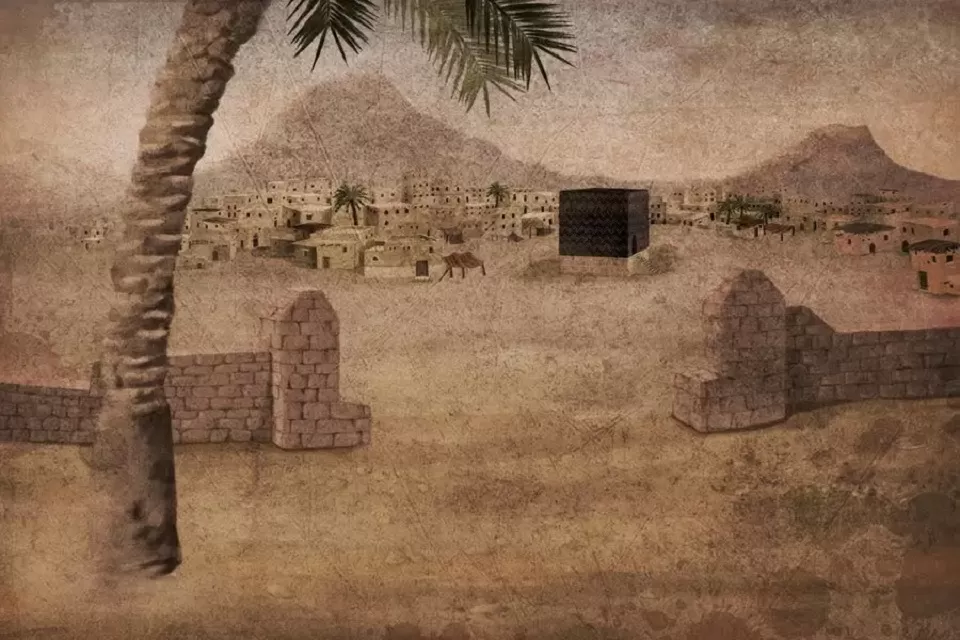
The Historical Significance and Chronology of Masjid Al-Haram and Masjid Al-Aqsha as Earth’s First Places of Worship
Understanding the origins of human architecture dedicated to the worship of the Divine holds a profound place in Islamic theology and history. Among the most enduring inquiries for scholars and believers alike is the identification of the very first sanctuary established on Earth for the remembrance of God. Islamic tradition offers a precise chronological and geographical narrative regarding this topic, anchoring the discussion around two of the most revered sites in the Islamic faith: Masjid Al-Haram in Makkah and Masjid Al-Aqsha in Jerusalem.
Etymologically, the term "masjid" originates from the Arabic root word "sajada," which translates to prostrate or submit. Consequently, a mosque signifies a physical space designated for humble submission and prostration before the Creator. Throughout Islamic history and jurisprudence, these sacred grounds have served not only as community epicenters and houses of prayer but also as focal points of spiritual orientation. Prophetic traditions emphasize the elevated status of these locations, contrasting them starkly with secular or commercial hubs. According to an authentic narration, the places most beloved to Allah Ta’ala are the mosques, whereas the places most detested are the marketplaces.
Main Facts and the Core Narration
The primary textual evidence establishing the chronological relationship between the two oldest sanctuaries on Earth is recorded in the authentic collections of Sahih Al-Bukhari and Sahih Muslim. The narration stems from a well-known dialogue involving the revered companion Abu Dzar Al-Ghifari radhiallahu ‘anhu and the Prophet Muhammad Shallallahu Alaihi Wassalam.
Abu Dzar once posed a fundamental question to the Prophet: "O Messenger of Allah, which mosque was first built on the face of the earth?"
The Prophet Muhammad replied, "Al-Masjid Al-Haram."
Abu Dzar then inquired, "And then which?"
The Prophet answered, "Al-Masjid Al-Aqsha."
Seeking further clarification on the temporal gap between the establishments of these two monumental structures, Abu Dzar asked, "How long was the period between them?"
The Prophet Muhammad stated, "Forty years."
This explicit narration, documented under Sahih Al-Bukhari (Hadith No. 3186) and Sahih Muslim (Hadith No. 520), forms the bedrock of historical theology regarding the foundational timeline of Islamic sacred architecture. However, this text has historically presented a complex exegetical puzzle for classical and contemporary Islamic scholars, primarily due to apparent historical discrepancies concerning the known human builders of these structures.
Chronology and Historical Context
To comprehend the forty-year gap between Masjid Al-Haram and Masjid Al-Aqsha without historical contradiction, scholars must reconcile the prophetic statement with the established prophetic timelines of Prophet Ibrahim (Abraham) and Prophet Sulaiman (Solomon).
According to mainstream historical and scriptural consensus, Prophet Ibrahim, alongside his son Prophet Ismail (Ishmael), raised the physical walls and foundations of the Ka’bah in Makkah. Centuries later, Prophet Sulaiman is credited in traditional accounts with the major construction or reconstruction of Baitul Maqdis (Masjid Al-Aqsha) in Jerusalem. Mainstream historical chronology places an interval of more than a thousand years between the eras of Prophet Ibrahim and Prophet Sulaiman.
This vast temporal chasm led prominent classical scholars to analyze the terminology of "building" utilized in the prophetic tradition. Addressing this potential ambiguity, the renowned Hanbali jurist and historian Imam Ibnul Jauzi rahimahullah noted—as later cited by Al-Hafizh Ibn Hajar al-Asqalani in his monumental commentary Fathul Bari (Volume 6, page 408)—that accepting a literal construction of both complete architectural structures by Ibrahim and Sulaiman creates a historical conflict due to the millennia-long gap separating the two prophets.
Resolution of Scholarly Interpretation
To resolve this theological and historical puzzle, Islamic scholars provide a uniform and cohesive consensus: the "building" referred to in the narration concerning the forty-year interval does not denote the complete architectural edifices known in later dynastic eras, but rather the establishment of their foundational layouts, spiritual demarcations, or initial divine ordinances.
Contemporary Indonesian scholar and Arabic linguist Ustaz Farid Nu’man Hasan points out that Masjid Al-Haram was widely recognized even during the pre-Islamic era known as Jahiliyah. Its prominence required no introduction among the Arab populace because the Ka’bah and its surrounding precincts have universally maintained their status as the primordial home established for humanity’s spiritual connection to the Divine.
Therefore, when the Prophet Muhammad spoke of these mosques being built forty years apart, Islamic analysts conclude that the narration refers to the laying or renewing of their sacred foundations—potentially established originally by angels or earlier prophetic figures under divine instruction—long before the physical structures familiar to later generations were raised by Ibrahim and Sulaiman. Historical records similarly note that the sacred precinct of the Ka’bah has weathered various environmental challenges throughout antiquity, including significant natural events such as historical floods, which necessitated periodic reconstruction of its physical walls while preserving its original sacred coordinates.
Supporting Data and Theological Framework
The designation of these sites as foundational markers is reinforced by broader Quranic and hadith literature. Masjid Al-Haram surrounds the Ka’bah, which the Quran explicitly identifies as the first house appointed for mankind, blessed and a guidance for the worlds (Surah Ali ‘Imran: 96). Meanwhile, Masjid Al-Aqsha holds the distinction of being the second sanctuary established on Earth, serving later as the focal point of the nocturnal journey (Isra and Mi’raj) of the Prophet Muhammad before his ascension to the heavens.
The geographical and architectural timeline can be summarized through the following analytical framework:
- Primordial Establishment: The spiritual foundations of both sites were laid down by divine decree, separated by a span of forty years.
- Prophetic Renewal: Prophet Ibrahim and Prophet Ismail structurally raised the foundations of the Ka’bah, while Prophet Sulaiman later undertook substantial works on the structure of Masjid Al-Aqsha.
- Linguistic Interpretation: Classical exegetes clarify that "building" in the context of the 40-year gap signifies the original establishment of sacred boundaries and foundations rather than the simultaneous erection of thousand-year-old physical complexes.
Broader Impact and Implications
The precise understanding of the origins of Masjid Al-Haram and Masjid Al-Aqsha carries deep implications for the global Muslim community. Beyond their architectural and historical majesty, these sites serve as geopolitical and spiritual anchors for over a billion believers worldwide.
In contemporary discourse, scholarly clarity on the origins of these mosques helps dispel historical misconceptions and reinforces the interconnected heritage of Abrahamic traditions within Islamic eschatology and history. By anchoring the timeline in authentic prophetic narrations while utilizing rigorous scholarly methodology to interpret apparent historical gaps, Islamic scholarship maintains a harmonious bridge between textual tradition and empirical history.
Ultimately, the enduring legacy of Masjid Al-Haram and Masjid Al-Aqsha continues to inspire millions, serving as physical manifestations of the continuity of monotheistic worship, resilience, and divine stewardship on Earth.
