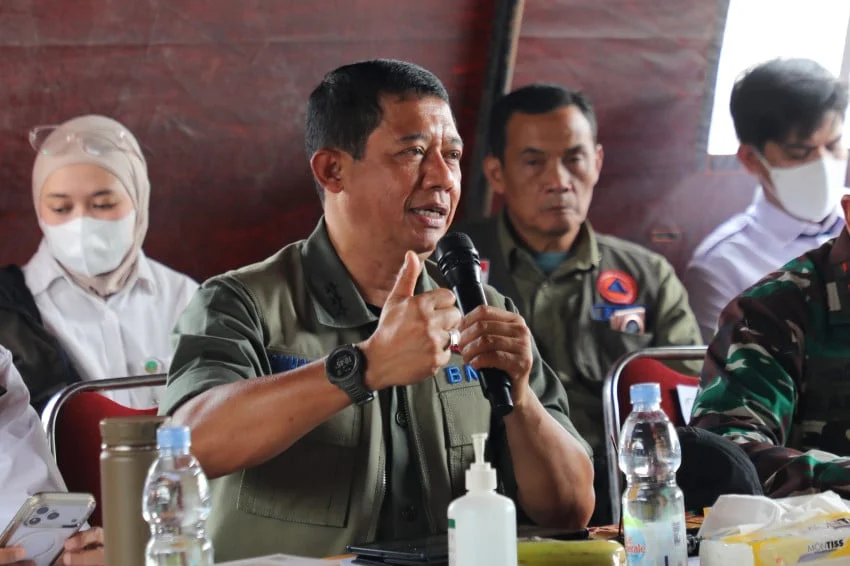
The head of Indonesia’s National Disaster Management Agency (BNPB), Lieutenant General Suharyanto, has issued a formal clarification following widespread public and social media criticism regarding his remarks on the situation in Kalimantan. During a limited cabinet meeting (ratas) presided over by President Prabowo Subianto on September 23, 2026, Suharyanto stated that the "wheels of life" for the local population were continuing to operate normally despite the ongoing forest and land fires (karhutla) and the resulting haze. The statement sparked immediate backlash from environmental activists, health experts, and residents of the affected regions, who argued that the characterization downplayed the severe respiratory and socioeconomic hardships caused by the persistent smoke.
Contextualizing the Controversy
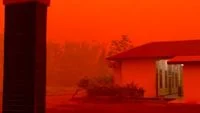
The controversy centers on the perception that the government is trivializing the humanitarian impact of the annual haze crisis. In recent weeks, air quality indices in provinces such as Central Kalimantan and West Kalimantan have frequently plummeted to "unhealthy" or "hazardous" levels. Public discourse on the matter has been intensified by the visual reality of thick smoke blanketing urban centers, which has forced schools to pivot to remote learning, led to flight cancellations, and surged hospital admissions for acute respiratory infections (ISPA).
Suharyanto’s clarification, released on Friday, September 25, 2026, aimed to contextualize his earlier briefing to the President. He emphasized that the term "normal" was not intended as a blanket assessment of the environmental or health conditions but was rather a technical indicator regarding the operational continuity of essential infrastructure and basic logistics.
Chronology of the 2026 Haze Crisis
The 2026 fire season began in earnest in early July, with the onset of a prolonged dry season that intensified the vulnerability of peatland areas in Kalimantan and Sumatra. By mid-August, the frequency of hotspots detected by satellite monitoring systems—such as the NOAA-20 and Terra/Aqua satellites—began to climb at a rate exceeding the five-year average.
- Early August 2026: BNPB and local provincial governments initiated a state of emergency for wildfire management in key districts in Central Kalimantan.
- Early September 2026: Air quality in Palangka Raya and Pontianak began to reach hazardous levels, prompting the Ministry of Education to issue guidelines for localized school closures.
- September 23, 2026: During a high-level briefing at the Presidential Palace, the BNPB chief reported on the multi-agency response, which included water-bombing operations and cloud seeding. It was during this session that the contested remarks were made.
- September 24, 2026: Online backlash escalated as citizens shared real-time imagery of the haze and local health data, criticizing the government’s apparent detachment from the ground reality.
- September 25, 2026: BNPB issued an official statement clarifying the intent behind the cabinet briefing and acknowledging the severity of the health risks faced by the population.
Technical Analysis of the Situation
The "wheels of life" indicator, as used by government agencies, typically monitors the functionality of public services, such as the flow of essential goods through major transport hubs and the uninterrupted delivery of basic utilities. However, critics argue that this metric is insufficient when evaluating a disaster of this scale.
According to data from the Ministry of Environment and Forestry (KLHK), the 2026 fire season has been exacerbated by complex land management issues and the physical degradation of peatlands, which, once ignited, are notoriously difficult to extinguish. Unlike forest fires in mineral soil, peat fires can smolder underground for weeks, releasing high concentrations of particulate matter (PM2.5) into the atmosphere.
Data from local health centers (Puskesmas) in West Kalimantan indicates a 22% increase in patient visits for respiratory issues since the start of September. This statistical surge directly contradicts any narrative suggesting that life is continuing "normally" for the average citizen.
Official Responses and Institutional Stance
In his follow-up statement, Suharyanto acknowledged the nuance that was missing from his initial briefing. "BNPB is fully aware that the quality of life for the residents of Kalimantan, particularly in the provinces of Central and West Kalimantan, has significantly declined due to the haze," the statement read. He highlighted that the agency is currently prioritizing medical assistance, the distribution of N95 masks, and the creation of "haze-free houses" equipped with air purifiers in public facilities.
The Ministry of Health has also stepped up its monitoring, providing daily air quality updates to the public and deploying mobile medical teams to the most severely affected sub-districts. Despite these efforts, the gap between the government’s operational perspective and the daily lived experience of the populace remains a point of friction.
Broader Implications: Health and Economy
The long-term implications of the 2026 haze crisis extend beyond immediate health concerns. Economically, the disruption of air travel in and out of regional airports impacts regional tourism and supply chains. Furthermore, the agricultural sector, already struggling with the dry season, faces diminished crop yields as persistent haze limits photosynthesis and discourages outdoor labor.
From an environmental standpoint, advocacy groups, including Greenpeace Indonesia, have challenged the government’s focus on fire suppression, arguing that the root causes—such as land clearing practices and the lack of enforcement against corporations responsible for peatland drainage—remain largely unaddressed. Belgis Habiba of Greenpeace Indonesia has notably argued that attributing the crisis solely to climatic phenomena like El Nino ignores the anthropogenic factors that make the landscape more susceptible to fire.
Analysis: Bridging the Communication Gap
The incident underscores a significant communication challenge for the Indonesian government in managing public expectations during disasters. While the cabinet meeting required a concise summary of logistics—where the continuity of basic services is a positive sign of state capacity—the public requires a communication style that validates their suffering and clearly outlines the mitigation strategies being deployed.
The government’s decision to issue a formal clarification suggests an awareness of the potential for this narrative to erode public trust. Going forward, the BNPB is expected to shift its public messaging toward more granular reporting, separating "operational continuity" from "human welfare indicators" to avoid future misunderstandings.
The Path Forward: Mitigation and Future Readiness
As the 2026 dry season continues, the pressure on the BNPB to demonstrate effective control over the wildfires is mounting. The deployment of additional water-bombing helicopters and the scaling up of artificial rain operations are part of a broader, multi-year strategy to improve disaster resilience.
However, experts suggest that technological solutions alone will not suffice. The incident involving Suharyanto’s comments serves as a catalyst for a broader discussion on the need for a more integrated, transparent approach to disaster reporting. Effective management of the haze crisis requires a dual-track strategy: one that addresses the immediate physical fire threat through rapid intervention, and another that acknowledges the socioeconomic and health burdens of the citizenry with greater transparency and empathy.
The situation in Kalimantan remains fluid. While government officials continue to oversee relief efforts, the vigilance of civil society and independent media remains a critical component in ensuring that the government’s response remains proportional to the scale of the crisis. The lesson learned from this week’s controversy is that in the age of real-time information, technical indicators of "normalcy" are no substitute for the lived reality of the people, and any government communication must be framed with an acute awareness of the human cost of environmental disasters.
As the government moves into the next phase of its response, the focus will likely remain on maintaining public order while scaling up medical infrastructure to handle the influx of respiratory cases. The cabinet, under President Prabowo, is expected to review the current disaster response protocols to ensure that future reporting to the public is both accurate and reflective of the genuine challenges on the ground. Only by bridging this divide can the state maintain its mandate to protect its citizens during one of the most testing periods of the year.