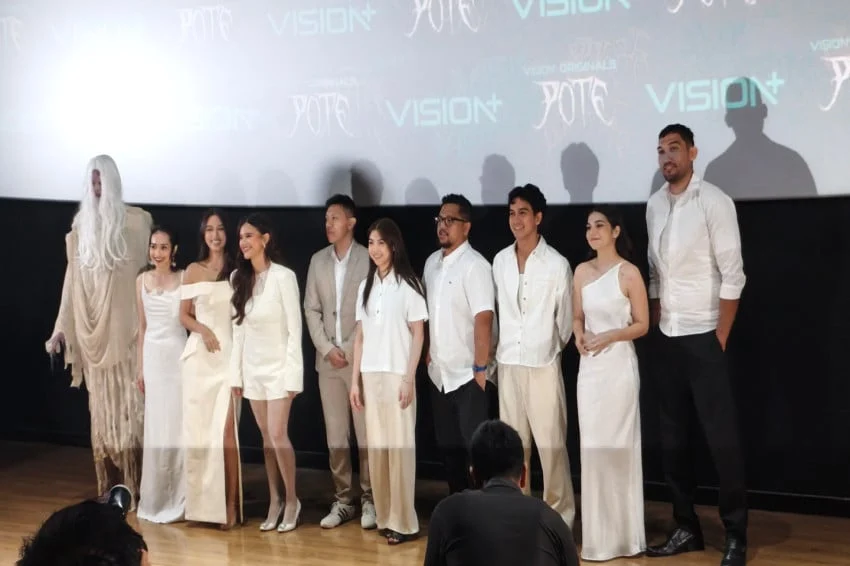
The landscape of Indonesian horror cinema is undergoing a significant evolution, shifting from traditional folklore-based scares toward more nuanced and original narrative structures. This transformation was underscored on Saturday, September 19, 2026, during the official press conference for the upcoming Vision+ original series, POTE, held in Jakarta. The event served as a platform for director Billy Christian to discuss his creative vision and the strategic decision to helm a project that diverges from the conventional horror tropes that have dominated the domestic market for decades.
A Departure from Conventional Horror Tropes
For years, the Indonesian horror genre has been heavily reliant on established mythological figures—ranging from the iconic pocong and kuntilanak to genderuwo. While these entities are deeply embedded in the cultural consciousness, their repetitive use has led to a sense of fatigue among audiences seeking fresh thrills. Billy Christian, a filmmaker renowned for his contributions to the genre, emphasized that his decision to direct POTE was driven by the project’s unique premise.
"When I was first approached with the concept for POTE, my interest was immediate," Christian stated during the press screening. "The entity at the heart of this series is fundamentally different from the ghosts and ghouls I have been presented with in previous projects. It provides a vast, uncharted territory for creative development."
According to Christian, the industry has reached a saturation point where audiences can easily predict the trajectory of a story based on the specific ghost involved. POTE, however, challenges this predictability. By introducing an entity that has not been widely explored in film or television, the production aims to reset the expectations of the horror-loving demographic, offering a narrative experience that relies on psychological depth and genuine suspense rather than jump scares anchored in familiar folklore.
The Evolution of the Indonesian Streaming Market
The emergence of series like POTE is a direct reflection of the rapid growth of Indonesia’s Over-the-Top (OTT) media services. With platforms such as Vision+ investing heavily in original local content, there is a strategic push to produce high-quality, genre-bending material that can compete on both national and regional levels.
Supporting data from recent industry reports suggests that horror remains the most popular genre in Indonesia, consistently ranking as the top category in terms of viewership and social media engagement. However, the data also indicates a rising demand for "elevated horror"—productions that emphasize atmospheric storytelling and production value over the low-budget tactics of the past. Vision+ has positioned POTE as a flagship title, aiming to bridge the gap between mass-market entertainment and the demand for sophisticated, modern storytelling.
The production timeline for POTE reflects the rigorous standards now expected of original streaming content. From the initial conceptualization phase to the casting of lead actors—such as Audi Marissa, who plays a medical professional, a role requiring extensive preparation in medical terminology—the project has undergone a meticulous development cycle. This commitment to detail, from scriptwriting to technical execution, highlights the professionalization of the local industry.
Character Development and Narrative Depth
A critical component of the series’ appeal, as highlighted by the creative team, is the depth afforded to its characters. In many traditional Indonesian horror films, characters often serve merely as vessels for the haunting experience. In POTE, the integration of professional roles—such as the medical expertise portrayed by Audi Marissa—suggests a narrative that balances the supernatural with grounded, realistic settings.
Audi Marissa’s involvement has been widely cited as a major asset to the series. By undergoing specific training to understand the nuances of a medical environment, her portrayal adds a layer of authenticity that grounds the supernatural elements of the plot. This approach is part of a broader trend in the Indonesian film industry where actors are increasingly expected to perform deep research, thereby elevating the overall quality of the production.
Chronology of Production and Market Impact
The project’s trajectory from inception to its upcoming release provides insight into the current pace of the Indonesian entertainment sector:
- Early 2025: Initial development and conceptualization of the POTE entity and storyline.
- Late 2025: Finalization of the script and recruitment of the creative team, including Billy Christian as director.
- Early 2026: Casting and principal photography, involving intensive training for the cast to ensure technical accuracy in professional depictions.
- September 2026: Official press screening and promotion, building anticipation ahead of the series’ launch.
The impact of this shift toward "originality" in horror cannot be overstated. As regional streaming platforms look to expand their subscriber base, the ability to produce stories that are culturally resonant yet distinct from the standard repertoire is vital. If POTE succeeds in capturing the audience’s imagination, it will likely pave the way for a new wave of horror series that prioritize original lore over recycled myths.
The Role of Vision+ in Industry Innovation
Vision+ has been instrumental in fostering an environment where directors like Billy Christian can experiment with unconventional narratives. By providing the budget and the creative freedom to explore entities that are not part of the standard folklore, the platform is effectively diversifying the horror genre in Indonesia.
Industry analysts observe that this strategy is not merely an artistic choice but a necessary business pivot. As global streaming services continue to penetrate the Indonesian market, local players must offer content that is uniquely "Indonesian" in its aesthetic yet modern in its structure. POTE, with its focus on a fresh, mysterious entity, fits perfectly into this strategy of differentiation.
Analytical Perspectives: The Future of Indonesian Horror
The move away from traditional ghosts toward more complex, "unknown" entities represents a maturation of the genre. Historically, Indonesian horror functioned as a form of cultural catharsis, addressing social anxieties through the lens of local mythology. While POTE continues this tradition, it does so by creating new anxieties rather than revisiting old ones.
From an analytical standpoint, the success of this series will depend on whether the narrative can effectively sustain its suspense without the crutch of familiar tropes. Billy Christian’s confidence in the material suggests that the production has focused heavily on world-building. If the audience connects with the mythology behind POTE, it could potentially lead to a franchise, further solidifying the trend of building cinematic universes around original IP (Intellectual Property).
Conclusion and Looking Forward
As the release of POTE approaches, the anticipation within the industry is palpable. The combination of a visionary director, a dedicated cast, and a platform willing to invest in original content creates a compelling case for the series’ potential impact. By stepping away from the familiar ghosts that have populated screens for decades, the creators of POTE are taking a calculated risk that could redefine the standards for Indonesian horror.
The press conference in Jakarta was more than just a promotional event; it was a testament to the changing tides in the local entertainment landscape. As the audience shifts toward more demanding, high-quality content, the industry is responding with projects that are as creative as they are terrifying. Whether POTE will become the new benchmark for the genre remains to be seen, but its arrival is undoubtedly a significant milestone in the ongoing development of Indonesia’s streaming cinema.