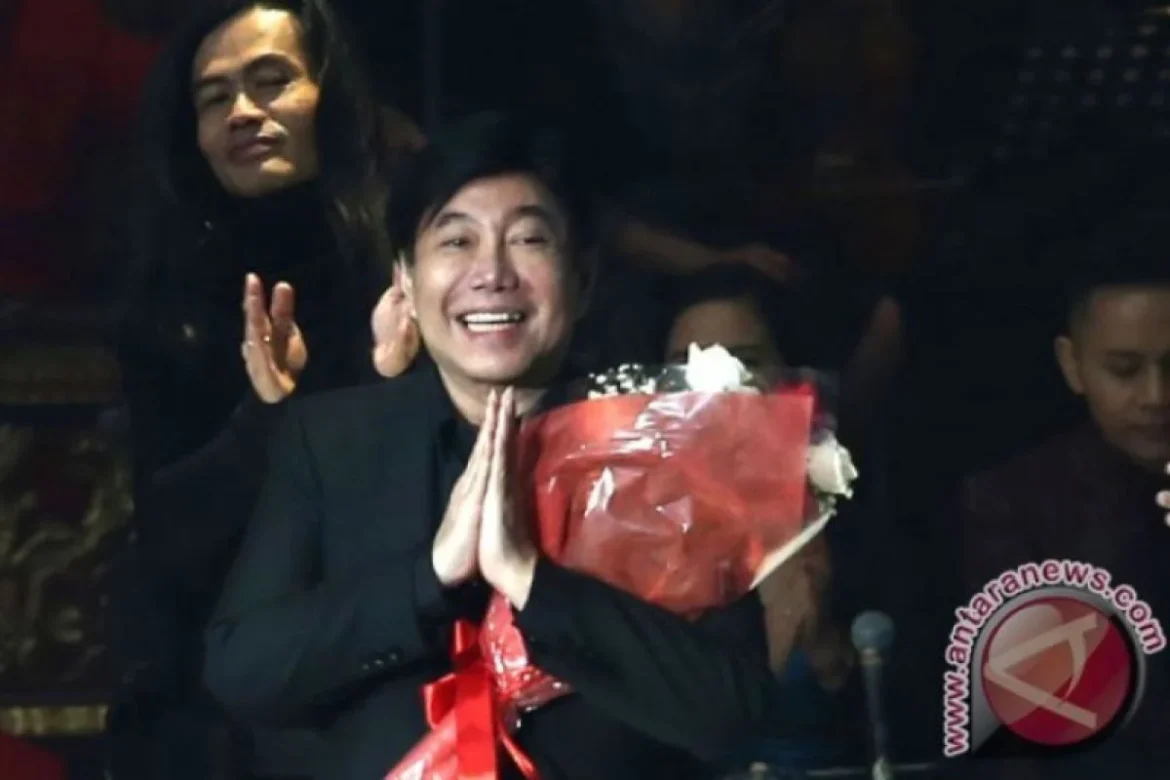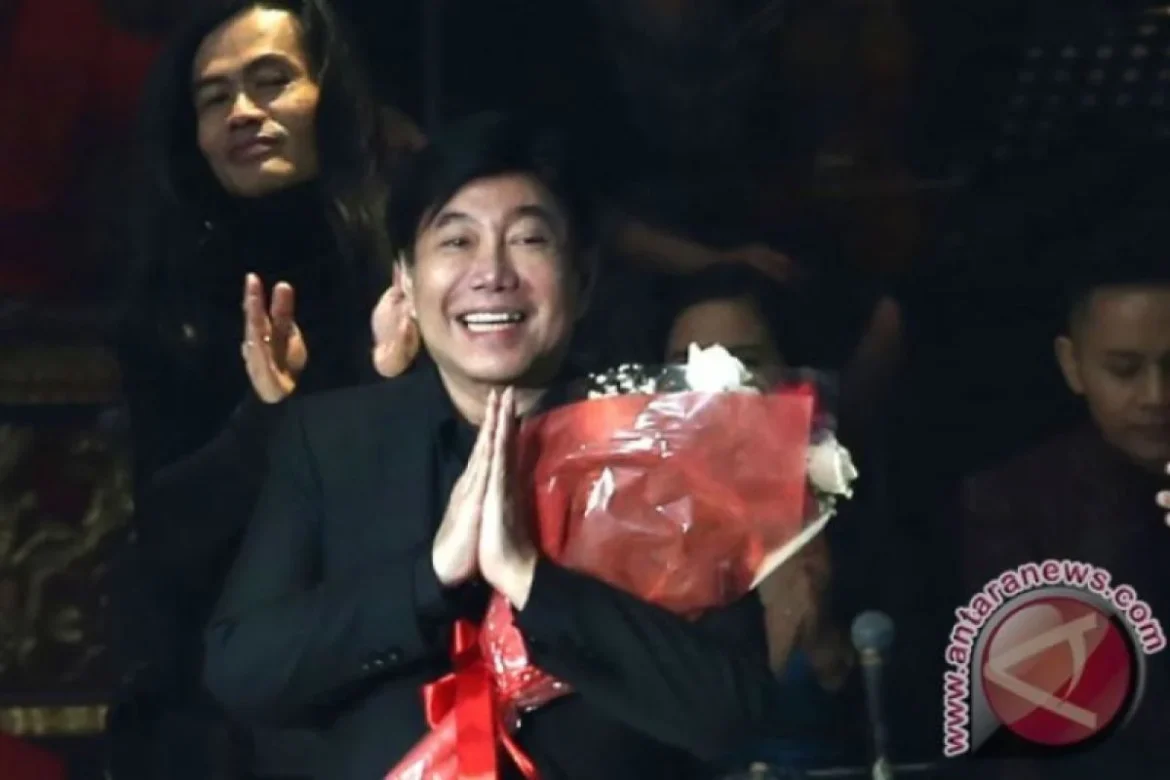
The Indonesian artistic community is mourning the loss of one of its most luminous figures, as composer, choreographer, and cultural visionary Mohammad Guruh Irianto Soekarnoputra passed away at the age of 73. The revered artist breathed his last at 04:16 Western Indonesia Time (WIB) on Saturday at the MRCCC Siloam Hospitals Semanggi in Jakarta. The news of his demise sent shockwaves through the nation’s cultural landscape, prompting an outpouring of grief from artists, public figures, and cultural institutions alike.
The passing of the nation’s quintessential cultural pioneer was officially announced by Hasto Kristiyanto, the Secretary General of the Indonesian Democratic Party of Struggle (PDI-P), through a written statement issued early Saturday morning. As the youngest son of Indonesia’s founding father and first president, Sukarno, and former First Lady Fatmawati, Guruh occupied a unique space at the intersection of national history and high-end artistic production. However, rather than relying solely on his formidable political lineage, Guruh forged a distinct, deeply personal legacy built on decades of relentless creative output, reshaping how contemporary Indonesia perceives its own traditional heritage.
A Lifetime Dedicated to the Arts: Chronology and Formative Years
Guruh’s lifelong romance with the arts began in early childhood. Archival records from the National Archives of Indonesia (ANRI) indicate that he immersed himself in the study of classical and regional dance traditions—including Javanese, Sundanese, Balinese, and Minangkabau styles—long before reaching adolescence. By the time he was in elementary school, his prodigious talent was already evident as he performed regularly on TVRI, the state-owned television network, alongside musical ensembles he had personally assembled.
During his teenage years in the mid-1960s, Guruh expanded his repertoire into songwriting and contemporary composition. In 1965, he founded the band The Beat-G, followed by the formation of The Flower Poetman in 1970. These early experiments coincided with rigorous academic and practical pursuits in traditional arts. He actively participated in gamelan troupes, traditional Balinese music circles, and theatrical workshops, while also organizing angklung and Javanese gamelan groups within the Perguruan Cikini educational environment.
His artistic horizon broadened significantly in the early 1970s when he traveled to the Netherlands to study at the Universiteit van Amsterdam. Far from abandoning his roots while abroad, Guruh embedded himself deeper into the diaspora of Indonesian culture. He joined Javanese and Balinese gamelan ensembles at Amsterdam’s Tropen Museum, where he eventually took on the role of an instructor, teaching Balinese dance and gamelan. This international exposure profoundly shaped his artistic philosophy: he became convinced that modern music and global artistic movements did not need to sever ties with local heritage to be relevant. Instead, they could exist in a powerful, symbiotic dialogue.
The Guruh Gipsy Phenomenon and Bold Musical Experimentation
Upon returning to Indonesia in 1975, Guruh catalyzed a paradigm shift in the archipelago’s music industry. His most monumental early achievement was the creation of Guruh Gipsy, a groundbreaking collaborative project that fearlessly fused classical Balinese gamelan orchestration with Western progressive rock and jazz fusion.
Working alongside the avant-garde rock group Gipsy—featuring Keenan Nasution on drums and vocals, Chrisye on bass and vocals, Roni Harahap on piano and keyboards, Oding Nasution on guitar, and Abadi Soesman on synthesizers—Guruh took on the multifaceted role of lyricist, pianist, and gamelan instrumentalist. The recording sessions for the self-titled album Guruh Gipsy spanned from 1975 to 1976. Upon its release in 1976, the record redefined the boundaries of Indonesian popular music.
Featuring timeless compositions such as "Geger Gelgel," "Barong Gundah," "Smaradhana," "Indonesia Maharddhika," "Janger 1897 Saka," and "Chopin Larung," the album was far more than an exercise in sonic juxtaposition. Guruh infused the project with deep socio-cultural commentary, addressing national identity, historical consciousness, and the anxieties of rapid modernization. Tracks like "Indonesia Maharddhika" became anthems of cultural self-assertion, while "Smaradhana" achieved enduring fame through the evocative vocals of the late Chrisye.
The legacy of this avant-garde project resonated decades later when Guruh Gipsy—featuring surviving original members Keenan Nasution and Abadi Soesman, alongside a cadre of cross-generational musicians—took the stage at Synchronize Fest 2025. The performance served as a living museum of Indonesian music history and a poignant tribute to departed bandmates Chrisye, Roni Harahap, and Oding Nasution.
Expanding the Repertoire: From National Pop Anthems to the Disco Era
Guruh’s creative output extended far beyond progressive rock experimentation. In 1976, his composition "Renjana" captured top honors at the National Popular Song Festival, earning him the opportunity to represent Indonesia at the prestigious World Popular Song Festival in Tokyo, Japan. This triumph opened the floodgates for a stream of iconic compositions that remain etched into the national consciousness. Songs such as "Galih dan Ratna," "Gita Cinta," "Anak Jalanan," "Lenggang Puspita," "Sendiri," and "Marlina" transformed the landscape of Indonesian pop music (Indo-pop).
His stylistic versatility was further demonstrated through compositions like "Kembalikan Baliku," performed by Jopie Latul. The track, which once again took Guruh to the international stage at the Tokyo music festival, brilliantly married traditional Balinese musical motifs with high-energy disco and rock arrangements. This signature formula—maintaining a distinctly modern aesthetic while anchoring the work in Indonesian identity—remained the hallmark of his prolific career.
Swara Maharddhika and the Birth of Colossal Stage Production
In 1977, Guruh established Swara Maharddhika, an organization conceived as a creative incubator for Indonesian youth. This platform served as the launchpad for his grand vision of total art (Gesamtkunstwerk), merging traditional Indonesian dance with Western modern choreography, elaborate theatrical staging, and high-fashion costume design.
Beginning with the inaugural Pergelaran Karya Cipta Guruh Soekarno Putra in 1979, Guruh mounted a series of historic, large-scale musical revues, including "Untukmu Indonesiaku" (1980), "Cinta Indonesia" (1984), and "Gilang Indonesia Gemilang" (1986). In these productions, Guruh operated simultaneously as composer, lyricist, choreographer, and director. His monumental staging concepts soon became the template for national celebrations, including the grand opening ceremonies of the 10th National Games (PON) in Jakarta in 1981, the Jakarta Fair in 1982, and the colossal theatrical production "JakJakJakJak Jakarta" in 1989.
To institutionalize these artistic endeavors, Swara Maharddhika transitioned into a formal foundation in 1988, complemented by the launch of GSP Productions for commercial and professional arts management. Under Guruh’s leadership, these troupes performed internationally, taking Indonesian culture to stages across Singapore, Morocco, Tunisia, Jordan, Germany, Belgium, Denmark, Sweden, Switzerland, and Australia.
Crucially, Swara Maharddhika functioned as an invaluable talent academy. The organization nurtured dozens of figures who would later dominate the Indonesian entertainment industry, including Titi DJ, Deni Malik, Dewi Gita, Memes, Irianti Erningpraja, Euis Dahlia, and Rico Tampatty.
Multidisciplinary Reach: Film Scoring, Acting, and Choreography
Guruh’s artistic footprint extended seamlessly into cinema. He composed critically acclaimed musical scores for iconic Indonesian films such as Ali Topan Anak Jalanan, Gita Cinta dari SMA, and Puspa Indah Taman Hati. His work on the silver screen was recognized in 1977 when he won the Best Music Scoring award at the Indonesian Film Festival (FFI). Demonstrating his versatility as a performer, he also stepped in front of the camera to portray Sunan Muria in the 1985 historical epic Wali Songo.
As a choreographer, Guruh was uncompromising in his pursuit of cross-pollinating traditional and contemporary movement vocabularies. His encyclopedic knowledge of traditional dance was acquired firsthand from legendary masters of the discipline, including I Wayan Diya, I Wayan Rindi, Anak Agung Ayu Oka, Ni Ketut Reneng, I Nyoman Kakul, and I Gusti Kompyang Raka, alongside musical mentors Mochtar Embut and Ismail Marzuki.
Intergenerational Resonance and Lasting Legacy
The enduring relevance of Guruh’s artistry is perhaps best illustrated by the continuous reinterpretation of his catalog by younger generations of Indonesian artists. In 2014, the tribute concert "Salute to Guruh Soekarno Putra" brought together contemporary musicians to breathe new life into 25 of his greatest compositions. Similarly, in 2020, Musica Studios released Puspa Ragam Karya Guruh Sukarno Putra 2020, an album featuring reimagined versions of his classics performed by modern heavyweights such as Noah, Iwan Fals, D’MASIV, Kahitna, Afgan, Geisha, Sheryl Sheinafia, and Vidi Aldiano.
Even in his later years, Guruh remained an active voice in cultural discourse. As recently as January 2026, he appeared at a media briefing for the musical production Bukan Cinta Galih/Ratna, where he passionately reiterated the role of the arts as an indispensable medium for character-building and values transmission among the youth.
The passing of Guruh Soekarnoputra marks the end of an era for Indonesian arts and culture. Yet, the foundational structures he built—from the experimental synthesis of Guruh Gipsy to the colossal spectacles of Swara Maharddhika and an immortal songbook sung across generations—ensure that his vision remains alive. Guruh leaves behind not merely a catalog of works, but a philosophical blueprint for Indonesian creativity: a reminder that honoring the past and embracing modernity are not opposing forces, but the twin pillars of a dynamic, evolving national identity.