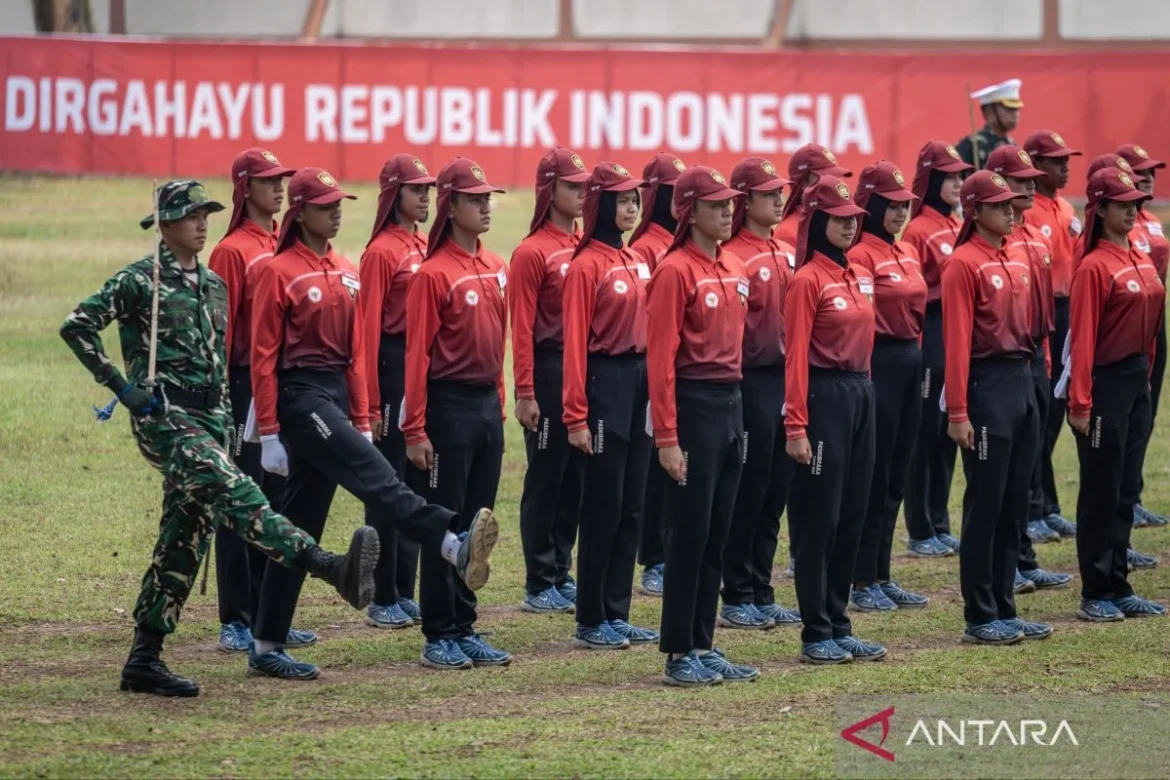
Every year as August 17 approaches, public curiosity invariably swells around the lives, duties, and compensation of the elite young individuals chosen for the National Flag Hoisting Troupe, widely known as Paskibraka Nasional. These exceptional high school students, representing all 34 to 38 provinces of Indonesia depending on administrative expansions, shoulder the immense honor of hoisting and lowering the duplicate of the Sacred Heritage Flag during the commemoration of the Republic of Indonesia’s Independence Day at the State Palace. While the role is universally recognized as a pinnacle of youthful patriotism, a persistent question lingers among citizens: How much are these national flag bearers paid, and what form does government appreciation take for their grueling weeks of service?
To understand the nature of Paskibraka remuneration, it is vital to clarify that these teenagers are not traditional employees drawing a fixed monthly salary. Instead, they are selected student representatives performing a state duty. Consequently, the financial compensation they receive is structured as honorary allowances, pocket money, and specialized grants rather than a standard corporate payroll. Based on historical data and precedent from prior national independence celebrations, the financial tokens or honoraria provided to national-level Paskibraka members typically range between IDR 3 million and IDR 10 million per individual. While this figure can fluctuate annually depending on state budget allocations, regional policies, and the specific organizing committee’s directives, the monetary amount represents only a fraction of the overall investment made by the state in these youths.
Beyond direct monetary stipends, the state provides comprehensive, all-inclusive support throughout their tenure. This includes rigorous training provisions, specialized uniforms, high-standard accommodation, nutritional daily meals, medical care, and structured leadership coaching before and during the actual Independence Day ceremony. Furthermore, national Paskibraka members frequently become eligible for specialized bonuses, educational assistance, and prestigious university scholarships awarded by various government ministries, state-owned enterprises, and private philanthropic foundations. In previous years, standout members have even secured academic grants valued in the hundreds of millions of rupiah, serving as a long-term investment in their higher education and future careers.
The Journey to the State Palace: Selection and Rigorous Training
The path to standing on the front lines of the State Palace lawn on August 17 is arduous, demanding extraordinary physical endurance, mental resilience, and emotional maturity. The recruitment process begins months in advance at the regency and municipal levels, progressing through strict provincial selection rounds. Out of millions of eligible high school students across the archipelago, only a select group—typically numbering 76 members representing the nation’s provinces—earns the right to be dispatched to the national capital. This process ensures absolute geographical representation while upholding the highest standards of meritocracy.
Once assembled in Jakarta, the selected candidates undergo a mandatory quarantine and intensive training camp managed by the National Pancasila Ideology Development Agency (BPIP). Under the watchful eye of instructors from the Indonesian National Armed Forces (TNI) and the Indonesian National Police (Polri), the teenagers participate in daily drills that test their discipline, synchronization, and physical stamina. The training regimen is designed not only to perfect the intricate marching and flag-handling maneuvers required for the ceremony but also to instill deep-seated values of national unity, teamwork, and psychological resilience.
Far Beyond a Ceremonial Duty: The Legal and Ideological Framework
The significance of Paskibraka extends far beyond the brief hours of the August 17 ceremony. According to Presidential Regulation Number 51 of 2022, Paskibraka members are legally classified as the nation’s best student cadres tasked with executing the ceremonial duties of the Independence Day Proclamation and the anniversary of the birth of Pancasila on June 1. More importantly, they are designated as Pancasila Cadres, expected to act as ambassadors of unity, tolerance, and civic responsibility within their respective home regions long after their uniforms are safely stored.
This structural evolution highlights a broader shift in how the state views youth leadership programs. Paskibraka is no longer merely viewed as a drill team for a national holiday; it is an incubator for future national leaders. The rigorous environment forces teenagers from vastly different cultural, economic, and geographic backgrounds to live, train, and struggle together, forging bonds that mirror the nation’s motto of Bhinneka Tunggal Ika (Unity in Diversity). Consequently, the historical prestige associated with being a Paskibraka alumnus carries lifelong social and professional capital, often opening doors to higher education, civil service careers, and community leadership roles.
Socio-Economic Implications and the True Value of Service
Analyzing the compensation structure and operational framework of the National Paskibraka reveals important insights into state appreciation for youth contributions. While critics occasionally scrutinize the exact rupiah amounts of the honoraria, economists and sociologists emphasize that the true value of the Paskibraka experience cannot be measured solely in monetary terms. The comprehensive package of state-funded training, national exposure, character development, and academic scholarships provides a transformative life experience that money cannot easily buy.
Moreover, the inclusion of diverse participants—including remarkable youth from disaster-affected regions, remote border islands, and underprivileged backgrounds—underscores the democratizing effect of the selection process. When a student from a remote area successfully overcomes regional selection and national quarantine to stand tall before the President of the Republic of Indonesia, it sends a powerful message of social mobility and national inclusion. The financial stipends and educational grants function as a safety net and springboard, ensuring that financial limitations do not hinder the futures of these exceptionally disciplined young citizens.
As Indonesia looks toward future milestones, including upcoming decennial independence celebrations, the institution of the National Paskibraka remains a resilient pillar of national identity. The combination of state honoraria, educational bonuses, and unparalleled character building ensures that the nation’s finest youth are appropriately recognized for bearing the heavy, sacred responsibility of the Red and White flag.