

China has embarked on a pioneering endeavor to construct a sophisticated satellite-based computing network specifically designed for artificial intelligence (AI) operations in Earth’s orbit. This ambitious undertaking, known as the Xingshu Plan, commenced with the successful launch of its inaugural constellation, marking a significant stride towards establishing a formidable space-based infrastructure for AI processing. Spearheaded by Shanghai Xingshu Tiansuan Space Technology, the project envisions a colossal network comprising approximately 1,000 satellites upon its full operational completion, positioning China at the forefront of the burgeoning field of in-orbit computing.
The core innovation of the Xingshu Plan lies in its departure from traditional satellite data handling. Rather than collecting vast quantities of raw data and transmitting them entirely back to Earth for processing, this revolutionary system performs data computation directly in space. This paradigm shift holds profound implications for AI applications and remote sensing capabilities, as only the refined, processed information is subsequently beamed down to ground stations. Proponents of this space-based data processing architecture highlight its potential to drastically reduce data transmission latency and alleviate the considerable strain on Earth’s communication network capacities, thereby enabling faster, more efficient, and more responsive AI-driven insights.
The Xingshu Plan: A Deep Dive into China’s Orbital AI Ambition
The Xingshu Plan, whose name translates from Chinese as "star hub" or "star center," represents Shanghai’s flagship space computing constellation project. Its strategic importance underscores China’s national commitment to achieving global leadership in both space technology and artificial intelligence. The initial launch, while not detailed in terms of specific satellite numbers for the "first constellation," has been heralded by Shanghai Xingshu Tiansuan Space Technology as a pivotal step bringing China closer to the commercial operation of a space-based computing network. This move is indicative of a broader global trend where nations and private entities are increasingly recognizing the strategic value of decentralized, in-orbit processing capabilities.
The fundamental difference from conventional satellite systems is critical to understanding the Xingshu Plan’s potential impact. In a traditional setup, satellites act primarily as data collectors, capturing images, sensor readings, and other information, which is then sent to ground stations. This raw data, often voluminous, requires significant bandwidth for transmission and substantial time for download and processing on Earth. The Xingshu Plan’s satellites, equipped with advanced AI processors and algorithms, can analyze this data in real-time or near real-time directly in orbit. For example, instead of sending down gigabytes of raw satellite imagery, the system could identify specific objects, changes, or anomalies, and only transmit the relevant metadata or analytical results. This intelligent filtering and processing in space drastically reduces the data payload, making the entire system more agile and efficient.
The benefits extend beyond mere efficiency. Reduced latency is paramount for applications requiring immediate decision-making, such as disaster response, autonomous navigation for space vehicles, or even potential military surveillance where seconds can be critical. Furthermore, by processing data closer to its source, the Xingshu Plan could potentially offer enhanced data security and resilience against terrestrial network disruptions. The concept of "edge computing" – bringing computation closer to the data source – is being extended to the ultimate edge: outer space.
A Phased Approach to a Thousand-Satellite Network
The development of the Xingshu Plan is structured into distinct, ambitious phases, reflecting the complexity and scale of deploying such an advanced constellation.
- Verification Stage: This initial phase is designed to test the fundamental technologies and operational viability of the system. It is slated to include two dedicated computing satellites and 12 "edge computing" satellites. Edge computing satellites are critical as they are equipped to perform localized data processing and analysis, reducing the need for data to travel long distances within the network or back to Earth. This stage focuses on proving the concept and refining the algorithms and hardware in a real-world space environment.
- Commercial Stage: Following successful verification, the project aims to scale up significantly for commercial operations. This phase targets an expansion to 50 computing satellites and 100 edge computing satellites. This increased capacity would allow for the offering of commercial services, potentially to a wide range of clients including government agencies, scientific institutions, and private enterprises requiring high-speed, low-latency space-based data processing for various applications.
- Final Operational Stage: The ultimate goal of the Xingshu Plan is to establish a robust network of approximately 1,000 satellites. This massive constellation would provide pervasive, high-capacity AI computing capabilities across the globe, fundamentally altering how space data is utilized and integrated into Earth-based systems.
The official announcement of the Xingshu Plan was strategically made on Saturday, July 18, at the World AI Conference (WAIC) and High-level Meeting on Global AI Governance 2026 in Shanghai. This forum served as an ideal platform to showcase China’s technological advancements and its strategic vision for AI. Notably, Chinese President Xi Jinping’s presence at the conference underscored the national importance placed on AI development, with Xi explicitly positioning Beijing as a leader in shaping a new global order for AI. This high-level endorsement signals the Xingshu Plan not merely as a technological feat but as a cornerstone of China’s broader national strategy.
Strategic Context: China’s Broader Space and AI Vision
The Xingshu Plan does not exist in a vacuum; it is an integral component of China’s expansive and rapidly accelerating ambitions in both space exploration and artificial intelligence. Beijing views dominance in these sectors as crucial for its economic prosperity, national security, and geopolitical influence in the 21st century.
China’s Ascendant Space Program: Over the past few decades, China has transformed from a nascent space power into a formidable competitor on the global stage. Its journey began with the launch of its first satellite, Dongfanghong-1, in 1970. Since then, the program has achieved a remarkable series of milestones:
- Manned Spaceflight: The Shenzhou program successfully launched its first astronaut, Yang Liwei, into orbit in 2003, making China only the third nation to achieve independent human spaceflight.
- Space Stations: China operates the Tiangong space station, a continuously inhabited orbital outpost, demonstrating its capability for long-duration human presence in space.
- Lunar and Planetary Exploration: The Chang’e series of lunar missions has included orbiters, landers, and rovers, with Chang’e-4 achieving the first-ever soft landing on the far side of the Moon. The Tianwen-1 mission successfully orbited, landed, and deployed a rover on Mars, showcasing deep-space capabilities.
- Navigation Systems: The indigenous Beidou Satellite Navigation System now rivals the U.S. GPS, providing global positioning, navigation, and timing services, which is critical for both civilian and military applications.
- Launch Cadence: China’s annual launch rate has steadily increased, often surpassing other nations, indicating a robust and active space industry. In 2023, China conducted over 60 orbital launches, deploying hundreds of satellites, a testament to its growing infrastructure and capabilities.
This sustained investment and success in space provide a strong foundation for a complex project like the Xingshu Plan, which leverages existing launch capabilities and orbital management expertise.
The Global AI Race and Beijing’s Ambition: China’s national strategy, particularly under initiatives like "Made in China 2025" and the "Next Generation Artificial Intelligence Development Plan" (issued in 2017), explicitly aims for global leadership in AI by 2030. President Xi Jinping has repeatedly emphasized AI as a strategic imperative, driving massive investments in research, development, and talent acquisition.
- Government-backed Initiatives: Beijing has poured billions into AI research and development, fostering a thriving ecosystem of AI companies and research institutions.
- Data Advantage: China’s vast population and extensive digitalization provide an unparalleled volume of data, a crucial resource for training sophisticated AI algorithms.
- Civil-Military Fusion: A core doctrine in China’s technological development, civil-military fusion seeks to integrate civilian technological advancements, including AI, into military applications. This dual-use potential is a significant factor in how projects like the Xingshu Plan are perceived globally.
The Xingshu Plan directly aligns with these national goals. By establishing an independent, high-capacity AI computing infrastructure in space, China not only enhances its technological prowess but also potentially creates a resilient platform for its burgeoning AI industry, less reliant on terrestrial infrastructure that could be vulnerable to geopolitical tensions or cyberattacks.
Technical Innovations and Applications of In-Orbit Computing
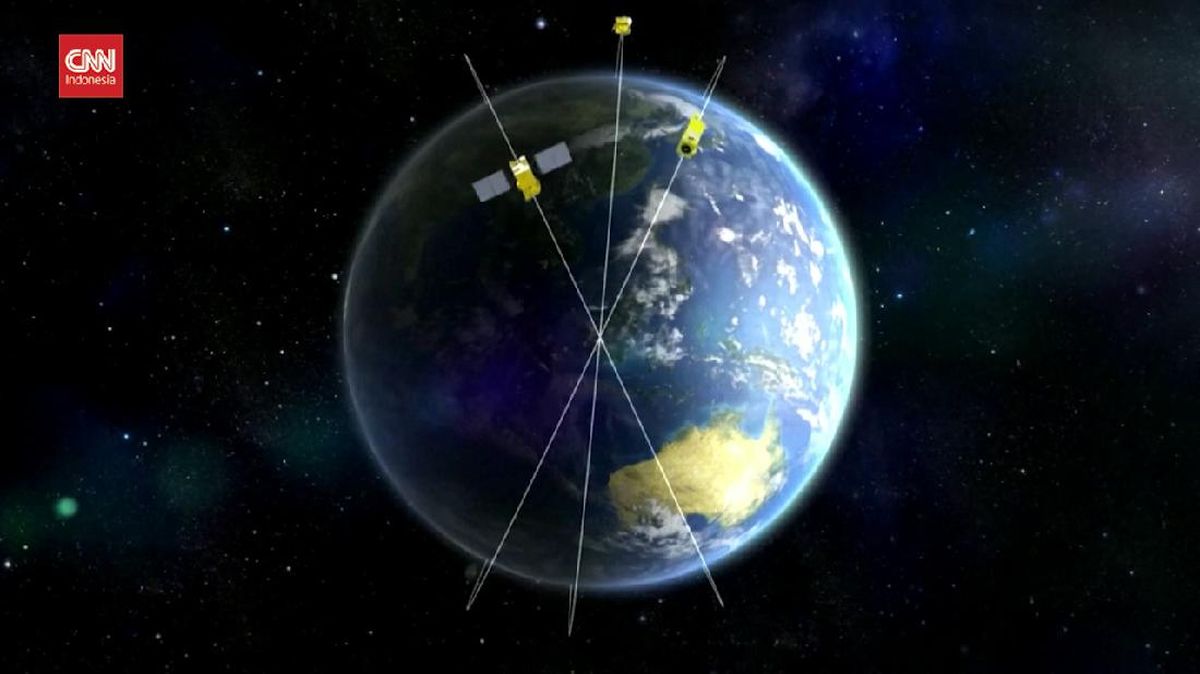
The deployment of the Xingshu Plan hinges on several advanced technological innovations, particularly in the realm of edge computing adapted for space.
Edge Computing in Space: Edge computing involves processing data closer to the source of data generation, rather than sending it to a centralized cloud server. In the context of the Xingshu Plan, the "edge" is literally in Earth’s orbit. This approach is critical for:
- Real-time Remote Sensing: Satellites equipped with AI can instantly analyze high-resolution imagery for applications such as monitoring agricultural health, detecting illegal deforestation, tracking maritime traffic, or assessing damage after natural disasters. The ability to identify anomalies or specific features on the fly means that decision-makers on Earth receive actionable intelligence almost immediately, rather than waiting for large data files to download and be processed.
- Autonomous Orbital Operations: As space becomes more congested, AI-powered satellites can autonomously detect potential collisions, manage their own orbital maneuvers, and optimize their operational parameters without constant ground intervention.
- Environmental Monitoring: Processing sensor data in orbit can provide faster insights into climate change indicators, pollution levels, and severe weather patterns, aiding in predictive modeling and early warning systems.
- Scientific Research: Faster data analysis can accelerate scientific discoveries by quickly identifying phenomena of interest from vast datasets collected by telescopes or scientific instruments in space.
Challenges and Opportunities: While the promise is immense, the development of in-orbit computing faces significant technical hurdles.
- Power Consumption: AI processors are notoriously power-hungry. Designing efficient, low-power AI chips that can operate reliably in the harsh space environment is a major challenge.
- Radiation Hardening: Space radiation can corrupt electronic components. Satellites must be designed with radiation-hardened electronics, which are often more expensive and less powerful than their terrestrial counterparts.
- Miniaturization and Heat Dissipation: Fitting powerful computing hardware into small satellite form factors while managing heat dissipation in a vacuum is complex.
- Inter-satellite Communication: Establishing robust, high-speed communication links between hundreds or thousands of satellites is essential for a cohesive network, requiring advanced optical or radio frequency technologies.
- Software and Algorithm Development: Optimizing AI algorithms for space-based processors and ensuring their reliability and security in an autonomous environment is crucial.
Despite these challenges, the Xingshu Plan opens up vast opportunities for the new space economy. It could foster the development of specialized space-AI hardware, software, and data services, creating new markets and driving innovation across multiple sectors.
Global Competition and the Dual-Use Dilemma
China’s Xingshu Plan is not an isolated initiative but part of a broader, intensifying global race in space-based computing and AI.
International Parallels: SpaceX and Others: Elon Musk’s companies, particularly SpaceX and its AI venture xAI, are also actively pursuing initiatives that intersect with space computing. While SpaceX’s Starlink constellation primarily focuses on global internet connectivity, the sheer scale of its deployment and its potential for integrated data processing facilities in orbit suggest a similar trajectory towards advanced space-based services. xAI, with its focus on developing advanced AI, could leverage Starlink’s infrastructure for distributed AI processing, akin to the Xingshu Plan’s goals. Other nations and commercial entities in Europe, the United States, and elsewhere are also investing in smaller-scale projects or research into similar concepts, recognizing the strategic advantage of such capabilities. For example, the European Space Agency (ESA) has explored "on-board processing" for Earth observation satellites to enhance data efficiency.
The competitive landscape is characterized by both collaboration and rivalry, with nations vying for technological supremacy and control over critical space infrastructure.
Geopolitical and Security Implications: The dual-use nature of satellite technology—its applicability for both civilian and military purposes—casts a significant shadow over projects like the Xingshu Plan.
- Military Applications: A constellation of AI-enabled satellites could significantly enhance a nation’s military intelligence, surveillance, and reconnaissance (ISR) capabilities. Real-time analysis of satellite imagery could provide instantaneous insights into troop movements, naval activities, or missile launches. Furthermore, AI could potentially be used for autonomous targeting, battlefield management, or even controlling swarms of drones or other orbital assets, raising serious ethical and arms control concerns.
- Space Weaponization: The deployment of numerous sophisticated satellites capable of advanced processing could be perceived as a step towards space weaponization, fueling an arms race in outer space. The ability to process data rapidly in orbit could, for example, facilitate faster responses to perceived threats or enhance anti-satellite (ASAT) capabilities.
- Data Sovereignty and Espionage: Control over such a network grants immense power over data collection and analysis. Concerns might arise regarding data sovereignty, privacy, and the potential for surveillance or intelligence gathering on an unprecedented scale.
- International Space Governance: The proliferation of mega-constellations like the Xingshu Plan (and Starlink) raises complex questions about space traffic management, debris mitigation, spectrum allocation, and adherence to international treaties on the peaceful use of outer space. Without robust international frameworks, the potential for conflict or accidents in orbit increases.
Economic and Societal Impact
The successful realization of the Xingshu Plan has the potential to profoundly transform various industries and aspects of daily life, while also posing new societal and ethical questions.
Transforming Industries:
- Agriculture: Precision agriculture can be revolutionized by real-time crop health monitoring, pest detection, and optimized irrigation schedules, leading to increased yields and reduced resource consumption.
- Disaster Management: Rapid assessment of damage from earthquakes, floods, or wildfires, coupled with AI-driven predictive analytics, can significantly improve emergency response times and save lives.
- Logistics and Supply Chain: Real-time tracking of goods, optimized routing, and predictive maintenance for transportation infrastructure can enhance efficiency and resilience of global supply chains.
- Environmental Protection: More frequent and granular monitoring of pollution, deforestation, and climate indicators can provide crucial data for environmental policymaking and conservation efforts.
- Smart Cities: Integration with urban infrastructure could enable advanced traffic management, public safety enhancements, and efficient resource allocation in smart cities.
Data Sovereignty and Ethics: The shift to in-orbit data processing introduces new complexities regarding data ownership, privacy, and ethical use.
- Who owns the data processed in space? This question becomes more pertinent when processing occurs outside national jurisdictions.
- Privacy Concerns: The ability to collect and analyze vast amounts of data from space raises concerns about individual privacy and potential for mass surveillance.
- Bias in AI: If the AI algorithms used in space are biased, their analyses and recommendations could perpetuate or exacerbate existing inequalities.
- Ethical Guidelines: There is an urgent need for international cooperation to establish clear ethical guidelines and regulatory frameworks for AI in space, ensuring its development and deployment serve humanity’s best interests.
The Road Ahead: Challenges and Prospects
The Xingshu Plan, while ambitious, faces a long and challenging road to full operational capability. Beyond the technical hurdles, significant financial investment, regulatory approvals, and sustained political will are required. The sheer cost of launching and maintaining a constellation of 1,000 advanced satellites is astronomical, demanding a robust economic model for commercial viability. Furthermore, managing such a vast network in an increasingly crowded orbital environment presents unprecedented challenges for collision avoidance and space debris mitigation.
However, if successful, the Xingshu Plan could solidify China’s position as a global leader in advanced space technology and artificial intelligence. It represents a pivotal step towards a future where computing power is not confined to Earth but distributed throughout our orbital environment, enabling a truly interconnected and intelligent space-Earth ecosystem. This initiative promises to unlock new frontiers in data processing, accelerate scientific discovery, and provide innovative solutions to some of humanity’s most pressing challenges, while simultaneously intensifying the geopolitical competition for technological dominance in the cosmos.
