
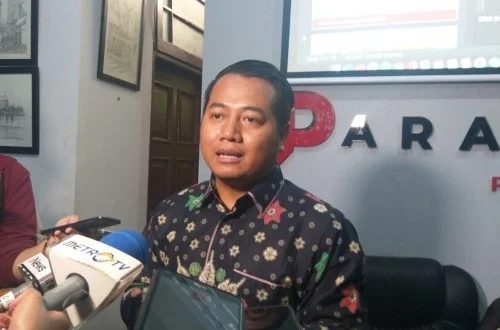
JAKARTA – A recent survey conducted by Parameter Politik Indonesia has positioned Taj Yasin Maimoen, the former Deputy Governor of Central Java for the 2018-2023 term, as the most popular figure in the burgeoning race for the Central Java gubernatorial election. The data, meticulously gathered between May 15 and 21, 2024, sheds light on the initial public perception of potential candidates, indicating a dynamic and still-forming electoral landscape ahead of the upcoming regional head elections (Pilkada).
Adi Prayitno, Executive Director of Parameter Politik Indonesia, unveiled the findings during an online release witnessed from Jakarta on Wednesday, May 29, 2024. He detailed the methodology, explaining, "We asked respondents one by one, ‘Sir, Madam, are you familiar with the following figure?’ So, we asked the respondents individually, and approximately 52.1 percent of them reported knowing Taj Yasin by name." This direct approach to gauging name recognition underscores Taj Yasin’s significant public presence within the province, a crucial initial metric for any political contender.
Following Taj Yasin, Hendrar Prihadi, the current Head of the Government Goods/Services Procurement Policy Institute (LKPP) and former Mayor of Semarang, secured the second position with a 40 percent recognition rate. Bupati Kendal, Dico Ganinduto, rounded out the top three, registering 38.1 percent popularity. Prayitno elaborated on the selection of these figures, stating, "These individuals are those whom we believe possess potential, are frequently discussed, or are consistently associated with the possibility of running in the Central Java Pilkada. Therefore, if we tally them one by one, this is the general portrait of their popularity." Despite these encouraging numbers for the leading contenders, Prayitno cautioned that none of the popular figures could yet be described as "outstanding" or having an overwhelming lead, suggesting a highly competitive and fluid race as the election cycle progresses.
The Significance of Central Java in Indonesian Politics
Central Java, one of Indonesia’s most populous provinces, holds immense strategic importance in the nation’s political landscape. With a population exceeding 37 million people, it is a key electoral battleground that often reflects broader national political sentiments. The province is traditionally considered a stronghold of the Indonesian Democratic Party of Struggle (PDI-P), the party of incumbent President Joko Widodo and presidential candidate Ganjar Pranowo. However, it also boasts a significant presence of Nahdlatul Ulama (NU), Indonesia’s largest Islamic organization, making it a complex tapestry of secular nationalist and religious conservative influences.
The gubernatorial election in Central Java is not merely a regional contest; it serves as a barometer for national political shifts and the strength of various political parties. A victory here can bolster a party’s influence and provide a launchpad for future national ambitions, while a defeat can signal a weakening grip. Understanding the demographics, historical voting patterns, and the interplay of local and national political figures is crucial to interpreting the survey results and anticipating the eventual outcome. The province’s diverse economy, ranging from agriculture to manufacturing, and its rich cultural heritage further add layers of complexity to its political dynamics.
Candidate Profiles and Their Appeal
The top three figures identified by Parameter Politik Indonesia each bring unique backgrounds and appeal to the Central Java electorate.
Taj Yasin Maimoen (52.1% Popularity):
Taj Yasin Maimoen, often referred to as Gus Yasin, carries significant weight due to his lineage and political experience. He is the son of the late Maimoen Zubair, a highly revered charismatic cleric (kyai) and former chairman of the consultative council (Syuriah) of Nahdlatul Ulama. This familial connection grants him instant recognition and a deep well of support, particularly among the traditionalist Islamic communities and NU followers in Central Java, where religious scholars hold immense moral authority. His tenure as Deputy Governor alongside Ganjar Pranowo provided him with practical governance experience and exposure across the province. His appeal likely stems from a blend of religious legitimacy, youth (he is relatively young for a top political figure), and his past role in provincial administration. He is often seen as representing a blend of religious piety and modern governance, a potent combination in a province like Central Java. His challenge will be to translate this inherited popularity and name recognition into concrete electability across all demographic segments, including urban and non-NU affiliated voters.
Hendrar Prihadi (40% Popularity):
Hendrar Prihadi is a seasoned politician with a strong track record in regional governance. His two terms as Mayor of Semarang, the provincial capital, saw significant urban development and public service improvements, earning him a reputation as an effective administrator. As a prominent figure within PDI-P, his political machinery is well-oiled and extensive. His current role as Head of LKPP, a national-level agency, also gives him broader visibility and demonstrates his capability to handle complex administrative tasks. Hendrar’s appeal is likely strongest among urban voters, those who value administrative experience, and loyal PDI-P constituents. His challenge might involve differentiating himself from the party’s broader image, especially if other PDI-P cadres also eye the gubernatorial nomination, and expanding his appeal beyond the Semarang metropolitan area.
Dico Ganinduto (38.1% Popularity):
Dico Ganinduto, the Regent of Kendal, represents a newer generation of political leaders. As a member of the Golkar Party, one of Indonesia’s oldest and largest political parties, he benefits from a strong party network. His current role as a regent provides him with direct experience in local governance and a platform to address grassroots issues. Dico’s appeal might be particularly strong among younger voters and those seeking fresh faces in leadership. His challenge will be to expand his recognition and influence beyond his regency and compete with more established figures who have broader provincial exposure and deeper party backing. For Golkar, supporting a young, dynamic candidate like Dico could be a strategy to rejuvenate its image and expand its reach in Central Java.
The Pilkada Timeline and Nomination Process
The 2024 regional head elections (Pilkada) are a nationwide event, with elections for governors, regents, and mayors held simultaneously across Indonesia. The general timeline for these elections typically follows a structured process:
- Initial Stages (Early 2024): Political parties begin internal surveys and assessments to identify potential candidates. Public opinion polls, like the one from Parameter Politik Indonesia, play a crucial role in this phase, providing data for strategic decision-making.
- Candidate Registration (August-September 2024): This is the critical period when political parties or coalitions of parties officially register their candidate pairs (governor and deputy governor) with the General Election Commission (KPU). Candidates must meet specific criteria, including minimum age, educational qualifications, and most importantly, secure sufficient party support.
- Campaign Period (September-November 2024): Once registered, candidates embark on an intensive campaign period, holding rallies, debates, and engaging with voters through various media. This is where popularity figures can significantly shift based on campaign effectiveness, policy platforms, and public engagement.
- Election Day (November 27, 2024): Voters cast their ballots.
- Results Announcement and Inauguration (December 2024 – January 2025): The KPU announces the official results, followed by potential dispute resolutions and the inauguration of elected officials.
The current survey falls within the initial assessment phase, offering an early glimpse into public sentiment. The "not yet outstanding" observation by Adi Prayitno highlights that while some names are recognized, none have established an insurmountable lead. This suggests that the campaign period, candidate debates, and the eventual political party endorsements will be pivotal in shaping the final outcome. Coalitions will be key, as no single party is likely to secure enough seats in the provincial legislature to nominate a candidate pair independently, necessitating alliances and negotiations.
Broader Impact and Implications
The survey results carry several implications for the political landscape of Central Java and the involved parties.
For the Candidates:
- Taj Yasin Maimoen: His leading popularity provides a strong starting point, but he must now convert this name recognition into strong electability. This involves building a robust campaign structure, articulating a clear vision for Central Java, and securing firm backing from relevant political parties, most notably PKB (National Awakening Party) and potentially others who align with NU’s aspirations. His challenge will be to broaden his appeal beyond his traditional base and convince voters that his religious and family background translates into effective modern governance.
- Hendrar Prihadi: His solid second-place showing confirms his strong base and administrative credentials. As a prominent PDI-P figure, he will likely be a strong contender for the party’s nomination. However, PDI-P has other potential candidates, and internal party dynamics will play a significant role. He will need to highlight his proven governance skills and vision for the province’s future to secure the nomination and then win over voters.
- Dico Ganinduto: His presence in the top three, despite being a regent, is notable. It indicates a potential for growth, especially among younger demographics. For Golkar, Dico represents an opportunity to challenge the PDI-P dominance in Central Java. He will need to significantly raise his profile across the province and articulate a compelling platform that resonates with a broader electorate.
For Political Parties:
The survey results serve as a wake-up call and a strategic guide for political parties. For PDI-P, it highlights the strength of its cadres like Hendrar Prihadi but also the potential challenge from figures like Taj Yasin. For parties like PKB, the strong showing of Taj Yasin offers a clear potential candidate to rally behind. Golkar will likely see Dico Ganinduto as a viable option to expand its influence. The necessity of forming coalitions means that these popularity figures will be critical in inter-party negotiations, where parties will assess the electability of potential running mates and their ability to attract votes. The ‘not yet outstanding’ status of any candidate means parties cannot be complacent; they must actively build strong campaign strategies and alliances.
For the Electorate:
The early survey results indicate that Central Java voters are still in an evaluative phase. The absence of an "outstanding" candidate suggests that voters are open to considering various options, focusing on experience, vision, and perhaps party affiliations. This implies that the upcoming campaign period will be crucial for candidates to articulate their platforms clearly and connect with the diverse needs and aspirations of the provincial population. Issues such as economic development, infrastructure, education, healthcare, and environmental sustainability are likely to dominate public discourse.
Supporting Data and Historical Context
Historically, Central Java has been a PDI-P stronghold. In the 2018 gubernatorial election, Ganjar Pranowo (PDI-P) and Taj Yasin Maimoen (PKB, PDI-P endorsed) secured a decisive victory. This history underscores the power of strong party machinery, particularly PDI-P’s, and the strategic importance of aligning with influential religious figures. The 2019 and 2024 general elections further solidified PDI-P’s dominance in the province, both in legislative and presidential votes.
However, the political landscape is never static. The 2024 presidential election, while ultimately won by Prabowo Subianto nationally, saw a significant portion of Central Java still voting for PDI-P’s candidate, Ganjar Pranowo. This indicates a strong loyal base but also signals that national trends can sometimes diverge from regional ones, or that local factors might exert a stronger influence in Pilkada. The challenge for future gubernatorial candidates will be to harness these loyalties while also appealing to swing voters and those who might be disillusioned with established political norms.
The survey’s sample size, though not explicitly stated in the provided snippet, typically ranges from 1,000 to 1,600 respondents for a provincial-level poll in Indonesia, with a margin of error of approximately 2.5% to 3% at a 95% confidence level. Such a sample size, when conducted with proper multi-stage random sampling, provides a statistically reliable snapshot of public opinion.
Inferred Statements and Future Outlook
While direct statements from the candidates or their teams were not part of the original report, it is reasonable to infer their potential reactions. Taj Yasin’s camp would likely express gratitude for the public’s trust, emphasizing his commitment to continuing his service to the people of Central Java. They would also likely reiterate the importance of humility and hard work, acknowledging that the path to victory is long. Hendrar Prihadi’s team would probably highlight his proven track record in public service, viewing the survey as an early indicator of his strong public recognition and suitability for leadership. They might also stress his extensive experience in managing large urban centers and his understanding of provincial needs. Dico Ganinduto’s supporters would likely be encouraged by his placement among more established figures, positioning him as a rising star and a fresh alternative for the province.
Political analysts, when presented with such data, would likely reiterate Adi Prayitno’s point that "popularity" does not automatically translate into "electability." They would emphasize that while name recognition is a vital first step, candidates must still articulate compelling visions, build strong coalitions, secure party endorsements, and execute effective campaigns. The next few months will be crucial as parties finalize their nominations and candidates begin to actively campaign. The Central Java gubernatorial race promises to be one of the most closely watched regional elections in Indonesia, offering insights into the future direction of Indonesian politics. The dynamic nature of the current poll underscores that the contest remains wide open, setting the stage for an engaging and competitive election season.
