
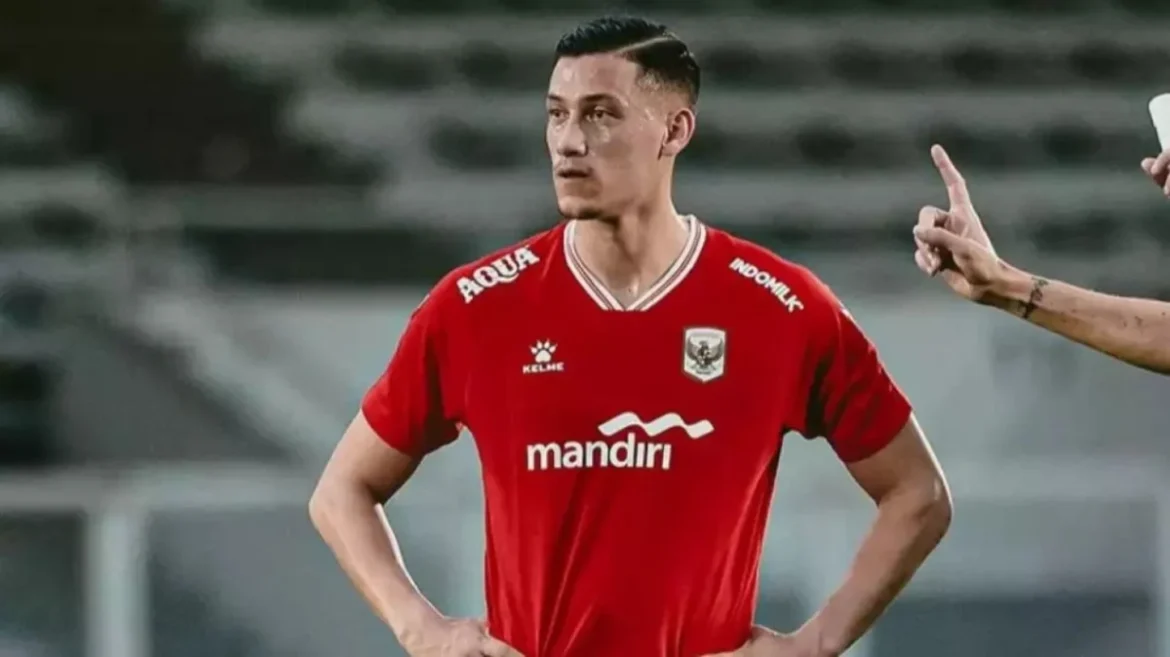
The physical well-being of Indonesian national team captain Jay Idzes has emerged as a central concern for football enthusiasts and coaching staff alike, casting a shadow over the squad’s preparations for the upcoming FIFA ASEAN Cup 2026. The towering central defender, who currently plies his trade in the Italian Serie A with Sassuolo, sustained a physical knock during a high-stakes league fixture against Italian powerhouse Juventus. The incident occurred at the Mapei Stadium, where Sassuolo secured a dramatic and memorable 3-2 victory. However, the celebration of the club’s triumph was swiftly tempered in Indonesia by the sight of their defensive lynchpin signaling discomfort and walking off the pitch prematurely.
As the national team approaches the prestigious regional tournament under mounting expectations, the fitness status of key personnel has become paramount. With several other marquee names already sidelined due to long-term injuries, the potential absence of Idzes represents a significant tactical and psychological blow to the Garuda squad. Football analysts, national team officials, and supporters are closely monitoring medical updates from Italy, hoping for a swift recovery for a player who has rapidly evolved into the bedrock of Indonesia’s modern football resurgence.
The Match Chronology and the Incidents at Mapei Stadium
The fixture between Sassuolo and Juventus on Monday, September 14, 2026, lived up to its billing as a fiercely contested Serie A encounter. Jay Idzes was named in the starting lineup by the Sassuolo manager, retaining his place at the heart of the defense. Displaying his trademark composure, tactical intelligence, and aerial dominance, the 26-year-old commander marshaled the backline effectively against a potent Juventus attacking force.
For the vast majority of the match, Idzes appeared to be operating at his usual high standard, helping his club weather intense pressure from the Bianconeri. However, as the match entered its closing stages, signs of physical distress became apparent. In the 81st minute of the encounter, after an intense aerial duel and a subsequent clearance, Idzes went down clutching his lower leg. Visibly wincing in pain and unable to continue, the Indonesian captain was immediately called ashore by the coaching staff.
He was replaced by Croatian defender Duje Caleta-Car to see out the remaining minutes of the match. While Sassuolo successfully defended their lead and claimed all three points in a thrilling 3-2 victory, the immediate post-match narrative in Indonesian sporting circles shifted away from the club’s success toward the physical condition of their national team captain. Television broadcasts and pitchside observers noted that Idzes walked gingerly toward the bench, prompting immediate concern regarding the severity of the issue.
Broader Defensive Implications and Analyst Reactions
The timing of the injury could hardly have been worse. With the FIFA ASEAN Cup 2026 looming just days away, the prospect of losing the defensive general has sent ripples of anxiety through the national football community. Prominent Indonesian football pundit Bung Harpa was among the first to voice public concern over the situation, emphasizing the irreplaceable nature of Idzes within the national setup.
In a comprehensive breakdown shared on his official digital platforms, Bung Harpa detailed the gravity of the situation. "This is quite concerning for all of us, considering that in the early hours of yesterday morning, Sassuolo managed to defeat Juventus 3-2," Bung Harpa stated. "Jay had to be pulled out in the 80th or 81st minute, visibly wincing in pain."
Bung Harpa further elaborated on why Idzes’ potential absence carries far more weight than that of a standard squad member. Beyond his defensive proficiency, positional awareness, and ability to neutralize elite forwards, Idzes occupies a vital leadership role within the dressing room. As the team captain, he serves as the tactical conductor on the pitch, organizing the defensive block, communicating with the goalkeeper, and dictating the defensive line’s temperament under pressure.
"Jay Idzes, we all know how vital his role, his leadership, and the solidity he brings to the backline of our National Team are," Bung Harpa added. His analysis underscores a prevailing sentiment among analysts: while Indonesia boasts a growing pool of talent, the specific blend of European-tier experience, tactical maturity, and authoritative leadership embodied by Idzes is exceptionally difficult to replicate on short notice.
PSSI Assessment and Current Injury Crisis
The timing of this fresh injury concern coincides with a precarious period for the Football Association of Indonesia (PSSI), which is already navigating a severe depletion of its player pool due to prior injuries. Prior to the incident at the Mapei Stadium, PSSI General Chair Erick Thohir had already addressed the media regarding the availability of several key overseas-based players for the upcoming FIFA ASEAN Cup 2026.
During a briefing on September 14, 2026, Erick Thohir confirmed that Adrian Wibowo, Miliano Jonathans, and Mees Hilgers would be unavailable for selection. All three players were ruled out of the tournament due to ongoing rehabilitation processes stemming from club-level injuries. The absence of this trio already posed a stiff challenge to the coaching staff’s tactical blueprints, requiring careful squad rotation and alternative tactical deployments.
When questioned about Jay Idzes immediately following the Sassuolo-Juventus match, Erick Thohir acknowledged that the situation was fluid and still under evaluation. "Jay Idzes, I don’t know; last night in the 81st minute he was pulled out. So I don’t know what his current condition is like," Erick stated on the evening of September 14.
This uncertainty placed Idzes in a transitional status within the national team selection pipeline. Unlike Wibowo, Jonathans, and Hilgers, whose long-term absences were officially confirmed, Idzes was neither ruled out nor cleared for action. His inclusion in the final tournament roster hinges entirely on the diagnostic assessments provided by Sassuolo’s medical department and the subsequent evaluations conducted by the national team’s medical staff under the direction of head coach John Herdman.
Tactical Challenges for Head Coach John Herdman
The potential absence of Jay Idzes presents a complex tactical puzzle for national team manager John Herdman. Known for his meticulous tactical planning and high-intensity tactical frameworks, Herdman has built much of his defensive architecture around the stability provided by Idzes at center-back.
A central defender who is comfortable playing out from the back, Idzes acts as the first playmaker in build-up phases, transitioning defensive recoveries into fluid offensive transitions. Without him, Herdman may be forced to completely restructure his defensive pairings, potentially altering the team’s pressing triggers and defensive block height.
Furthermore, the leadership void left by Idzes’ absence would require other senior members of the squad to step forward and assume organizational responsibilities on the pitch. While players such as Jordi Amat or Rizky Ridho possess international experience, the specific chemistry forged between Idzes and his defensive partners over successive international windows cannot be instantly duplicated.
The coaching staff faces a race against time. Final squad registration deadlines dictate that decisions must be made swiftly, weighing the risk of rushing a recovering player against the strategic necessity of having the captain available for crucial matches. Medical reports from Italy are being evaluated on a daily basis, with physical therapists conducting range-of-motion tests and scanning protocols to determine the exact extent of the muscle or joint strain.
The Historical Context of Jay Idzes’ Rise and National Impact
To fully understand the gravity of Jay Idzes’ current fitness situation, one must examine his meteoric rise within Indonesian football. Born in the Netherlands, Idzes developed through prestigious youth academies before establishing himself in professional European leagues, notably in the Netherlands and subsequently in Italy’s Serie A with Venezia and later Sassuolo.
His decision to represent the Indonesian national team marked a watershed moment in the country’s modern football history, aligning with PSSI’s strategic initiative to integrate top-tier diaspora talent with domestic standouts. From his very first appearance in the Garuda jersey, Idzes displayed an extraordinary level of professionalism and tactical discipline. His physical stature, combined with elite positional intelligence honed in the tactical crucible of Italian football, quickly made him an indispensable component of the national team’s defensive framework.
Over the past two years, Idzes has been a permanent fixture in pivotal World Cup qualifiers and regional tournaments. His ability to handle world-class attackers during high-profile club matches translated seamlessly to the international stage, elevating the overall confidence of the entire squad. Beyond his defensive duties, his appointment as team captain reflected his natural leadership qualities, earning him the absolute respect of both his peers and the millions of fans who follow the national team’s fortunes.
The Wider Significance of the FIFA ASEAN Cup 2026
The FIFA ASEAN Cup 2026 holds immense symbolic and competitive importance for Indonesian football. As Southeast Asia’s premier international football competition, the tournament serves as both a regional showcase and a crucial benchmark for the ongoing development of the national program. PSSI and the coaching staff have framed participation in the tournament not merely as an opportunity to secure regional silverware, but as an essential testing ground for the broader strategic roadmap leading toward global competitions.
Expectations among the public are exceptionally high. The rapid development of the national team, fueled by structural reforms, elite coaching appointments, and the integration of European-based professionals, has fostered a belief that Indonesia is entering a golden era of football. Consequently, every match is scrutinized, and any setback regarding player fitness triggers widespread public debate.
The injury concern surrounding Jay Idzes has thus evolved beyond a simple sports medicine update; it has become a focal point of national sporting discourse. Fans across social media platforms, sports talk shows, and analytical forums continue to dissect every scrap of news emanating from Italy, underscoring the deep emotional and cultural connection between the populace and their national team representatives.
Looking Ahead: The Final Squad Selection and Medical Protocols
As the medical assessment period enters its final phase, all eyes remain fixed on the communication channels between Sassuolo’s athletic trainers and the Indonesian national team’s medical staff. Standard protocol dictates that player welfare remains paramount, with neither the club nor the national association willing to risk a long-term injury for a short-term tournament gain, regardless of its importance.
If medical evaluations indicate a minor strain that requires only conservative management and short-term rest, Idzes could potentially join the squad late in the preparation cycle, even if his participation in the opening fixtures remains managed. Conversely, if diagnostic imaging reveals a more significant structural issue, Herdman will be forced to activate contingency plans, mobilizing alternative defensive combinations to shoulder the burden during the FIFA ASEAN Cup 2026 campaign.
For the millions of supporters backing the Garuda, the coming days will be characterized by anxious anticipation. The hope remains that the injury sustained at the Mapei Stadium is merely a temporary scare, allowing the captain to resume his position at the heart of the defense and lead Indonesia onto the pitch as they embark on their continental ambitions.
