

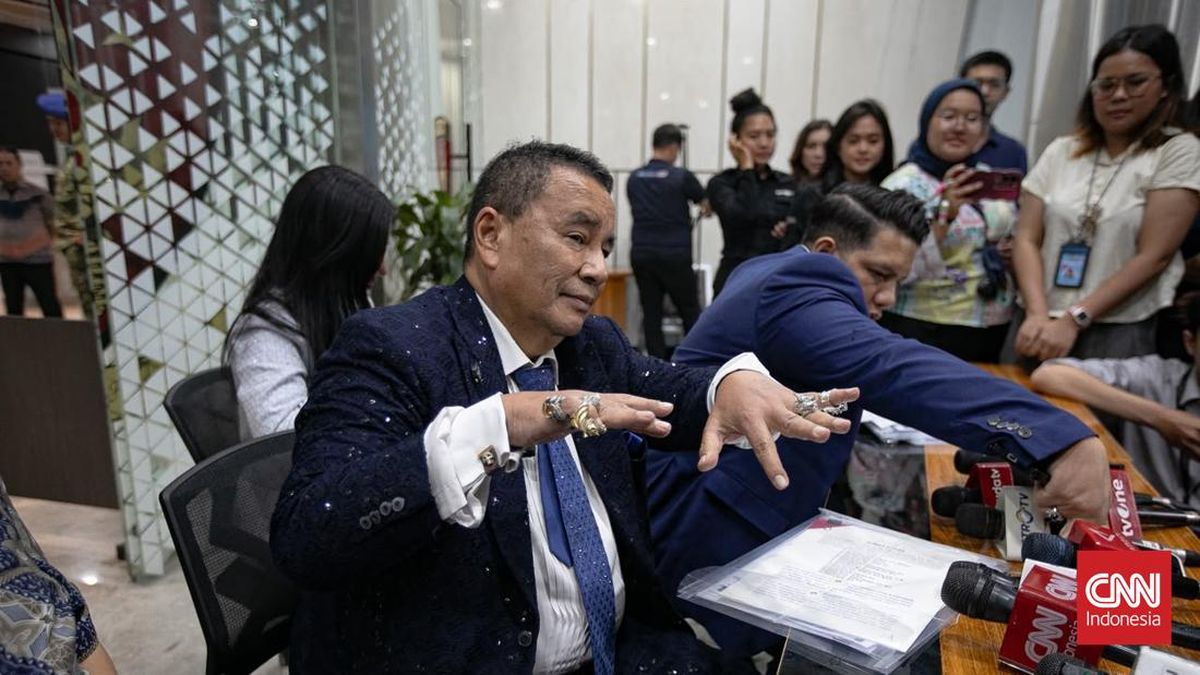
The Indonesian Editors’ Forum (Forum Pemred) has issued a strong condemnation of prominent lawyer Hotman Paris Hutapea’s conduct during a press conference held at the Attorney General’s Office (Kejaksaan Agung) on Friday, July 17. The incident, which occurred while Hotman Paris was addressing reporters regarding the case of his client, former Junior Attorney General for Special Crimes (Jampidsus) Febrie Adriansyah, drew immediate criticism for its perceived unprofessionalism and demeaning tone towards working journalists. The Forum Pemred, through its chairperson Retno Pinasti, asserted that Hotman Paris’s choice of words and arrogant demeanor not only fell short of professional standards but also directly undermined the integrity and protected status of the journalistic profession as enshrined in Indonesia’s Press Law.
The Incident: A Clash at the Attorney General’s Office
The confrontation unfolded on Friday, July 17, at the Attorney General’s Office, a critical hub for legal and judicial news in Indonesia. Hotman Paris Hutapea, a flamboyant and highly recognizable figure in Indonesian legal circles, was representing Febrie Adriansyah, whose case had garnered significant public and media attention. As is customary for high-profile legal matters, a swarm of journalists was present, seeking to glean information, confirm facts, and provide updates to the public. During the press conference, a journalist posed a question that apparently displeased Hotman Paris. In response, he reportedly used language described by Forum Pemred as "unprofessional" and "demeaning," including the phrase "lu punya otak ngga" (do you have a brain?), alongside an overall arrogant attitude that failed to address the substance of the inquiry.
This exchange quickly became a flashpoint, highlighting the often-strained relationship between public figures and the media, particularly in sensitive legal contexts. Journalists, operating under the mandate of the Press Law, are tasked with scrutinizing power and holding individuals accountable, a role that necessitates direct and often probing questions. Conversely, sources, while having the right to refuse to answer, are expected to engage with the press respectfully, maintaining decorum appropriate for public discourse. The perceived breach of this professional etiquette by a figure of Hotman Paris’s stature immediately triggered concern within journalistic organizations.
Chronology of Events Leading to the Condemnation
The timeline of events surrounding the incident and its subsequent condemnation by the Forum Pemred is crucial for understanding the gravity of the situation:
- Friday, July 17: The press conference takes place at the Attorney General’s Office. Hotman Paris Hutapea, representing Febrie Adriansyah, engages with journalists. During this interaction, the alleged demeaning language and arrogant attitude are exhibited by Hotman Paris in response to a journalist’s question. The incident is witnessed by numerous reporters and likely captured by various media outlets.
- Saturday, July 18: Following the incident, discussions and concerns likely circulate within journalistic circles. Media professionals, editors, and press organizations begin to review the footage and accounts of the press conference, assessing the implications of Hotman Paris’s conduct. The use of such language by a prominent public figure towards a working journalist becomes a topic of serious internal deliberation.
- Sunday, July 19: The Indonesian Editors’ Forum (Forum Pemred) formally issues a written statement condemning Hotman Paris’s actions. The statement, attributed to its Chair, Retno Pinasti, articulates the organization’s dismay, labeling the lawyer’s response as unprofessional and demeaning to the journalistic profession. The statement is subsequently quoted by various news outlets, including Detiknews, bringing the issue to broader public attention. The timing of the statement, two days after the incident, indicates a period of internal consultation and a deliberate decision to address the matter formally and publicly, underscoring the severity with which the Forum Pemred views such behavior.
This swift and public rebuke from a leading journalistic organization emphasizes the immediate impact of the incident and the collective resolve within the media community to uphold professional standards and protect the rights of journalists.
The Legal Framework: Press Law No. 40 of 1999
At the heart of Forum Pemred’s condemnation lies the fundamental protection afforded to journalists under Indonesian law, specifically Law No. 40 of 1999 concerning the Press (Undang-Undang Pers Nomor 40 Tahun 1999). This seminal legislation serves as the bedrock for press freedom in Indonesia, outlining the rights, responsibilities, and protections for journalists and media organizations. Retno Pinasti explicitly referenced this law, emphasizing that journalists are "working to carry out the mandate of Law No. 40 of 1999."
Key provisions of this law are pertinent to the incident:
- Freedom of the Press (Article 4): This article guarantees the right of the press to seek, obtain, and disseminate ideas and information, underscoring its crucial role in a democratic society. Any act that hinders this right, directly or indirectly, can be seen as an impediment to press freedom.
- Protection for Journalists (Article 8): This article unequivocally states that journalists "receive legal protection in carrying out their profession." This protection encompasses various aspects, including the right to refuse (hak tolak), prohibition of censorship, and freedom from acts of violence and intimidation. Forum Pemred argues that Hotman Paris’s "intimidative manner" – both verbal and nonverbal – directly contradicts this legal protection and the very spirit of press freedom. The use of demeaning language, coupled with an arrogant demeanor, creates an environment where journalists may feel intimidated or discouraged from asking critical questions, thereby impeding their ability to fulfill their professional duties.
- Journalistic Ethics and Professionalism: While the law provides legal protection, it also implicitly demands professionalism from all parties involved in newsgathering. Journalists are expected to adhere to a code of ethics, including verifying information and maintaining objectivity. Correspondingly, sources, especially those in positions of public trust or representing clients in public interest cases, are expected to engage with the media in a professional and respectful manner. Retno Pinasti highlighted that asking questions is a fundamental method for journalists to confirm and extract information, an essential part of the journalistic process and verification discipline, which is both professional and legally protected.
The Forum Pemred’s invocation of Law No. 40 of 1999 is not merely a procedural point but a powerful assertion of the constitutional rights of the press and a reminder that acts perceived as hindering or demeaning journalistic work are not just breaches of etiquette but potentially violations of a fundamental legal framework.
Official Responses and Broader Implications
The condemnation from the Forum Pemred carries significant weight within the Indonesian media landscape. As an organization comprising editors-in-chief from various major news outlets, its pronouncements reflect a consensus among leading media professionals regarding critical issues affecting the press.
-
Forum Pemred’s Unwavering Stance: Retno Pinasti’s statement underscores the Forum Pemred’s role as a guardian of journalistic integrity and safety. She reiterated that the organization "is very concerned about the safety and honor of journalists in carrying out journalistic duties, including fighting against those who deliberately harass the journalistic profession or even obstruct journalistic work." This firm stance signals that such behavior will not be tolerated and that media organizations are prepared to actively defend their members’ rights. The Forum Pemred’s call for "all parties to uphold press freedom by respecting each other’s professions and prioritizing competence and professional ethics" serves as a broader appeal for mutual respect and understanding between sources and the media.
-
Potential Reactions from Related Parties: While Hotman Paris Hutapea has not yet issued a public response to the Forum Pemred’s condemnation, the incident opens the door for reactions from other relevant bodies:
- Legal Community/Bar Associations: Organizations such as the Indonesian Advocates Association (PERADI) might be prompted to comment on the ethical conduct expected of lawyers, especially when engaging with the public and media in their professional capacity. A lawyer’s code of conduct typically emphasizes professionalism and respect, and an incident involving demeaning language could potentially be reviewed against these standards.
- Other Journalist Organizations: Other prominent press organizations, such as the Alliance of Independent Journalists (AJI) or the Indonesian Journalists Association (PWI), could issue similar statements of support for Forum Pemred’s position, amplifying the message and demonstrating solidarity across the media industry. Such unified responses reinforce the seriousness with which the media community views threats to press freedom and professional dignity.
- Public Opinion: Incidents involving public figures and the media often generate significant public debate. Depending on how the story evolves, public sentiment could lean towards supporting press freedom and professional conduct or, conversely, side with the public figure, reflecting broader societal views on media scrutiny. The public’s perception of the legal process and media credibility could also be influenced.
Broader Impact and Analysis of Implications
The incident involving Hotman Paris and journalists transcends a mere personal spat; it highlights several critical implications for press freedom, the legal profession, and public discourse in Indonesia:
- Chilling Effect on Press Freedom: When prominent figures verbally abuse or demean journalists, it can create a chilling effect. Reporters might become hesitant to ask tough questions, fearing similar retaliation or humiliation. This self-censorship undermines the media’s essential role as a watchdog, particularly in covering sensitive legal cases that often involve powerful individuals or state institutions. Indonesia, while generally having a relatively free press compared to some neighbors, still faces challenges, as evidenced by its ranking in global press freedom indices (e.g., Reporters Without Borders’ 2023 World Press Freedom Index ranked Indonesia 108th out of 180 countries). Incidents like this do not help improve that standing.
- Erosion of Public Trust: Such public confrontations can erode public trust in both the legal system and the media. If journalists are perceived as being treated disrespectfully by legal professionals, it can create an impression that access to information is being obstructed or that accountability is being avoided. Conversely, if the public perceives journalists as overly aggressive, it can also diminish respect for the profession. Maintaining a professional and respectful dialogue is crucial for both professions to uphold public confidence.
- Professional Ethics and Accountability: The incident underscores the importance of professional ethics for all public-facing professions, including law. While lawyers are advocates for their clients, their conduct in public forums must adhere to a standard of professionalism that respects other professions and the public’s right to information. This incident serves as a reminder that accountability for conduct extends beyond the courtroom.
- The Role of Public Figures: High-profile individuals like Hotman Paris carry a significant responsibility. Their words and actions are amplified and often set precedents. When they engage in demeaning behavior, it can inadvertently normalize such conduct, potentially encouraging others to treat journalists with similar disrespect. This is particularly concerning in a society striving to strengthen democratic institutions and uphold the rule of law.
- Advocacy for Journalistic Rights: The Forum Pemred’s strong response reinforces the need for continuous advocacy for journalistic rights. It sends a clear message that media organizations will actively defend their members against harassment and intimidation. This collective action is vital in countries where press freedom, though legally enshrined, often faces practical challenges. The incident prompts a renewed focus on journalist safety and the creation of an environment conducive to ethical and unfettered newsgathering.
In conclusion, the condemnation by the Indonesian Editors’ Forum against Hotman Paris’s conduct is more than just a critique of an individual’s behavior. It is a robust defense of press freedom, a call for mutual respect among professions, and a reinforcement of the legal protections afforded to journalists in Indonesia. As the nation continues to navigate its democratic journey, upholding the principles of a free and responsible press, and ensuring professional conduct from all public figures, remains paramount for fostering an informed citizenry and a transparent society.
