
The global geopolitical landscape has experienced a profound seismic shift following the escalation of hostilities between the United States and Iran. According to international analysts, policy experts, and regional observers, Washington is now forced to confront a series of uncomfortable geopolitical and military realities. Chief among these developments is the severe, arguably permanent, erosion of the United States’ reputation as an unchallenged global military hegemon. Following the high-stakes military engagements and subsequent maritime standoffs that intensified around February, Washington’s strategic calculus in the Middle East has faced unprecedented scrutiny.
Mohamad Elmasry, a prominent professor at the Doha Institute for Graduate Studies, highlighted in recent analyses that the aura of invincibility historically surrounding the U.S. armed forces has suffered catastrophic damage on the international stage. What was once perceived as a rapid-response capability capable of projecting absolute dominance has bogged down into a complex quagmire, particularly concerning critical maritime chokepoints. As the diplomatic and economic fallout continues to ripple across global markets, military strategists and international relations scholars are dissecting the multifaceted consequences of a conflict that Washington appears ill-equipped to decisively win on its own terms.
The Erosion of American Military Prestige and Credibility
The foundational pillar of U.S. foreign policy projection has long relied on deterrence—the belief that American military might is absolute, swift, and overwhelming. However, the recent confrontations involving Iran have fundamentally challenged this paradigm. In the eyes of international observers, allies, and adversaries alike, the perceived effectiveness of U.S. power projection has sustained permanent damage.
This reputational decline is most visibly manifested in the ongoing struggle for control over the Strait of Hormuz, one of the world’s most vital maritime arteries. While political figures, including former U.S. leadership elements, have attempted to project an image of normalcy—asserting that oil tankers continue to transit the critical waterway with increasing frequency—satellite telemetry and maritime tracking data paint a drastically different picture. Independent tracking systems reveal that actual commercial traffic passing through the strait remains severely depressed, exposing a stark discrepancy between political rhetoric and operational realities on the ground and at sea.
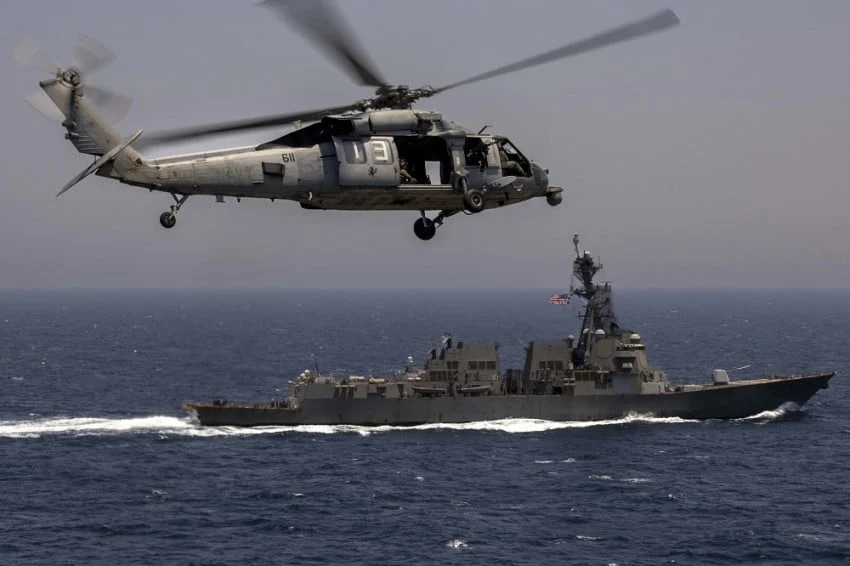
Furthermore, despite mobilizing significant naval assets and deploying specialized tactical resources to support clandestine, nighttime passage attempts, the United States has proven incapable of restoring normal shipping volumes. This systemic failure to secure international waters that are crucial for global energy supplies has sent shockwaves through the defense community. Allies who traditionally relied on American security guarantees are now reassessing their strategic alignments, recognizing that Washington’s capacity to unilaterally dictate terms in critical regional conflicts has notable limitations.
The Strategic Stalemate: Why Washington Cannot Defeat Iran Militarily
The inability of the United States to decisively break Iran’s maritime blockade underscores a deeper tactical and strategic stalemate. Military analysts point out that a comprehensive campaign to neutralize Iranian defensive capabilities in the Strait of Hormuz would require a massive, protracted conventional war—an outcome that neither the American public nor regional capitals desire, given the catastrophic economic and human costs it would entail.
Professor Elmasry emphasized this critical juncture, noting that the situation has reached a critical bottleneck. The options available to Washington are increasingly stark: either compel Tehran to back down through diplomatic or economic coercion, or accept the new, unfavorable geopolitical reality on the ground. Given the deeply entrenched ideological stance of the Iranian leadership, the former scenario is viewed by most Middle East experts as exceedingly unlikely. Tehran has demonstrated a high tolerance for economic hardship and international isolation, viewing the defense of its sovereign waters as an existential priority.
Consequently, the United States faces a humiliating strategic dilemma. Continuing low-intensity operations without achieving a breakthrough drains resources and exposes naval assets to asymmetrical threats, such as anti-ship missiles, fast attack craft, and extensive naval minefields deployed by the Islamic Revolutionary Guard Corps (IRGC). Conversely, scaling back operations equates to a de facto acknowledgement of regional containment by Tehran, signaling a historic retreat of American influence in the Persian Gulf.
The Strait of Hormuz: Tehran’s Ultimate Strategic Deterrent
To understand why Iran refuses to relinquish control of the Strait of Hormuz, one must examine the core security doctrine of the Islamic Republic. Alan Eyre, a veteran former U.S. diplomat and esteemed researcher at the Middle East Institute, offered critical insight into Tehran’s calculus during discussions with international media.
According to Eyre, the primary objective of the Iranian leadership is the prevention of future military aggression by the United States and Israel. Having faced decades of economic sanctions, covert cyber warfare, and persistent threats of preemptive kinetic strikes, Tehran views its geographic chokehold on the Persian Gulf as its single most effective strategic deterrent. Approximately one-fifth of the world’s petroleum consumption passes through the Strait of Hormuz, making it the jugular vein of the global energy market.
By asserting operational control over this narrow passage, Iran effectively holds the global economy hostage, creating an automatic threshold that deters large-scale foreign military intervention. For the regime in Tehran, the strait is not a negotiable chip to be traded away at the preliminary stages of a diplomatic settlement. It is viewed as an indispensable shield. Consequently, expectations within Washington that Iran might voluntarily cede maritime authority as a gesture of de-escalation are fundamentally disconnected from the strategic realities guiding Iranian statecraft.
Global Economic Fallout and the Shift in Diplomatic Channels
The inability of the United States to secure free navigation through the Strait of Hormuz has triggered severe repercussions across the global economy. Energy markets remain volatile, with insurance premiums for commercial vessels transiting the Persian Gulf skyrocketing to historic highs. Shipping companies, fearful of vessel seizures or collateral damage from asymmetrical skirmishes, have increasingly opted to reroute shipments or suspend operations entirely, leading to supply chain bottlenecks and inflationary pressures worldwide.
In light of these mounting economic pressures, analysts suggest that Washington and its Gulf Cooperation Council (GCC) partners may have no choice but to temporarily accommodate Iran’s dominance over the waterway. Accepting this reality as a short-term baseline has become a bitter pill for Western policymakers, who traditionally refuse to legitimize state-backed maritime disruptions.
Compounding this diplomatic setback is the notable shift in mediation efforts. Historically, Washington served as the primary mediator and power broker in Middle Eastern crises. However, recent developments indicate that the U.S. has proven both unwilling and incapable of conducting the nuanced, multi-track diplomacy required to navigate the current standoff. As a result, diplomatic initiatives have largely migrated away from Washington, finding new focal points in regional capitals such as Baghdad and various Gulf states. Iraq, in particular, has emerged as a crucial diplomatic intermediary, leveraging its unique geopolitical positioning to maintain open channels with both Western powers and Tehran.
Historical Context and Chronology of the Escalation
To fully grasp the magnitude of the current crisis, it is essential to trace the historical buildup that led to the February confrontations. The friction in the Strait of Hormuz is not an isolated incident but rather the culmination of years of escalating tensions following the unilateral U.S. withdrawal from the Joint Comprehensive Plan of Action (JCPOA) in 2018.
- 2018–2019: The re-imposition of maximum pressure sanctions by Washington triggered a series of asymmetric maritime incidents in the Persian Gulf, including attacks on oil tankers and the downing of a U.S. surveillance drone by Iranian air defenses.
- 2020–2022: Tensions remained at a simmer, characterized by low-level cyber warfare, intermittent vessel seizures, and proxy conflicts across the broader region. Iran steadily advanced its nuclear enrichment program while simultaneously upgrading its asymmetric naval warfare capabilities.
- Late 2023–January 2024: Regional flashpoints expanded dramatically in the wake of the Gaza conflict, drawing various regional actors into an interconnected web of hostilities. Iran and its network of aligned militias increased pressure on international shipping lanes, culminating in direct military exchanges.
- February: The conflict reached a critical turning point with direct kinetic engagements between U.S. forces and Iranian assets. These clashes exposed the vulnerability of coalition naval escorts and proved that traditional deterrence models were no longer functioning effectively in the localized theater.
- Post-February to Present: Washington found itself locked in a strategic stalemate, unable to secure the waterway through force while diplomatic initiatives stalled, prompting regional states to take the lead in seeking backchannel accommodations.
Fact-Based Analysis of Broader Implications
The unfolding situation presents profound long-term implications for international law, global trade security, and the future of American hegemony. From a legal standpoint, the freedom of navigation—a cornerstone of international maritime law codified under the United Nations Convention on the Law of the Sea (UNCLOS)—is being actively challenged by a regional power without facing effective multilateral enforcement. This erosion of codified maritime norms sets a dangerous precedent for other strategic waterways worldwide.
Economically, the persistent instability in the Persian Gulf accelerates the transition toward alternative energy sources and non-Middle Eastern supply routes, yet these structural adjustments require years to fully materialize. In the interim, industrialized economies in Asia and Europe remain acutely vulnerable to supply disruptions originating from the region.
From a geopolitical perspective, the crisis highlights the limits of a purely militarized foreign policy. The reliance on sanctions, naval deployments, and coercive diplomacy has failed to achieve strategic compliance from Tehran. Instead, it has fostered a multipolar security environment where regional powers increasingly assert autonomy, bypassing traditional Western leadership.
As Washington digests these hard truths, the overarching consensus among foreign policy experts is clear: the post-Cold War era of unquestioned American primacy in the Middle East has closed. Moving forward, U.S. strategy must account for a resilient, defiant Iran that has successfully carved out an enduring sphere of influence at the very doorstep of global commerce.
